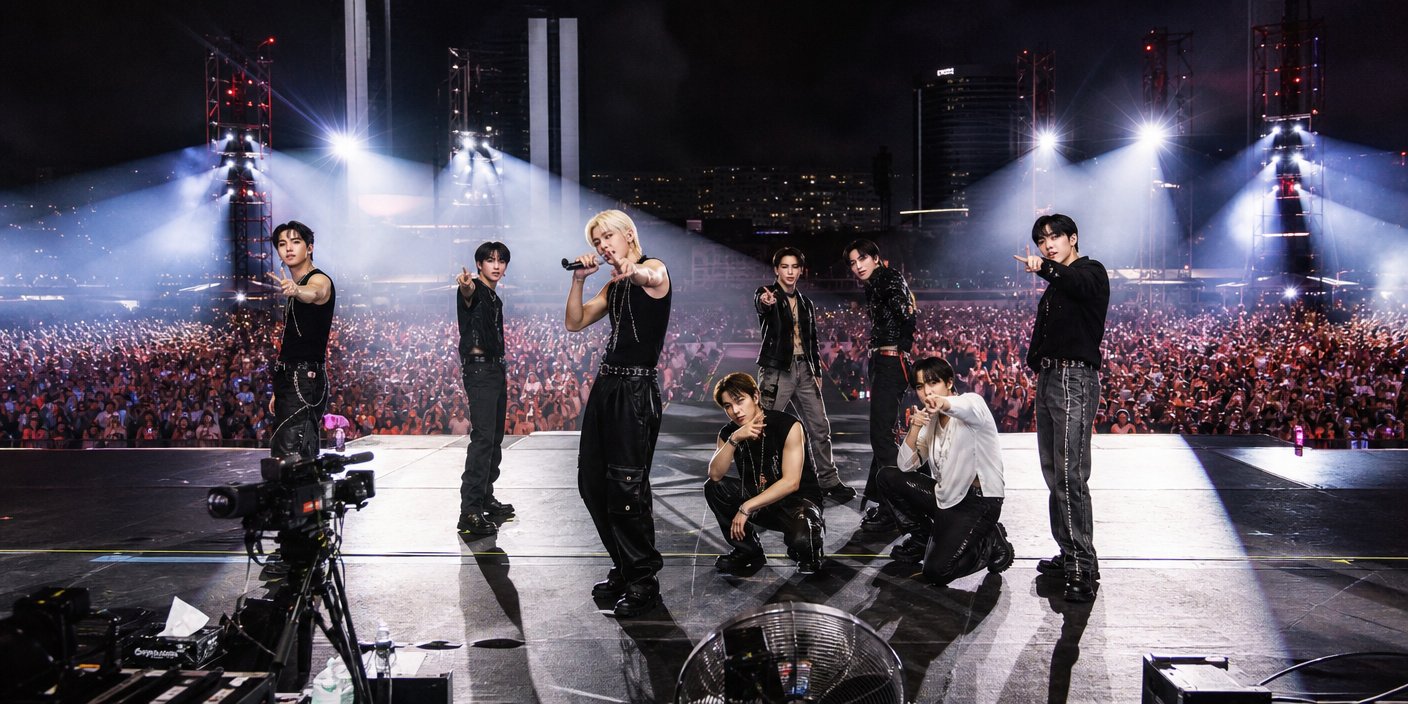
Stray Kids are officially bringing their explosive stage presence to the heart of Latin America with the launch of ‘Straycity,’ a custom-built festival circuit announced by JYP Entertainment in strategic partnership with Live Nation. This multi-city tour marks a definitive pivot for K-pop, moving beyond standard concert stops toward immersive, branded festival experiences that capitalize on the rapidly growing demand for Korean cultural exports in the region.
Key Highlights
- The ‘Straycity’ Concept: A curated festival brand developed by JYP Entertainment and Live Nation, designed to go beyond typical concert formats to offer a localized fan-centric experience.
- Tour Locations: The festival will anchor its presence in three major Latin American cultural hubs: Bogota (Colombia), Buenos Aires (Argentina), and Mexico City (Mexico).
- Strategic Partnership: This collaboration deepens the relationship between JYP Entertainment and global live event giant Live Nation, aimed at scaling K-pop’s logistical footprint in emerging markets.
- Market Significance: The move addresses the high demand for K-pop in Latin America, establishing a permanent or recurring infrastructure for future high-tier musical acts.
The Strategic Blueprint: Redefining K-Pop Touring in the Americas
The announcement of ‘Straycity’ is not merely an addition to a tour schedule; it represents a fundamental shift in how global music management firms view the Latin American market. By aligning with Live Nation—a titan in event infrastructure—JYP Entertainment is effectively lowering the barrier to entry for international mega-stars. For years, the Latin American K-pop fan base has been one of the most vocal and fastest-growing demographics globally, yet it has historically faced challenges regarding venue logistics, ticket distribution, and long-term event planning. ‘Straycity’ appears to be the solution to these friction points, creating a standardized festival framework that can be replicated or expanded.
Scaling Infrastructure and Localized Economics
Choosing Bogota, Buenos Aires, and Mexico City for the inaugural run is a calculated move that speaks volumes about the economic viability of these markets. Mexico City serves as the gateway to North American tours, while Bogota and Buenos Aires act as essential anchors for the South American leg of any major international circuit. By concentrating resources into these three specific, high-capacity locations, the organizers are focusing on efficient logistics, optimized transportation of stage equipment, and localized security protocols. This ‘hub-and-spoke’ model minimizes the costs associated with touring, ensuring that the spectacle brought to fans is identical in quality to shows seen in Seoul, Tokyo, or Los Angeles.
Furthermore, the economic ripple effects are significant. Major festivals of this magnitude drive substantial revenue into local tourism sectors. Hotels, regional transport, and local food-and-beverage vendors in each host city will see a massive influx of activity during the ‘Straycity’ dates. This is a mutually beneficial arrangement where the artist builds a stronger, more direct connection with their local audience, and the host cities benefit from the global branding associated with hosting a premier international music festival.
The Cultural Exchange Factor
At its core, ‘Straycity’ is about more than just music; it is about the intersection of cultures. Stray Kids, known for their high-octane production and self-produced music, bring an aesthetic that translates across linguistic barriers. The festival format allows for a more fluid interaction between the artists and the audience than a traditional stadium show, potentially incorporating pop-up events, cultural showcases, and interactive fan experiences. This level of immersion is the current gold standard in the music industry, and its application in Latin America is a signal that this market is now considered Tier-1 status for international talent.
Industry analysts have noted that the success of ‘Straycity’ could lead to a ‘multiplier effect,’ encouraging other major K-pop labels to seek similar partnerships with local promoters or global entities like Live Nation to establish their own recurring festivals. It marks a transition from ‘visiting’ a country to ‘investing’ in a country, a nuance that fans will undoubtedly reward with high loyalty and engagement.
Future-Proofing the Fan Experience
One of the most pressing questions for the global fandom is whether ‘Straycity’ is a one-time event or a recurring annual fixture. Given the branding, it is highly likely that this is intended to be a multi-year investment. By embedding the ‘Straycity’ brand into the local cultural calendar, JYP Entertainment and Live Nation are securing a long-term foothold. This consistency is crucial for building a brand that feels like a home-away-from-home for both the artists and the fans. As the technical logistics are finalized, we can expect further announcements regarding additional partner brands, local artist collaborations, and exclusive merchandising that will likely integrate local Latin American aesthetics with the established Stray Kids visual identity.
FAQ: People Also Ask
Q: What is the primary difference between a ‘Straycity’ festival and a standard Stray Kids concert?
A: Unlike a standard tour stop, ‘Straycity’ is branded as a festival circuit. This implies a more immersive experience, potentially featuring multi-day programming, larger-scale stage production, pop-up events, and collaborations that go beyond the typical setlist of a standard concert.
Q: Will ‘Straycity’ expand to other countries in the future?
A: While the current announcement focuses on Bogota, Buenos Aires, and Mexico City, the ‘Straycity’ brand is built as a scalable festival circuit. If the inaugural run proves successful, the infrastructure created by JYP Entertainment and Live Nation could easily be expanded to include other major markets in the region.
Q: How does this partnership with Live Nation impact ticket accessibility?
A: By partnering with Live Nation, the festival benefits from a global ticketing ecosystem. This typically provides fans with access to established verified fan presales, more secure ticket distribution methods, and a unified purchasing experience, which can help mitigate the issues often found with smaller, third-party ticket sellers in international markets.
Q: Are there specific age restrictions for ‘Straycity’ events?
A: Specific age restrictions will depend on the local venue regulations in Bogota, Buenos Aires, and Mexico City. Fans are advised to check the official ‘Straycity’ website and local venue pages as the event dates approach for definitive rules regarding minors and chaperone requirements.