The Wirtz Center for the Performing Arts recently transformed into a pulsating epicenter of urban rhythm with the debut of ‘Perreo,’ a student-led theatrical production that does more than just entertain—it dissects the complex DNA of reggaeton. By weaving together the historical trajectory of the genre with the visceral, often harrowing experiences of a fictional rising female star, the play offers a critical lens through which to view the hyper-masculine corridors of the music industry. As the lights dimmed and the distinctive ‘dembow’ beat filled the theater, the audience was taken on a journey that balanced artistic celebration with socio-political critique.
The Historical Evolution of the ‘Dembow’ Rhythm
At the heart of ‘Perreo’ lies a sophisticated exploration of reggaeton’s origins. The production successfully demystifies the genre, tracing its roots from the underground ‘cassette culture’ of Puerto Rico and Panama in the late 1980s and 1990s to its current status as a global pop phenomenon. The play utilizes performance art to illustrate how the ‘dembow’ rhythm—characterized by its repetitive, driving beat—became the sonic architecture for a generation seeking a voice against systemic invisibility. By grounding the play in this historical context, the creative team ensures that the audience understands that reggaeton is not merely a modern commercial product, but a resilient subculture born from necessity.
Navigating the Industry: The Female Perspective
While the genre’s history provides the framework, the emotional core of ‘Perreo’ is the protagonist’s narrative. The play follows the trajectory of a rising female artist, navigating an industry that is notoriously resistant to women, particularly those who demand creative autonomy. The production highlights the tension between the artist’s desire for self-expression—symbolized through the dance style of perreo—and the industry’s demand for palatable, hyper-sexualized marketing. The performance effectively portrays the ‘machismo’ inherent in label dynamics, where the struggle for respect is often juxtaposed against the desire for commercial success. It challenges the audience to consider the cost of fame for women in a genre where their bodies are often commodified while their artistic contributions are frequently minimized.
The Wirtz Center as an Academic Stage for Discourse
Hosting ‘Perreo’ at the Wirtz Center serves as a deliberate juxtaposition between academic rigor and the raw, street-level energy of the subject matter. The production serves as a prime example of how student-led theater can act as a bridge between high-concept academic theory and visceral, contemporary social issues. By bringing the club atmosphere into the formal setting of a university theater, the production forces a conversation about the boundaries of ‘high art’ and ‘popular culture.’ It effectively argues that the stories contained within urban music are as worthy of intellectual analysis as the classical repertoire often found in such spaces.
Secondary Angles: Future Impacts and Trends
1. The Commercialization of Resistance: The play raises compelling questions about the future of reggaeton. As the genre continues to dominate global streaming charts, ‘Perreo’ invites viewers to wonder if its radical, underground roots can survive the intense commodification of the mainstream music business.
2. Technological Democratization: A sub-theme of the play examines how digital distribution and social media have leveled the playing field for independent artists, allowing female creators to bypass traditional gatekeepers—a modern nuance that adds layers to the protagonist’s struggle.
3. Genre Fluidity: The production subtly touches on how reggaeton is evolving into ‘neoperreo’ and other experimental offshoots, suggesting that the genre is not a monolith but a constantly shifting organism that responds to the cultural climate of its time.
FAQ: People Also Ask
What does ‘Perreo’ mean in the context of the play?
‘Perreo’ is a dance style associated with reggaeton music. In the play, it serves as a central visual metaphor for both liberation and exploitation, reflecting the tension the protagonist feels between owning her sexuality as an artist and being objectified by the industry.
Why is reggaeton’s history significant to this production?
Understanding the genre’s history is crucial because reggaeton emerged from marginalized communities. The play uses this history to underscore that the struggles the protagonist faces—especially regarding race, class, and gender—are deeply embedded in the origins of the music itself.
Is the play based on a real artist?
While ‘Perreo’ is a work of fiction, the creative team has stated that the protagonist’s experiences are synthesized from the collective stories of various women in the reggaeton and Latin urban music scenes, serving as an archetypal representation of their challenges.
How did the Wirtz Center accommodate such a high-energy production?
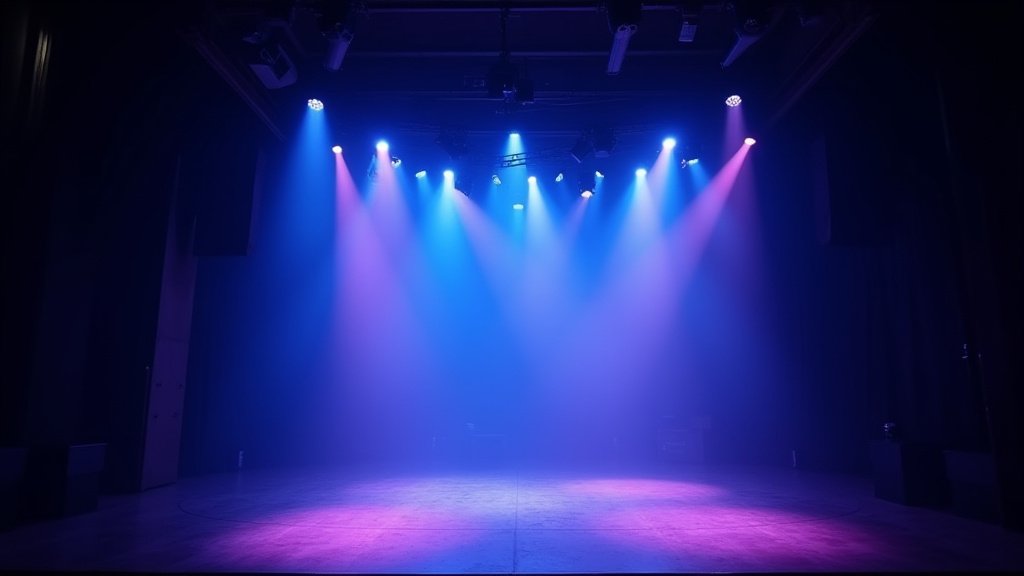
The Wirtz Center production team utilized innovative lighting and minimalist set design to recreate the claustrophobic and high-energy environments of recording studios and dance clubs, proving that powerful storytelling does not require elaborate physical sets but rather atmospheric, evocative staging.