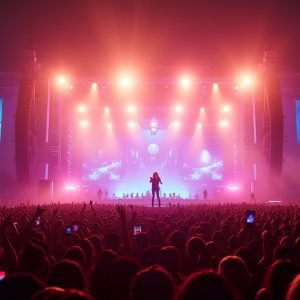
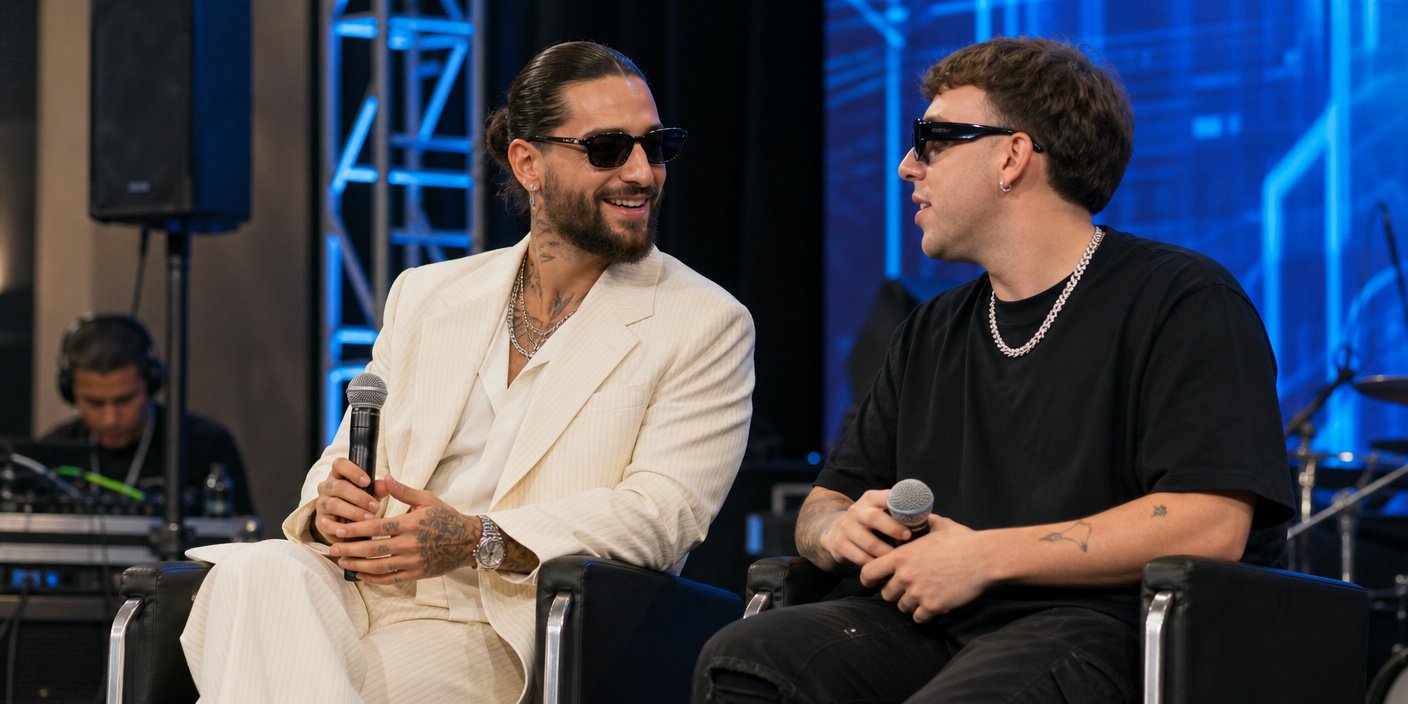
Billboard Latin Music Week 2026 has officially doubled down on its star power, announcing a massive second wave of talent that solidifies its status as the industry’s most critical gathering. The expansion, centered in the vibrant cultural hub of Miami, includes the addition of global superstars Maluma and Quevedo, as well as a diverse array of emerging disruptors including Aria Vega, Bebeshito, and DJ Conds. This announcement marks a strategic shift for the organization, bridging the gap between established chart-toppers and the next generation of digital-first talent.
Key Highlights
- Global Headliners Added: Superstars Maluma and Quevedo join the previously announced roster, significantly increasing the event’s overall draw.
- Emerging Artist Showcase: The addition of Aria Vega, Bebeshito, and DJ Conds highlights Billboard’s commitment to capturing the pulse of the underground and social-media-driven music scenes.
- Miami Hub: The 2026 edition continues to leverage Miami as the epicenter of Latin music, focusing on the synergy between local culture and international business.
- Industry Integration: The lineup expansion is designed to facilitate deeper networking opportunities between established labels, streaming platforms, and the burgeoning independent sector.
The New Momentum: A Shift in Curation
When Billboard first announced the framework for Latin Music Week 2026, the industry anticipated a focus on the “Big Three” of the genre: Reggaeton, Pop, and Urban. However, with the inclusion of this second wave of talent, the event is signaling a departure from predictability. The addition of Maluma—a multi-platinum titan known for his seamless ability to cross over into mainstream pop markets—alongside Quevedo, whose meteoric rise is perhaps the most representative of the streaming-era success story, suggests that Billboard is betting heavily on “hybridity.”
This isn’t just a concert series; it is a business summit. By placing these household names alongside rising talents like DJ Conds and the enigmatic Aria Vega, the organizers are curating an environment where the “how” of success is as important as the “who.” For industry executives, this provides a rare opportunity to observe how legacy stars maintain their relevance while younger artists navigate the hyper-competitive world of viral content and streaming metrics.
Why Miami Remains the Unrivaled Capital
There is a strategic necessity to the choice of Miami for this expansion. Unlike New York or Los Angeles, Miami functions as the true gateway between the Latin American markets and the North American industry infrastructure. For the 2026 programming, this geographical advantage is being leveraged to maximum effect. The organizers are not merely booking acts; they are building a bridge. This year’s programming is heavily weighted toward workshops, panels, and direct-to-audience events that explore how the “Miami Sound”—a blend of tropical, urban, and electronic rhythms—is currently influencing the global charts.
This geographic focus also serves a secondary purpose: economic impact. The influx of international talent, label heads, and tech innovators into the city provides a massive short-term boost to the local hospitality and event-tech sectors. It is a symbiotic relationship where the city provides the aesthetic backdrop, and the industry provides the cultural capital to maintain Miami’s relevance as the primary export hub for Spanish-language music.
The Digital-First Talent Paradigm
Perhaps the most compelling aspect of this second wave is the inclusion of artists who have cultivated massive followings primarily through digital distribution and social media. Aria Vega and Bebeshito represent a new breed of performer—one who does not require traditional radio gatekeeping to achieve stadium-level recognition. This is a critical pivot point for Latin Music Week.
For years, the industry operated on a “top-down” model, where labels dictated the talent. Now, the model is flipped. Data from streaming platforms and social media engagement dictates who gets the slot on the Billboard stage. By booking DJ Conds, a producer whose influence is largely felt through viral remixes and underground club tracks, Billboard is acknowledging that the future of the Latin charts is currently being written by producers in bedroom studios, not just corporate boardrooms. This is a crucial lesson for attendees: the line between “indie” and “industry” has effectively evaporated.
Navigating the Future of the Industry
Beyond the glitz and glamour of the live performances, the 2026 agenda is packed with serious, forward-looking discussions. The integration of artificial intelligence in music production, the ethical implications of digital likeness, and the ongoing shift toward short-form video consumption as the primary driver of music discovery will be at the forefront of the panels.
Industry leaders are particularly interested in how artists like Maluma manage to retain their identity while constantly evolving their sound to stay ahead of the curve. The sessions featuring these headliners are expected to be the most highly attended, as they offer a masterclass in longevity—a scarce commodity in the current, fast-paced streaming economy. The goal is to provide a roadmap for new artists to survive the transition from “viral trend” to “career musician.”
FAQ: People Also Ask
Q: How can fans access the performances by Maluma and Quevedo?
A: Billboard Latin Music Week offers a hybrid access model. While industry badge holders have priority access to all panels and showcase events, limited general admission tickets for select performances are released periodically through the official Billboard portal. It is recommended to register early as these tickets sell out almost immediately.
Q: Is this event limited to Latin music or does it cover broader industry topics?
A: While the focus is specifically on the Latin music market, the sessions cover universal industry topics, including global distribution, copyright law in the age of AI, and streaming optimization strategies that apply to any musical genre.
Q: How does the addition of emerging talent affect the scheduling?
A: The expansion has resulted in an extended schedule. Organizers have added “discovery stages” which run concurrently with main industry panels to ensure that emerging artists have adequate visibility without conflicting with the major headliner showcases.
Q: Will there be virtual access for international viewers?
A: Yes, Billboard provides a robust digital experience for those unable to attend in person. Many of the key panels, interviews, and condensed performance highlights will be available via livestream on the Billboard website and their official social media channels, though the full in-person experience remains the only way to access exclusive networking sessions.