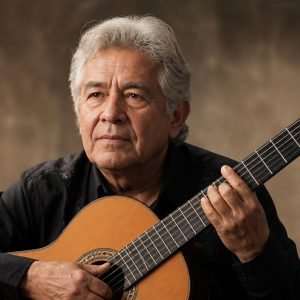
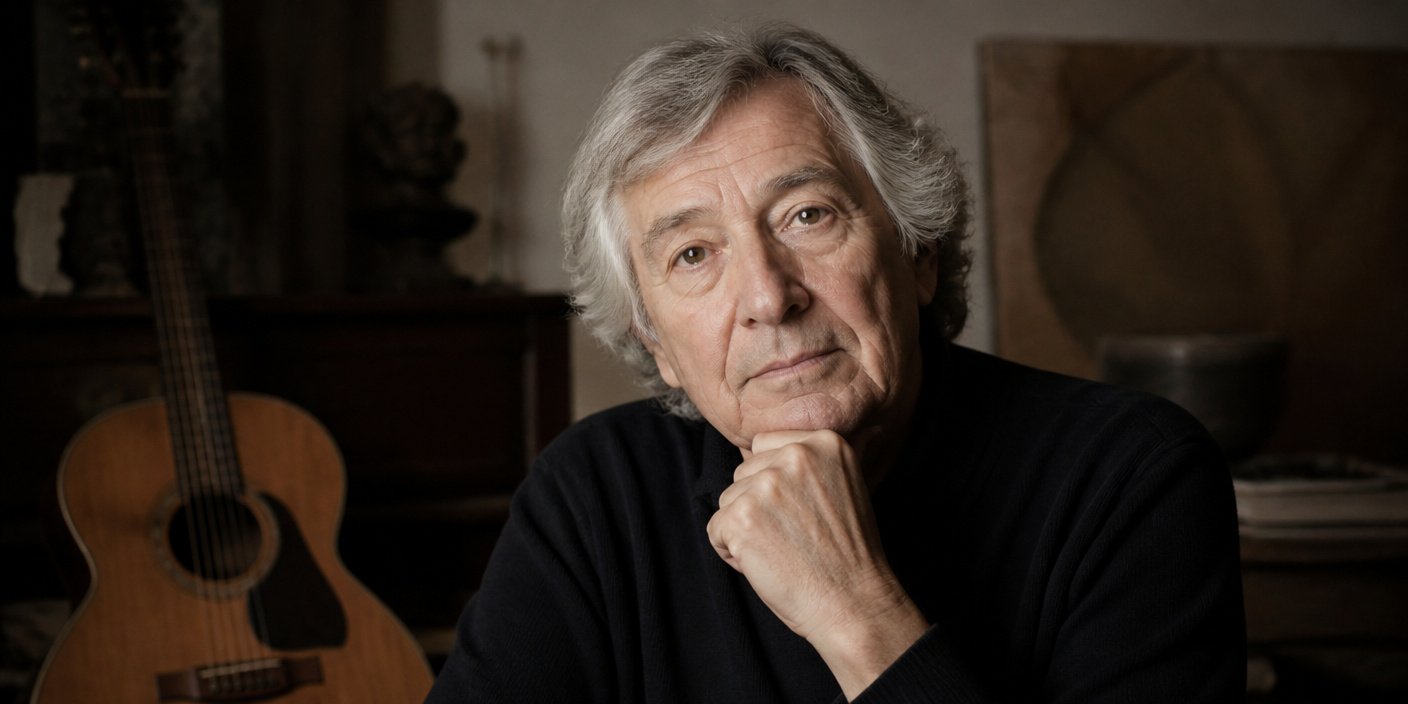
Piero Antonio Franco De Benedictis, the Argentine-Italian singer-songwriter who became a defining figure in 1970s protest music and the cultural architect of nostalgia, has passed away in Buenos Aires at the age of 81. Known to millions simply as Piero, his career spanned decades of political upheaval, social transformation, and artistic evolution, cementing his status as a permanent fixture in the Latin American musical canon.
Key Highlights
- Foundational Icon: Born in Italy and raised in Argentina, Piero emerged as a pivotal voice in the “Nueva Canción” movement, utilizing folk-rock elements to deliver profound social commentary.
- The Global Anthem: He is widely recognized for his 1969 hit “Mi Viejo” (My Old Man), a song that became an intergenerational anthem for fatherhood, transcending language and borders.
- Political Persecution: Throughout the turbulent 1970s in Argentina, Piero used his platform to advocate for civil rights, eventually leading to his exile during the height of the military dictatorship.
- Enduring Legacy: His transition from poetic folk to politically charged protest music made him a target of censorship, yet he remained a hero for those seeking a voice of memory and resistance in South America.
The Resonance of a Revolutionary Troubadour
From Immigrant Roots to Cultural Icon
Piero’s journey began in Italy, but it was in the vibrant, sometimes volatile soil of Argentina where he found his voice. He arrived in South America as a child, absorbing the complex cultural identity of an immigrant navigating a new world. This duality—the perspective of an outsider looking in, combined with the passion of an Argentine local—defined his musical approach. In the late 1960s, the Argentine music scene was undergoing a seismic shift, moving away from imported pop hits toward a localized sound that reflected domestic realities. Piero was at the vanguard of this movement.
His artistic breakthrough arrived not through loud, rebellious chords, but through delicate, emotive storytelling. He possessed an uncanny ability to turn the mundane into the profound. While other artists of the era were focusing on psychedelic rock or international trends, Piero turned his gaze inward to the family unit and the local street corners of Buenos Aires.
The Anthem That Defined a Generation
The release of “Mi Viejo” in 1969 remains the most significant milestone of his career. At a time when popular music was often discarded once a trend passed, “Mi Viejo” etched itself into the subconscious of the Spanish-speaking world. The song was a tribute to his father, but it became a mirror for every listener. Its universal appeal lay in its simplicity; it captured the complex, sometimes fraught, and deeply loving relationship between a child and their aging parent.
By framing the passage of time through the lens of a father’s “tired footsteps” and “weary face,” Piero tapped into a collective emotional reservoir. The song became more than a hit; it became a staple of Latin American culture, played on birthdays, anniversaries, and in moments of reflection. It transformed Piero from a singer into a companion for millions of families, a role he would occupy for the rest of his life.
Music as a Tool for Resistance
As the 1970s ushered in a period of intense political polarization and subsequent military dictatorship in Argentina, Piero’s music underwent a radical transformation. He moved away from the gentle introspection of “Mi Viejo” and leaned into the dangerous territory of protest. His lyrics became sharper, directly addressing social inequality, government corruption, and the erosion of human rights. He joined the ranks of artists who viewed the guitar not as a tool for entertainment, but as a weapon for truth.
This shift brought him directly into the crosshairs of the authorities. In an era where cultural expression was strictly monitored and censorship was rampant, Piero’s refusal to remain silent made him a target. He suffered from the systematic repression that characterized the “Dirty War” period. Facing threats and unable to perform freely, he was eventually forced into exile. This period, spent largely in Spain, was a crucible for his art. While he remained active musically, his songs from this time were underscored by the ache of displacement and the longing for a home that was no longer safe for him to inhabit. This period deepened the “protest” element of his persona; he became the voice of the exiled, the missing, and the silenced.
The Enduring Legacy of an Argentine Legend
Returning to Argentina in the 1980s, following the restoration of democracy, was a seminal moment for both the artist and the nation. Piero returned to a country that was healing, and he served as a bridge between the trauma of the past and the uncertainty of the future. He continued to produce music, though he often returned to the themes that first garnered him fame.
What defined Piero until the very end was his consistency. He never completely abandoned the poetic tenderness that launched his career, nor did he ever fully put down the mantle of the social critic. His ability to balance the personal with the political is a lesson for modern artists. In an era where digital content is often transient, Piero’s work stands as a testament to the power of authentic expression. He proved that a single voice, armed with nothing more than an acoustic instrument and a commitment to the truth, could withstand the pressures of time, dictatorship, and exile. His passing at 81 marks the end of an era, but his songs—from the tearful tribute to “Mi Viejo” to his sharp-edged critiques of state power—remain an essential component of the Argentine identity.
FAQ: People Also Ask
1. What is the historical significance of Piero’s music in Argentina?
Piero was a central figure in the “Nueva Canción” (New Song) movement, which blended local Argentine folk traditions with protest lyrics. His music provided a soundtrack to the 1970s political struggle, acting as both a mirror of society and a form of resistance against authoritarian rule.
2. Why was “Mi Viejo” considered such a massive hit?
“Mi Viejo” became a cultural phenomenon because it addressed the universal, complex dynamics of fatherhood with extreme vulnerability. Its emotional resonance transcended the specific Argentine context, becoming a standard song for family gatherings across the entire Spanish-speaking world.
3. Did Piero experience political exile?
Yes. Due to his outspoken lyrics and political activism during the military dictatorship in Argentina in the 1970s, he was forced into exile. He spent significant time in Spain, where he continued his musical career while speaking out about the human rights abuses occurring in his home country.
4. How does his legacy affect current Latin American musicians?
His legacy persists as a benchmark for integrity in songwriting. Modern artists often cite him as an influence for his ability to maintain popular appeal while simultaneously embedding political and social critiques within his work.