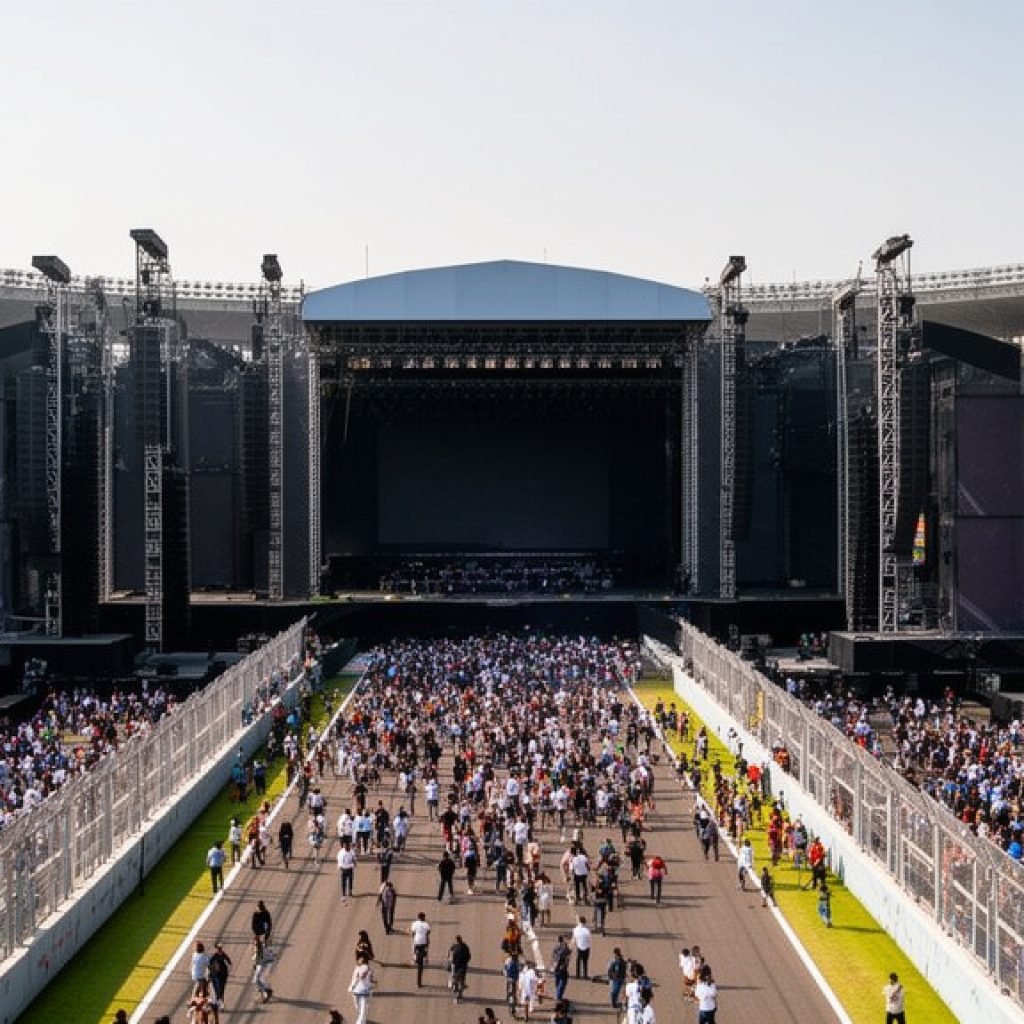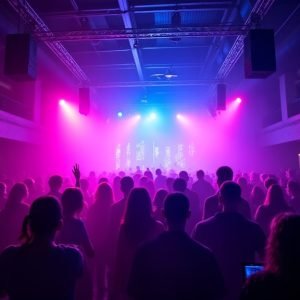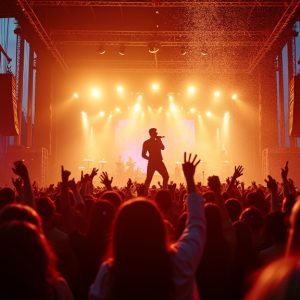
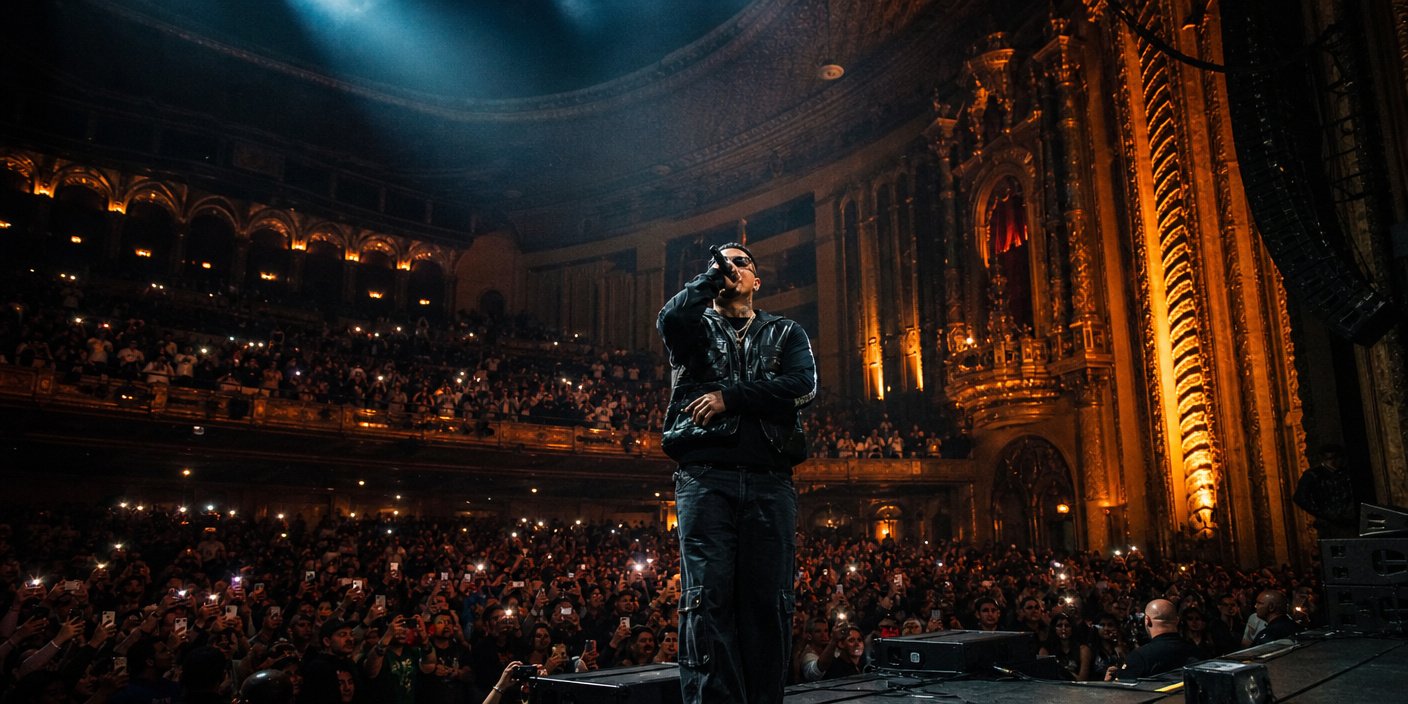
The vibrant pulse of the Bronx resonated through the historic halls of the United Palace on November 28, as burgeoning Latin trap artist NTG officially cemented his status as a headline act. In a move that signals a tectonic shift in the urban music landscape, the Bronx-born talent successfully sold out the legendary Washington Heights venue for his first-ever solo headlining theater performance. The event, meticulously orchestrated by The Touring Co., marks a watershed moment for both the artist and the genre, proving that NTG’s brand of visceral, beat-driven storytelling has outgrown the club circuit and is ready for the proscenium stage.
The Anatomy of an Independent Breakthrough
The United Palace as a Cultural Catalyst
The choice of the United Palace for NTG’s first headlining theater engagement was far from arbitrary. Located in the heart of Washington Heights, a neighborhood that serves as a spiritual and cultural epicenter for New York City’s Dominican and broader Latin American communities, the venue offers more than just seats. Originally opened in 1930 as the Loew’s 175th Street Theatre, the Palace is a beacon of opulent architecture and historical gravity. For an artist like NTG, whose music frequently draws from the grit and texture of Bronx street life, the juxtaposition of the venue’s ornate, gilded interiors with the stark, bass-heavy aesthetic of modern Latin trap created a uniquely charged atmosphere. This sold-out performance was not merely a concert; it was a homecoming for the Bronx native, transforming the theater into a crucible of local pride and musical ambition.
Strategic Promotion and The Touring Co.
Success at this scale is rarely an accident. The logistical heavy lifting behind this milestone was provided by The Touring Co., which has gained a reputation for betting on emerging artists who demonstrate high-engagement fanbases. By bypassing mid-tier arenas and focusing on a singular, high-impact theater date, the team avoided the pitfalls of oversaturation. The strategy was clear: create scarcity and demand. By limiting the ticket release to the United Palace’s specific capacity, they forced a consolidated rush, ensuring that the visual of a sold-out theater would serve as the ultimate social proof for NTG’s viability as a touring force. This data-driven approach to event planning highlights a broader industry trend where independent artists are leveraging precise demographic targeting to command prestige venues without the need for traditional label-backed massive tour cycles.
The Sound of the New Bronx
NTG’s musical identity is a complex tapestry of traditional Latin influences layered over the jagged, high-tempo percussion characteristic of contemporary trap. His lyrics, which often navigate the complexities of identity, economic struggle, and urban aspiration, have resonated deeply with a generation of listeners who see their own experiences mirrored in his verses. Unlike the highly polished, mainstream-leaning reggaeton that dominates global charts, NTG’s Latin trap retains an uncompromising edge. This performance served as a showcase for that evolution, with a production design that prioritized raw lighting, immersive sound design, and an emphasis on the artist’s direct connection with the crowd. The sell-out crowd was not there for spectacle alone; they were there for an authentic narrative experience that has been building since his early days in the borough.
Scaling the Latin Trap Phenomenon
The Latin trap genre has long been dominated by a few household names, but the sell-out of the United Palace indicates a widening gate. The industry is currently witnessing a ‘decentralization of fame,’ where niche artists can command massive cultural capital within specific urban centers. NTG represents this new guard: artists who have mastered the digital ecosystem—using platforms like TikTok and Instagram to cultivate a loyal, localized following—and have successfully converted those digital streams into physical ticket sales. The economic impact of such shows is significant. Beyond the ticket revenue, these events drive significant ancillary spending in the surrounding Washington Heights neighborhood, reinforcing the symbiotic relationship between cultural hubs like the United Palace and the artists who perform there.
Looking Ahead: The Post-Show Trajectory
With the November 28th show now recorded as a career-defining success, the question shifts to what comes next. Historically, a successful headlining debut at a venue of the United Palace’s stature is a precursor to larger regional tours or festival slots. For NTG, the challenge will be maintaining this momentum while scaling his production to larger venues without losing the intimacy that made his initial performances—and this debut theater show—so compelling. If the energy inside the United Palace on that night is any indicator, he has the foundation, the team, and the audience loyalty to navigate the transition from rising star to solidified industry staple. The concert has effectively drawn a line in the sand; the artist who walked into the United Palace as a regional favorite left it as a national contender.
FAQ: People Also Ask
Q: How many people can the United Palace hold?
A: The United Palace is a historic venue with a seating capacity of approximately 3,400 people. Selling it out for a debut headline show is a significant marker of an artist’s drawing power.
Q: What is the significance of the November 28 date for NTG?
A: November 28 marks the specific date that NTG established his viability as a solo headlining theater act in the New York City market, effectively ending his club-tour era and starting his career as a theater-level performer.
Q: Why was The Touring Co. instrumental in this show?
A: The Touring Co. provided the necessary promotional and logistical framework to secure the United Palace and manage the ticket distribution. Their expertise in targeting local Bronx and Manhattan demographics was crucial in ensuring the ‘sold out’ status of the event.
Q: Is Latin Trap still a growing genre in NYC?
A: Yes, Latin trap continues to be a dominant force in New York City’s urban music scene. The success of artists like NTG at historic venues highlights that the genre is not just surviving but is actively expanding into prestigious, larger-scale performance spaces.