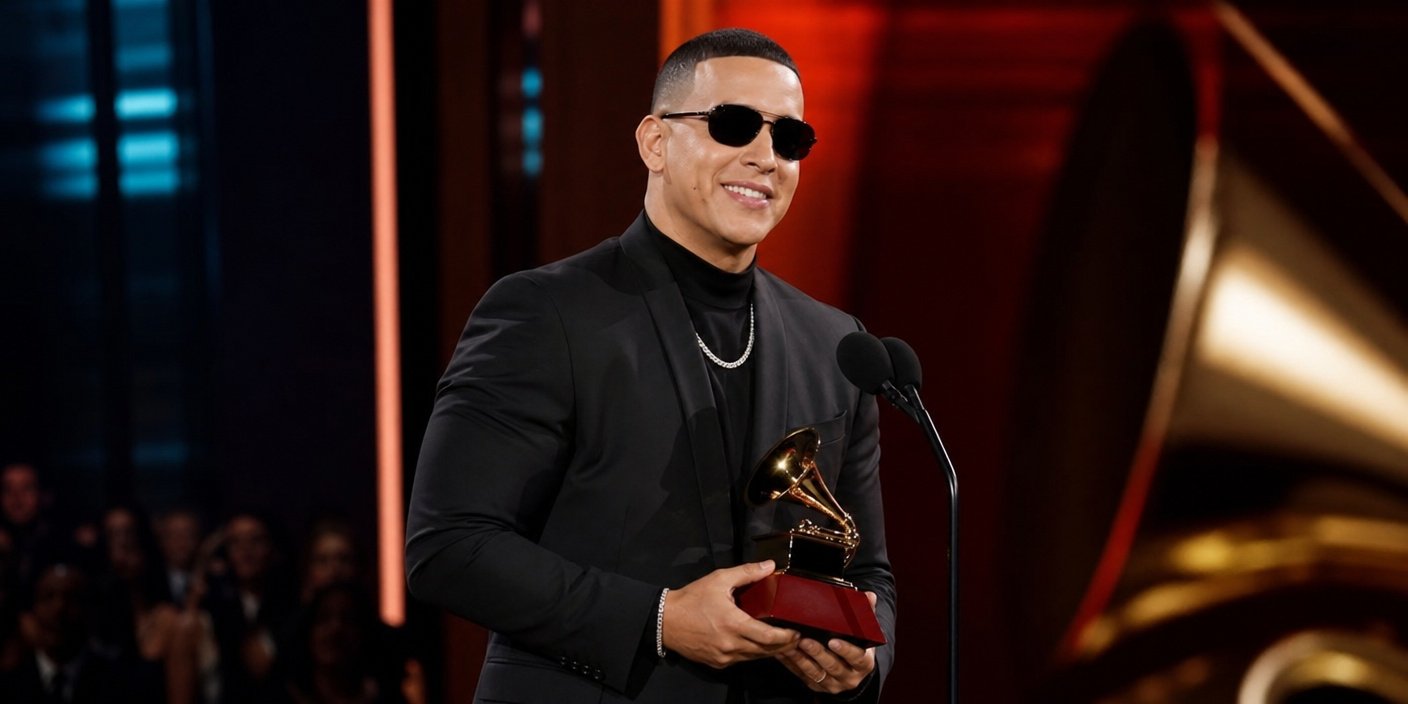
The 2026 Latin Grammy Awards served as more than just a ceremony; they acted as a cultural checkpoint for the history of reggaeton, finally providing a long-overdue formal recognition of Daddy Yankee’s foundational role in the genre’s explosion into the global mainstream. As the dust settles from the awards, the De Los podcast, produced by the LA Times, has released a special investigative analysis that explores the intricate evolution of Raymond Ayala—the man behind the moniker—and how his career milestones continue to dictate the pulse of the Latin music landscape in 2026.
Key Highlights
- Pioneering Reggaeton: Analysis of how Daddy Yankee bridged the gap between underground street culture and mainstream pop, creating the blueprint for the current Latin music industry.
- The ‘De Los’ Perspective: Exclusive insights from the podcast series detailing how his recent projects continue to influence contemporary artists.
Career-Long Impact: A retrospective on the transition from his 2004 breakout Barrio Fino* to his status as a global cultural icon in 2026.
- Cultural Hegemony: Discussions on how his work challenged linguistic barriers, allowing Spanish-language music to dominate international charts.
The Architecture of a Global Icon
The 2026 Latin Grammy celebration was widely regarded by industry analysts as a watershed moment for Daddy Yankee. While his commercial success has never been in question—spanning decades of chart-topping hits—the podcast De Los argues that this specific recognition validates his intellectual and creative contributions to the art form. The podcast episodes meticulously track his trajectory, starting from the barrios of San Juan, Puerto Rico, to the sold-out stadiums across the globe. By centering the conversation on his legacy, the analysis highlights that Yankee did not just “make music”; he engineered a shift in the global musical lexicon.
The ‘De Los’ Deep Dive
What makes the De Los podcast coverage essential listening is its focus on the ‘hidden’ mechanics of Yankee’s career. The production team goes beyond the accolades and sales numbers, diving into the sociopolitical climate of the early 2000s when reggaeton was often marginalized by the music industry. The podcast interviews producers, label executives, and contemporary artists who credit Yankee with navigating the transition from unauthorized underground tapes to multi-million dollar studio productions. By focusing on his tenacity, the podcast illustrates that his longevity is not an accident but a product of meticulous business acumen paired with artistic foresight.
Breaking the Language Barrier
One of the most compelling aspects of the De Los analysis is the exploration of how Daddy Yankee dismantled the stigma surrounding Spanish-language lyrics in the U.S. and European markets. Through the lens of his 2026 awards appearance, the podcast examines how his early hits, particularly those that popularized the reggaeton beat globally, served as the foundation for the ‘Latin Wave’ that currently dominates platforms like Spotify and Apple Music. The podcast hosts contend that without the groundwork laid by the ‘Big Boss’ in the mid-2000s, the current crossover success of artists like Bad Bunny or Karol G would have faced significantly higher friction from record labels and radio gatekeepers.
Economic and Cultural Resilience
The financial footprint of Daddy Yankee is a secondary angle explored with surgical precision in the podcast series. Beyond the music, the discussion touches on his ventures within the industry—specifically, the management of artists and the development of his own label infrastructures. The 2026 analysis underscores that Yankee’s influence is a form of cultural hegemony; he owns his masters, he manages his own brand, and he has successfully transitioned from an artist into an institution. For the listeners of De Los, this episode serves as a case study in how to maintain relevance while evolving into a mentor figure for the next generation of urban artists.
The Future of the Genre
Looking ahead, the De Los podcast posits that Daddy Yankee’s influence in 2026 is actually more visible in the ‘DNA’ of new music than in his own current releases. The podcast highlights how even as he takes a step back from touring and recording, his sound, his cadence, and his structural approach to hit-making are being mimicked, sampled, and paid homage to by emerging stars. The award at the 2026 ceremony, therefore, was not a ‘lifetime achievement’ in the sense of a farewell, but rather a formal acknowledgement that the genre he helped build is now the default language of global pop music.
FAQ: People Also Ask
Q: What is the primary focus of the ‘De Los’ podcast?
A: ‘De Los’ is an LA Times podcast that focuses on the nuance of Latinidad and Latin culture. It provides deep-dive journalism into how Latin music, politics, and social movements intersect, with a heavy emphasis on how historical figures like Daddy Yankee shaped modern cultural trends.
Q: Why was the 2026 Latin Grammy honor considered a major milestone for Daddy Yankee?
A: While Yankee has received many awards throughout his career, the 2026 recognition was unique for its focus on his foundational, structural impact on the genre. It moved beyond commercial success to highlight his role as a genre-builder who allowed future generations of artists to thrive internationally.
Q: How does Daddy Yankee’s legacy affect current Latin music artists?
A: According to the podcast analysis, current artists owe a debt to Yankee for creating the infrastructure and breaking down the linguistic barriers in the global music industry. His influence is felt in everything from production styles to the global touring models now standard for Latin urban artists.
Q: Is Daddy Yankee officially retired?
A: While his activity levels have fluctuated, the 2026 analysis suggests that ‘retirement’ for a figure like Daddy Yankee is fluid. He remains highly active as a mentor, producer, and cultural ambassador, rather than disappearing from the industry entirely.