Brazilian jazz virtuoso Antonio Adolfo has captivated the global music community once again with the release of his latest single, “Zatumtum.” This new composition serves as a masterclass in the fusion of intricate Latin rhythms and modern jazz improvisational techniques, further cementing Adolfo’s reputation as one of the most prolific and essential figures in contemporary Brazilian music. Known for his ability to bridge the gap between traditional Bossa Nova roots and avant-garde harmonic structures, Adolfo’s newest offering is not merely a song, but a rhythmic exploration that invites listeners into his sophisticated, layered sonic world.
Key Highlights
- Fresh Release: Antonio Adolfo has released the new track “Zatumtum,” a highly anticipated addition to his expansive discography.
- Genre-Bending Sound: The track showcases a sophisticated fusion of traditional Latin rhythms, specifically rooted in Brazilian samba and bossa nova, layered with modern jazz sensibilities.
- Technical Mastery: Known for his technical prowess, Adolfo utilizes “Zatumtum” to explore complex time signatures and syncopation that define his signature style.
- Continued Legacy: The release continues Adolfo’s multi-decade career, which has earned him multiple Grammy nominations and established him as a cornerstone of the Brazilian jazz movement.
Harmonic Convergence: Adolfo’s New Latin Jazz Frontier
For decades, Antonio Adolfo has stood at the crossroads of Brazilian cultural heritage and international jazz fusion. Born in Rio de Janeiro in 1947, his career spans the evolution of Bossa Nova in the 1960s to his current status as a Grammy-nominated independent powerhouse. With “Zatumtum,” Adolfo does not simply iterate on past successes; he pushes the boundaries of his rhythmic vocabulary. The title itself—suggestive of a percussive, onomatopoeic response—acts as the foundational DNA for the track, anchoring a composition that feels both organic and mathematically precise.
The Rhythmic Pulse of ‘Zatumtum’
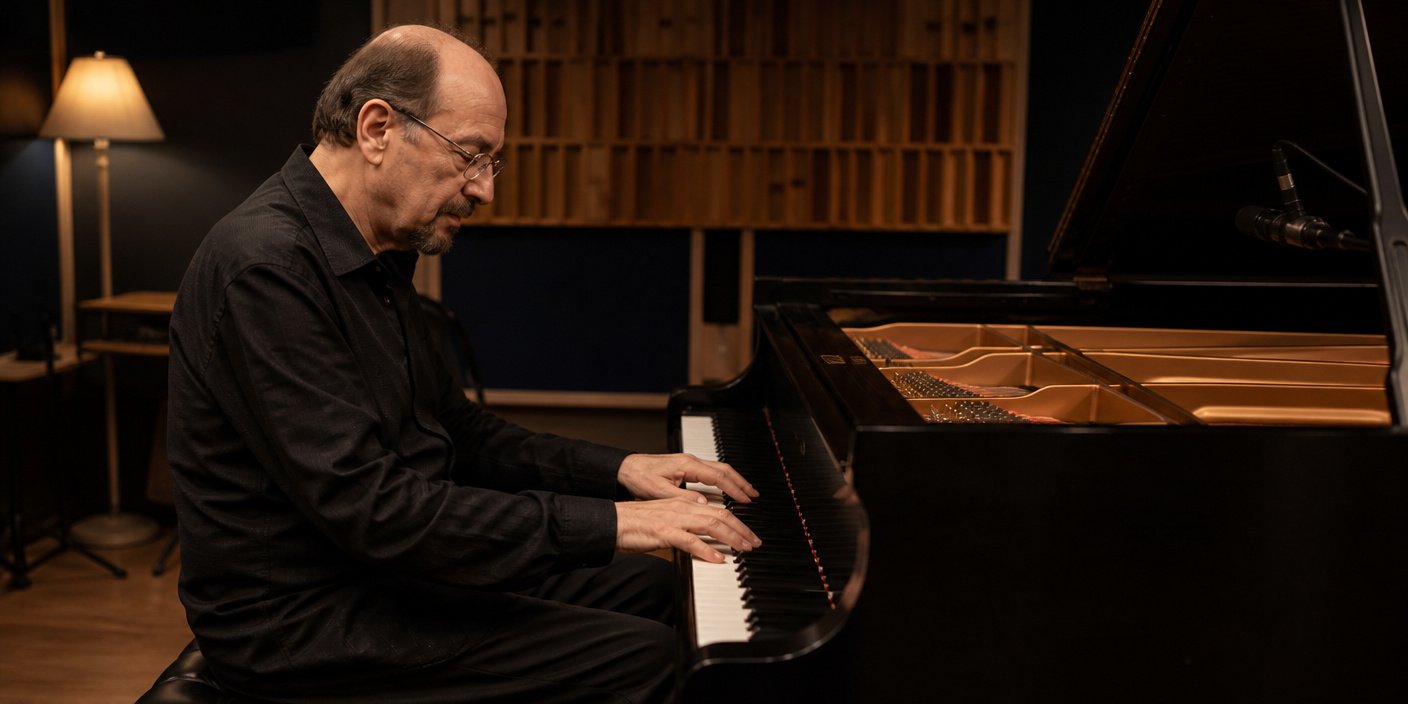
The defining characteristic of “Zatumtum” is its relentless, yet nuanced, rhythmic drive. Adolfo treats the piano not just as a melodic instrument, but as a percussive engine. Listeners familiar with his work will recognize the subtle ‘tum’ pulses that weave throughout the arrangement. This is where Adolfo excels: he creates a sonic environment where the piano left hand provides the gravitational pull—a deep, rooted samba feel—while the right hand dances with agile, bebop-influenced improvisations. The track demonstrates a high level of harmonic sophistication, employing complex chord voicings that are characteristic of his recent pedagogical and performance works. It is a study in tension and release, where the ‘Zatumtum’ motif provides a recurring anchor amidst fluctuating melodic lines.
Evolving the Brazilian Soundscape
The broader context for “Zatumtum” lies in Adolfo’s ongoing commitment to the preservation and modernization of Brazilian music through his label, AAM Music. By consistently releasing high-quality, genre-pushing material, Adolfo is actively resisting the dilution of Latin jazz. He is not catering to pop sensibilities but is instead inviting his audience to engage with the deep theory that underpins his compositions. In “Zatumtum,” one can hear the echoes of the giants he played alongside in his youth—the pioneers of the bossa era—yet the production value and the clarity of the improvisation are undeniably contemporary. It is a bridge between the historical significance of the Rio jazz scene and the global, digital-first landscape of modern jazz consumption.
The Technical Architecture of the Track
To understand the appeal of the track, one must examine the arrangement. Adolfo’s harmonic language has matured over the years, incorporating elements of modal jazz and impressionist classical music. “Zatumtum” utilizes this vocabulary to create a texture that feels larger than the sum of its parts. By integrating traditional syncopation with modern, open-voiced chords, he creates a sense of space that is rare in high-tempo jazz recordings. This structural choice allows the listener to parse the complexity of the rhythm while simultaneously enjoying the fluidity of the melody. It is a delicate balancing act that Adolfo navigates with the confidence of an artist who has been refining his craft for over half a century.
Secondary Angles: Exploring the Deeper Context
1. The Independent Label Model: Adolfo’s AAM Music serves as a case study for how legacy artists can maintain creative autonomy in the streaming era. By bypassing major labels, he ensures the artistic integrity of tracks like “Zatumtum,” focusing on audiophile-quality production over short-term trends.
2. The Global Diaspora of Samba: “Zatumtum” represents a specific cultural export. It highlights how Brazilian rhythm, when filtered through the lens of jazz, remains a universal language. The track reinforces the historical importance of the ‘Samba-Jazz’ movement, which began in the late 1950s and continues to evolve under artists like Adolfo.
3. Pedagogical Influence: Beyond his recordings, Adolfo is a renowned educator. His approach to music theory, often reflected in his performance choices, has influenced a generation of pianists. Analyzing “Zatumtum” offers a window into his method, revealing how he teaches the integration of melodic phrasing and percussive rhythm to aspiring musicians worldwide.
FAQ: People Also Ask
Q: What is the main inspiration behind Antonio Adolfo’s ‘Zatumtum’?
A: ‘Zatumtum’ is inspired by the exploration of foundational Latin rhythms, specifically the syncopation inherent in Brazilian music, blended with modern jazz improvisational techniques. It reflects Adolfo’s lifelong study of the ‘tum’ or rhythmic pulse found in samba and bossa nova.
Q: Why is Antonio Adolfo considered a major figure in Latin Jazz?
A: Adolfo is a Grammy-nominated pianist, composer, and arranger with a career spanning over 50 years. He was a pioneer during the height of the Bossa Nova era in Rio de Janeiro and has continued to innovate by fusing traditional Brazilian elements with complex, international jazz structures.
Q: Where can listeners hear ‘Zatumtum’?
A: ‘Zatumtum’ is available across all major streaming platforms, often distributed via Adolfo’s independent label, AAM Music.
Q: How does this track differ from Adolfo’s earlier works?
A: While it retains his signature harmonic complexity, ‘Zatumtum’ features a heightened emphasis on rhythmic interplay, showcasing a more contemporary, perhaps slightly more percussive approach to piano arrangement than his earlier, strictly Bossa-focused records.