In the bustling, diverse creative landscape of Milwaukee, few artists are as adept at navigating the intersection of community activism and musical innovation as El Sebas. His latest project, the single “Sana Sana,” serves as a potent testament to his artistic philosophy—a rhythmic, soulful fusion that bridges the gap between traditional cumbia roots and the hard-hitting, percussive energy of modern hip-hop. In a recent, wide-ranging discussion on the program La Alternativa, El Sebas peeled back the layers of his creative process, revealing how music functions not just as entertainment, but as a vehicle for memory, pedagogy, and cultural solidarity.
The Rhythmic Anatomy of ‘Sana Sana’
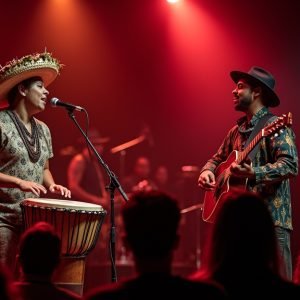
At the heart of the conversation was the technical and emotional architecture of his new single, “Sana Sana.” The track acts as a sonic manifesto, utilizing the familiar, cyclical percussion of cumbia—a genre deeply ingrained in Latin American identity—as the foundation for a hip-hop-influenced lyrical delivery.
For El Sebas, the choice to fuse these genres was not merely an aesthetic preference; it was a deliberate strategy to reclaim and repackage lessons learned from his upbringing. The cumbia influence provides a sense of continuity, invoking the gatherings of his childhood, while the hip-hop elements serve as the contemporary, urban voice of the present. During the interview, he detailed how he carefully balances the “swing” of the cumbia rhythm with the “snap” of a boom-bap drum loop, ensuring that neither genre overrides the other. This synthesis allows the listener to experience the nostalgia of the past while remaining firmly grounded in the reality of current urban struggles.
Milwaukee’s Unsung Cultural Engine
Beyond the studio, El Sebas occupies a critical position as a cultural organizer in Milwaukee. The city’s Latinx scene is often overshadowed by larger coastal hubs, yet it is currently undergoing a renaissance, with artists like El Sebas acting as the bridge between grassroots community efforts and the professional music industry. His approach to cultural organizing is inherently tied to his music; he views the act of performing as a form of community service.
By centering his art around themes of social justice, personal growth, and collective healing, El Sebas has become a focal point for younger artists looking to merge their professional ambitions with their identity. He notes that the “lessons learned”—the hardships, the victories, and the daily grind of community work—are the primary fuel for his lyricism. This authentic, lived-in perspective provides a layer of credibility that is often missing from more commercialized music, establishing his voice as a necessary one in the Midwest’s creative ecosystem.
The Pedagogy of Sound
One of the most compelling aspects of El Sebas’s interview was his discussion on music as education. He argued that the rhythms inherent in Latin music carry historical markers that, when combined with the narrative power of hip-hop, become potent teaching tools. By dissecting “Sana Sana,” he highlighted how he uses his platform to introduce younger, urban-focused audiences to the cultural heritage of their parents and grandparents.
This educational component is not heavy-handed. Instead, it is integrated into the melody and the flow. He described his songwriting process as an act of translation: taking the complex, non-linear experiences of being a bicultural individual in the United States and translating them into a coherent, rhythmic language that can be understood by diverse audiences across the cultural spectrum. He emphasized that the goal is to create a “common frequency” where the listener can learn about their own history while being moved by a contemporary groove.
Looking Toward a Multidisciplinary Future
As the interview concluded, the conversation turned toward the future of his sound and his expanding role in the Milwaukee arts scene. El Sebas hinted at further experimentation, suggesting that the synthesis found in “Sana Sana” is merely the beginning of a larger exploration into the Afro-Latin diaspora’s impact on urban music.
He remains committed to the principle that an artist’s responsibility does not end with the release of a song; it continues through the creation of spaces where dialogue, education, and artistic expression can flourish. His roadmap includes plans for workshops that pair musical production with community storytelling, proving that his ambitions extend far beyond the recording studio. In an era where digital noise often drowns out substance, El Sebas stands out as an artist who uses his platform to amplify the voices and stories that truly matter, making him a central figure to watch in the evolving narrative of Midwest culture.
FAQ: People Also Ask
Q: What is the significance of the title ‘Sana Sana’?
A: ‘Sana Sana’ is a cultural reference to a popular Spanish-language chant used to comfort children after a minor injury (‘Sana, sana, colita de rana’). By using this title, El Sebas is invoking themes of healing, resilience, and reclaiming domestic cultural wisdom within an urban hip-hop framework.
Q: Why does El Sebas emphasize the fusion of Cumbia and Hip-Hop?
A: He views this fusion as a way to reconcile his bicultural identity. Cumbia represents his heritage and the traditions of his family, while Hip-Hop provides the contemporary, urban medium for expressing his current experiences in Milwaukee.
Q: Where can listeners find the interview mentioned?
A: The interview took place on La Alternativa, a program dedicated to spotlighting independent voices and alternative cultural movements in the region.
Q: How does El Sebas incorporate cultural organizing into his musical work?
A: He treats his music as an extension of his community work, using his lyrics to document local struggles and triumphs, and organizing events that provide educational and networking platforms for other aspiring artists in Milwaukee.