The Latin music industry has reached a pivotal inflection point in 2026, characterized by robust revenue growth in established markets like Spain and a strategic restructuring of talent incubation in emerging territories such as Ecuador. While Spain’s streaming infrastructure continues to yield record-breaking financial returns, Ecuador is simultaneously positioning itself as the next frontier for international export, marked by the launch of ‘Sonido Distrito Sur.’ This dual-track evolution underscores a broader global trend: the democratization of musical distribution and the increasing effectiveness of hybrid partnerships between boutique artist companies and major label giants.
The Iberian Engine: Analyzing Spain’s €181.4 Million Milestone
Spain’s music market has officially cemented its status as a cornerstone of the European and Latin American music ecosystem. During the first half of 2026, the Spanish recorded music industry generated an impressive €181.4 million, reflecting a maturing digital ecosystem that favors subscription-based streaming models. This financial data is not merely a reflection of increased volume, but a qualitative shift in how Spanish audiences consume local repertoire.
For years, the Spanish market operated as a peripheral contributor to broader European music trends. However, in 2026, the data indicates that domestic consumption of Spanish-language artists is reaching an all-time high. This surge is driven by a combination of high-speed fiber penetration across urban centers, localized playlists algorithms optimized for Spanish genres, and a cultural renaissance that sees younger demographics prioritizing homegrown content over imported global hits. The €181.4 million revenue milestone serves as a baseline for the year, suggesting that the industry is well on track to outperform previous annual projections by a significant margin. This growth provides a stable economic foundation that allows major industry players to invest more aggressively in regional talent acquisition.
Sonido Distrito Sur: A New Blueprint for Ecuadorian Exports
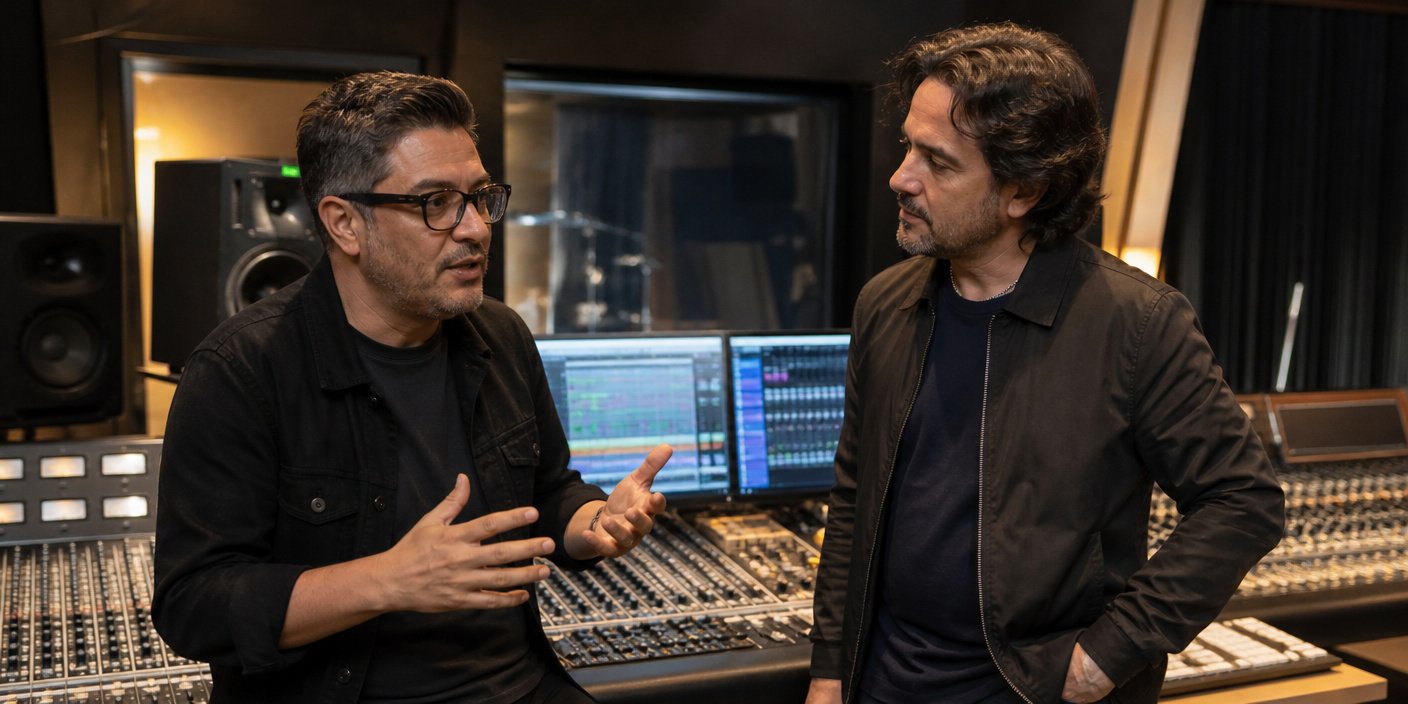
While Spain represents market maturity, Ecuador represents the high-potential frontier. The launch of ‘Sonido Distrito Sur’ is perhaps the most significant structural development in the Andean music industry this year. Spearheaded by acclaimed singer-songwriter Juan Fernando Velasco and industry veteran Ricardo Ordóñez, the venture is designed to bypass the traditional hurdles that have historically kept Ecuadorian artists from achieving sustained global visibility.
Sonido Distrito Sur is not a traditional record label; it is positioned as an ‘artist company partnership.’ This model is designed to maintain the creative integrity of the artist while leveraging the immense administrative and promotional machinery of Universal Music Group (UMG) and Warner Chappell Music. By aligning with these entities, Velasco and Ordóñez are effectively plugging the Ecuadorian music scene into a global distribution network that was previously inaccessible to all but the most prominent regional stars. The goal is clear: to cultivate a pipeline of Ecuadorian talent that can compete at a global scale, treating local artistry as a viable export commodity rather than a niche cultural product.
The Globalization of Local Sound: Strategic Convergence
The simultaneous growth in Spain and the institutional-grade launch in Ecuador are symptoms of the same disease: the thirst for authentic, non-English repertoire. Music industry executives are increasingly viewing Latin America not as a cluster of fragmented territories, but as a unified cultural powerhouse. The partnership between Sonido Distrito Sur, UMG, and Warner Chappell highlights a significant shift in corporate strategy. Major labels are moving away from the ‘top-down’ approach of trying to force-feed Western pop to local markets, opting instead to identify existing local ecosystems—like the one being built in Ecuador—and providing the infrastructure to scale them.
This convergence suggests that 2026 will be remembered as the year that ‘Latin’ stopped being a monolithic genre description and started becoming a distinct, high-growth asset class for investors and labels. The economic impact is measurable; by securing favorable licensing and publishing deals, local companies are retaining more equity in their masters and publishing rights, which in turn fuels further reinvestment into the local creative economy. This creates a virtuous cycle of growth that could eventually replicate the Spanish model in other Latin American nations.
Future Predictions and The Road Ahead
Looking toward the end of 2026 and into 2027, the industry can expect to see several key trends emerge from this foundation. First, we anticipate a rise in cross-border collaborations between Spanish and Ecuadorian artists, facilitated by the new professional networks currently being established. Second, the success of Sonido Distrito Sur will likely trigger a wave of similar ’boutique-to-major’ partnerships across Peru, Colombia, and Bolivia. Finally, with Spanish revenues currently at €181.4 million for the first half of the year, we project that the full-year figures will reach levels that force a complete reassessment of the Latin American region’s weighting in global music market reports.
As these initiatives mature, the focus will shift from simple distribution to long-term career development. The challenge for artists and executives alike will be maintaining cultural authenticity while navigating the pressures of global commercialization. If the current trajectory holds, the infrastructure put in place this year will support a new generation of Latin artists who are globally recognized, locally rooted, and financially empowered.
FAQ: People Also Ask
1. What is the significance of the €181.4 million revenue figure in Spain?
It represents a substantial growth milestone for the first half of 2026, demonstrating that Spain’s music market is rapidly maturing and that domestic streaming adoption is at an all-time high.
2. Who are the key figures behind Sonido Distrito Sur?
The company was founded by Ecuadorian singer-songwriter Juan Fernando Velasco and industry executive Ricardo Ordóñez.
3. How does the Sonido Distrito Sur partnership work?
It is a strategic artist company partnership that connects Ecuadorian talent to the global resources, distribution, and administrative infrastructure of major players like Universal Music Group and Warner Chappell Music.
4. Is this growth limited to just Spain and Ecuador?
While these two regions are the primary focus of this data, they are representative of a larger, systemic shift across Latin America where local music scenes are becoming global commercial players.