
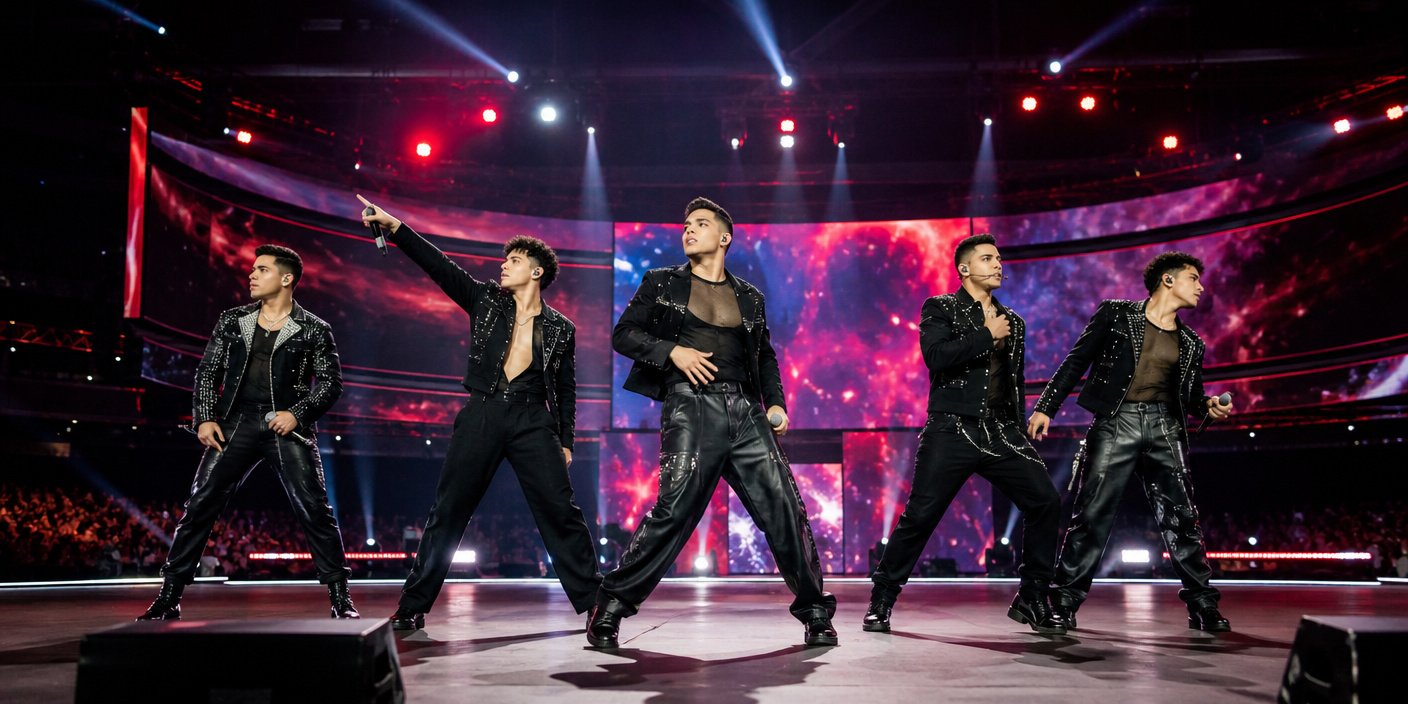
Santos Bravos has officially cemented their place in music history by becoming the first Latin American group to perform at KCON, the world’s largest Korean pop culture convention. This historic appearance at the prestigious event not only marks a career-defining moment for the band but also serves as a definitive signal that the barriers between the Latin music market and the global K-pop phenomenon are rapidly dissolving. As the convention continues to expand its reach, this inclusion suggests a strategic pivot toward a more inclusive, borderless definition of pop music that transcends traditional geographical and cultural silos.
Key Highlights
- Historical Precedent: Santos Bravos is the first Latin American musical group to take the stage at KCON, bridging two of the world’s most fervent fandoms.
- Strategic Fusion: The performance validates the growing intersection between Latin rhythms and K-pop production styles, reflecting broader industry trends.
- Global Market Expansion: KCON’s decision to host a Latin act highlights a move toward a truly globalized, interconnected pop music landscape.
- Future Outlook: This partnership sets a new blueprint for international touring and cross-cultural collaborations in the post-pandemic entertainment era.
The Cross-Cultural Shift: Why Santos Bravos Matters
The decision to feature Santos Bravos at KCON is far more than a simple booking; it is a calculated reflection of current consumption habits. For decades, the global music industry operated in fairly distinct silos: the K-pop Hallyu wave dominated Asian and select Western markets, while Latin pop remained a powerhouse in the Americas and Europe. However, the rise of short-form video content and globalized streaming algorithms has fundamentally altered how audiences discover music. Listeners are no longer categorized by the language they speak, but by the aesthetic and sonic “vibe” they prefer.
Santos Bravos, by entering the KCON ecosystem, is navigating this new reality. The group’s sound—a blend of high-energy percussion and melodic hooks that feel at home in both Reggaeton playlists and K-pop chart-toppers—exemplifies the new “borderless” philosophy. This is not merely about playing a stage; it is about the integration of marketing strategies, fan engagement techniques, and stage performance aesthetics that define both industries.
The KCON Transformation
KCON has long been the gold standard for K-pop immersion. By bringing in a Latin group, the organizers are acknowledging that their audience is no longer monolingual or monocultural. The convention is evolving from a K-pop specific event into a broader platform for international pop culture. This is a critical development for the Korean entertainment industry, which has been seeking sustainable ways to expand its footprint in Latin America—a region that has shown explosive growth in K-pop consumption over the last five years. By embracing Santos Bravos, KCON creates a symbiotic relationship: the band gains access to an elite, highly organized fan ecosystem, while KCON effectively diversifies its cultural relevance.
Musical Fusion and the New Production Paradigm
One of the most fascinating aspects of this collaboration is the technical crossover. K-pop is renowned for its synchronized choreography, high-concept visual music videos, and distinct production layering. Latin pop, particularly in the modern era, is defined by its infectious, dance-oriented rhythms and lyrical emphasis on romantic and party themes.
When these two worlds collide—as seen in the Santos Bravos set—we witness a unique evolution of pop. We are moving toward a period where the “K-pop style” of rigorous training and aesthetic precision is being applied to artists from various global backgrounds. The performance by Santos Bravos was widely noted for its polished choreography, which mirrors the standards of K-pop, fused with the organic, rhythmic charisma typical of the Latin scene. Industry analysts are already predicting that this “hybrid” performance model will become the standard for future international tours, as labels look to maximize the appeal of their artists across disparate, but increasingly overlapping, demographics.
Economic Implications and Digital Reach
From an economic perspective, the presence of Santos Bravos at KCON represents a significant opportunity for market penetration. Latin America is one of the fastest-growing regions for music streaming in the world. By integrating with KCON, the group is not just reaching the attendees at the venue; they are leveraging the massive digital infrastructure that KCON provides.
This partnership provides a case study for future talent managers: how to bridge the gap between regional success and global visibility. By participating in a high-profile, brand-heavy event like KCON, Santos Bravos has effectively bypassed traditional gatekeepers, proving that a dedicated, cross-continental fanbase can be mobilized through strategic, high-impact event appearances rather than just traditional radio play. The ROI on this performance will likely be measured not just in ticket sales, but in streaming spikes across South Korea, Japan, and the United States, proving the efficacy of this cross-continental marketing strategy.
FAQ: People Also Ask
1. Was Santos Bravos the only non-Korean act at this year’s KCON?
While KCON traditionally focuses on K-pop, the inclusion of Santos Bravos was a strategic standout. The event organizers have indicated a growing interest in diversifying the lineup to reflect the truly global nature of the music industry.
2. What does this mean for the future of KCON?
This move signals that KCON is evolving into a broader global music and culture festival. Expect to see more diverse international acts in future iterations, focusing on artists who bridge cultural gaps.
3. How did the audience react to a Latin group at a K-pop event?
Initial reports and social media analytics indicate a highly positive reception. The crossover appeal of high-production, dance-heavy music proved to be a natural fit for the K-pop audience, who are already accustomed to diverse, globalized musical trends.
4. Will this lead to more Latin and K-pop collaborations?
Yes, industry insiders are expecting a surge in collaborative tracks, cross-market touring, and co-produced events between Latin and Korean agencies, driven by the success of this milestone performance.