
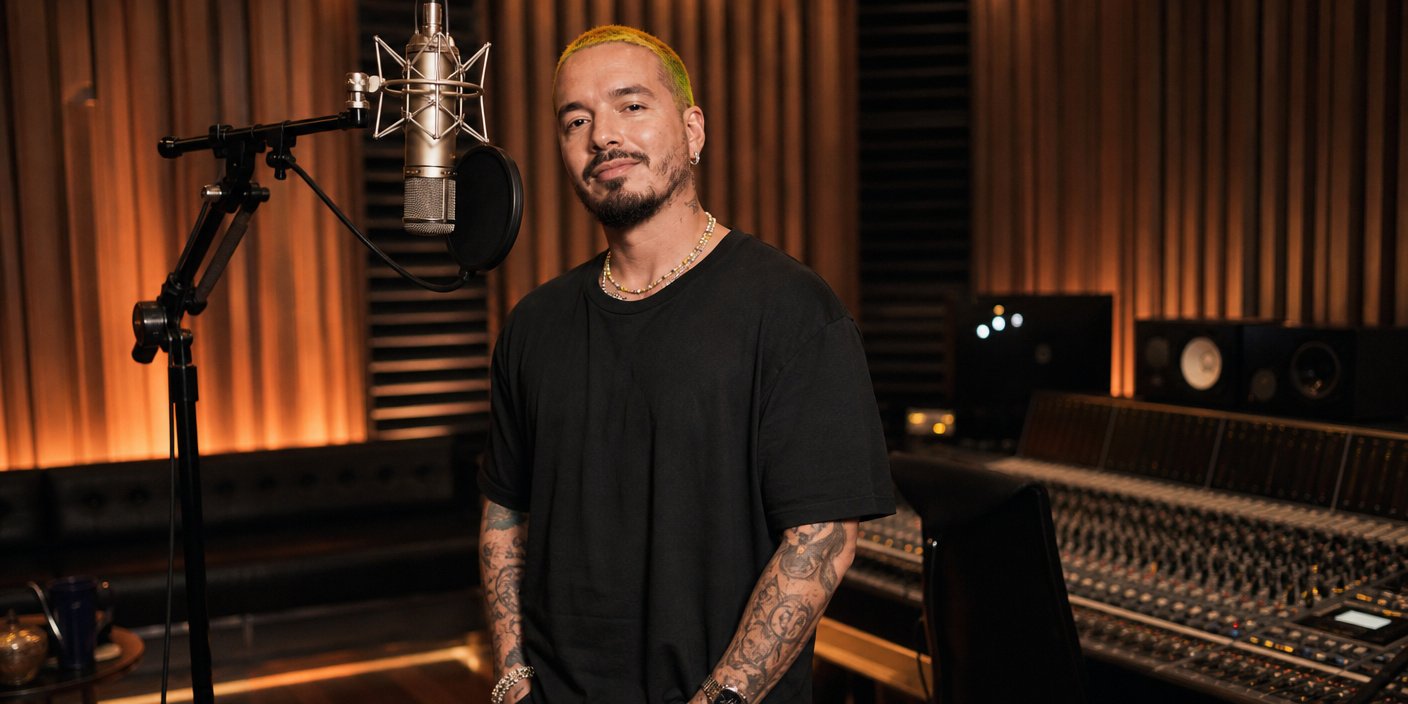
J Balvin has officially put to rest the long-standing industry narrative that Spanish-language artists must record music in English to achieve true global reach. In a recent interview, the Colombian reggaeton superstar addressed the evolution of the international music market, asserting that the success of his contemporaries—specifically Karol G and Bad Bunny—has irrevocably cemented the power of Spanish-language music on the world stage. For Balvin, the pressure to ‘cross over’ into English is a relic of the past, replaced by an era where authenticity, not assimilation, dictates the charts. “It’s our moment,” Balvin noted, underscoring that current global consumption patterns favor cultural integrity over linguistic adaptation.
Key Highlights
- J Balvin has confirmed that he has no intention to record a full-length album in English, citing the current global market as proof that the language barrier has been dismantled.
- The artist points to the massive, record-breaking success of Karol G and Bad Bunny as evidence that Spanish-language content is now a global standard, not a niche genre.
- The shift reflects a wider industry pivot where streaming platforms have democratized access, allowing Spanish-speaking artists to dominate global playlists without the need for traditional American radio ‘crossover’ strategies.
The New Era of Global Latin Dominance
For decades, the standard playbook for Latin American artists looking to conquer the international market involved a calculated ‘crossover’—recording singles or entire albums in English, often sacrificing the grit and nuance of their native sound to cater to US-based demographics. From the early 2000s wave featuring the likes of Shakira and Ricky Martin, who were pioneers in navigating these dual markets, the industry operated under a singular assumption: to be truly ‘global,’ you had to be bilingual.
J Balvin’s recent declaration signals that this era has not just evolved; it has effectively ended. The metrics support his confidence. In recent years, Bad Bunny’s album Un Verano Sin Ti held the title of the most-streamed album in Spotify history for an extended period, achieving massive revenue and touring success without relying on English-language tracks. Similarly, Karol G’s Mañana Será Bonito became the first all-Spanish-language album by a female artist to hit No. 1 on the Billboard 200. These are not statistical anomalies; they are indicators of a profound structural shift in how pop music is consumed.
The Impact of Streaming Algorithms
The fundamental driver behind this change is the decline of gatekeepers. Historically, American radio programmers and label executives determined which tracks reached global audiences. Today, streaming algorithms on platforms like Spotify, Apple Music, and YouTube are user-driven. When a listener in Tokyo, Paris, or Berlin engages with a reggaeton track by J Balvin or a ballad by Karol G, the algorithm promotes that content globally, regardless of the language. This has created a self-sustaining ecosystem where Spanish music is recommended to non-Spanish speakers based on sonic profile rather than lyrical understanding.
This shift has fundamentally altered the economic model for Latin artists. They no longer need the ‘validation’ of an English-language debut to fill arenas. J Balvin’s stance is a realization of this economic autonomy. When an artist can sell out stadiums from Mexico City to Milan while singing exclusively in Spanish, the commercial incentive to ‘dilute’ their brand for a specific US market evaporates.
Cultural Authenticity as a Currency
There is also a deeper, more sociological aspect to Balvin’s assertion. The modern global consumer places a premium on authenticity. Fans are increasingly savvy and connected; they recognize when an artist is operating outside of their comfort zone for commercial gain. By maintaining his artistic identity in Spanish, Balvin argues that he is providing a more genuine product.
This trend is reflected in the high-production values seen in contemporary reggaeton and Latin pop videos, which rival the budget and visual spectacle of any major US pop production. The ‘latinization’ of global culture is not merely a trend—it is a permanent recalibration of pop aesthetics. Artists are finding that they can export their local culture as a premium global product, rather than adapting it to fit a Western template.
The Future of Cross-Cultural Collaboration
While Balvin rejects the pressure to sing in English, he does not reject collaboration. The current landscape is defined by ‘hybridity’—an English-speaking artist featuring on a Spanish track, or vice-versa, without forcing the language change. This allows for cross-pollination without the erasure of identity. We are seeing a future where bilingualism is an artistic choice, not a commercial necessity. For J Balvin, sticking to his roots is not an act of defiance; it is a calculated business decision aligned with the reality of the 21st-century music economy. As he continues to dominate, the pressure on his peers to ‘translate’ their work seems destined to fade into history.
FAQ: People Also Ask
Has J Balvin ever recorded in English?
While J Balvin has collaborated with many English-speaking artists—such as Justin Bieber, Pharrell Williams, and Cardi B—he has maintained that his core discography and creative identity remain anchored in Spanish. He has never released a full-length solo album in English.
Why is Spanish music so popular globally right now?
The explosion of reggaeton, combined with the rise of streaming platforms that bypass traditional radio gatekeepers, has allowed Spanish-language music to reach a global audience organically based on tempo, production quality, and the viral nature of social media.
Who are the main figures driving this global shift?
Besides J Balvin, key figures leading this movement include Bad Bunny, Karol G, Rauw Alejandro, and Maluma. These artists consistently break records on charts like the Billboard Hot 100 and Spotify Global 200, proving that language is not a barrier to commercial success.
Does this mean there will be no more ‘crossover’ hits?
Not necessarily. While artists may not feel the ‘need’ to pivot for market access, collaboration remains a powerful tool for musical innovation. However, the motivation has shifted from ‘seeking entry’ to ‘artistic synergy.’