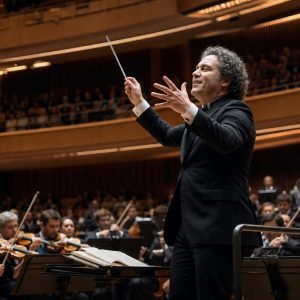
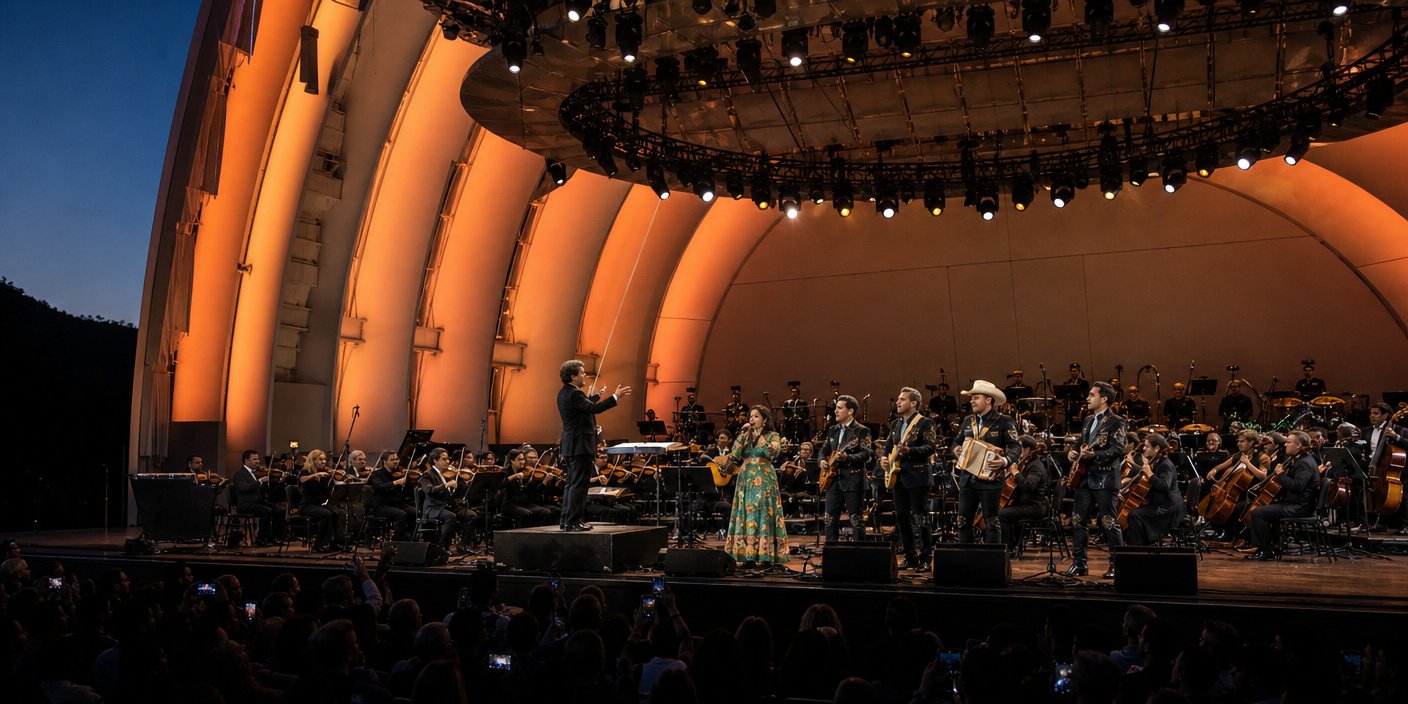
As the sun dipped behind the iconic shell of the Hollywood Bowl, the atmosphere was thick with a mixture of nostalgia and electric anticipation. The occasion was ‘Gustavo’s Fiesta,’ a cornerstone event in the twilight of Gustavo Dudamel’s tenure as Music & Artistic Director of the Los Angeles Philharmonic. This was not merely a concert; it was a triumphant summation of a philosophy that has defined Dudamel’s leadership in Los Angeles: the blurring of lines between the classical canon and the pulsating heart of Latin American musical heritage.
Key Highlights
- A Cultural Milestone: The ‘Fiesta’ served as a definitive celebration of the cultural fusion Dudamel championed throughout his years in Los Angeles, merging symphonic grandeur with regional Mexican traditions.
- Star-Studded Lineup: The evening featured monumental performances by the legendary Norteño icons Los Tigres del Norte and the incomparable Grammy-winning artist Lila Downs, bridging generations and genres.
- The Dudamel Legacy: The event underscored the Maestro’s mission to make the Los Angeles Philharmonic a community institution rather than an elitist enclave, cementing his impact on the city’s cultural fabric.
- Transition on the Horizon: As Dudamel prepares for his move to the New York Philharmonic in 2026, the Bowl event functioned as a symbolic ‘homecoming’ and farewell to the venue that arguably launched his American superstar status.
The Maestro’s Masterpiece: Defining the Dudamel Era
The ‘Fiesta’ at the Hollywood Bowl represents the culmination of a seventeen-year narrative. When Gustavo Dudamel first arrived in Los Angeles, he brought with him not only his baton but a vision of music as a social and communal catalyst. His tenure has been characterized by a relentless drive to democratize classical music, and nowhere was this more apparent than in his programming at the Hollywood Bowl. This specific ‘Fiesta’ event was the zenith of that mission. By inviting Los Tigres del Norte—the undisputed kings of Norteño music—to share the stage with the LA Philharmonic, Dudamel wasn’t just checking a box for ‘diversity’; he was making an artistic statement that the accordion and the bajo sexto belong in the same pantheon of prestige as the violin and the cello.
The Alchemy of Genre Fusion
The performance itself was a masterclass in musical diplomacy. Hearing the Los Angeles Philharmonic’s lush string sections swell behind the intricate, storytelling-driven lyrics of Los Tigres del Norte provided a sonic landscape that felt both deeply traditional and startlingly new. Lila Downs, known for her ability to weave indigenous Mexican rhythms with jazz, blues, and folk, added a layer of vocal complexity that resonated throughout the amphitheater. The synergy on stage was palpable. Dudamel, often seen as the kinetic force driving the orchestra, seemed to recede into the role of a facilitator, allowing the performers to take center stage, a testament to his humility and his genuine love for the genre.
The Cultural Impact on Los Angeles
The impact of Dudamel’s ‘Fiesta’ extends far beyond a single night at the Hollywood Bowl. Los Angeles is a city defined by its demographic diversity, and for years, the cultural institutions of the city struggled to mirror that reality. Dudamel changed the calculus. By creating these ‘Fiesta’ events, he ensured that the Hollywood Bowl wasn’t just a place for summer pops, but a vital hub for the city’s Latinx community. This has had long-lasting economic and social consequences, effectively rebranding the Philharmonic as an essential, rather than peripheral, aspect of the Angelenos’ identity. The economic impact of the tourism and local engagement generated by these high-profile, culture-bridging events has undoubtedly solidified the financial health of the organization during his tenure.
Preparing for the New York Chapter
As the final notes of the concert faded, the subtext of the evening was impossible to ignore: the looming departure. With Dudamel slated to assume the position of Music & Artistic Director of the New York Philharmonic in 2026, the ‘Fiesta’ felt like a closing of a significant chapter. While the move to New York represents a professional ascension to one of the world’s most prestigious musical posts, the ‘Fiesta’ reminded the audience of the unique emotional bond Dudamel forged with the people of Los Angeles. He didn’t just conduct an orchestra here; he became a part of the city’s rhythm. The challenge for the LA Philharmonic moving forward will be to maintain this momentum—the vibrant, inclusive spirit that Dudamel cultivated during his time at the Bowl.
FAQ: People Also Ask
Q: What is the significance of Gustavo Dudamel’s ‘Fiesta’ concerts?
A: The ‘Fiesta’ concerts were designed by Dudamel to highlight the rich musical traditions of Latin America, integrating them into the symphonic structure of the LA Philharmonic to better reflect the demographics of Los Angeles and democratize access to the orchestra.
Q: Who are Los Tigres del Norte and why were they included?
A: Los Tigres del Norte are legendary figures in Norteño music, famous for their socially conscious lyrics and deep influence on Mexican-American culture. Their inclusion was a deliberate choice to bridge the gap between classical music and popular regional genres.
Q: Is Gustavo Dudamel leaving the LA Philharmonic?
A: Yes, Gustavo Dudamel is concluding his tenure as the Music & Artistic Director of the Los Angeles Philharmonic. He is scheduled to begin his new role as the Music & Artistic Director of the New York Philharmonic in 2026.
Q: Why was this specific event at the Hollywood Bowl considered a ‘finale’?
A: While Dudamel has other commitments to fulfill, this event served as a major, high-profile celebration of his legacy at the Hollywood Bowl, the venue that has hosted many of his most significant, genre-bending collaborative performances throughout his tenure in LA.