
The 2026 Billboard Latin Music Awards, held on October 22, 2026, in the vibrant heart of Miami, proved once again why the genre remains a dominant force in the global cultural landscape. This year’s ceremony transcended the typical awards format, functioning instead as a high-octane showcase of the industry’s trajectory—blending the storied legacies of pioneers with the aggressive, innovative sounds of the new guard. From the moment the curtain rose at the venue, the atmosphere was electrified, signaling a year where Latin music moved beyond regional success to claim a central stake in the international pop culture zeitgeist.
Honoring the Architects of Sound
The night was anchored by the recognition of industry legends whose contributions have paved the way for the current explosion of Latin music. The most significant moment of the evening was the tribute to Rubén Blades, the salsa icon whose poetic lyricism and social commentary have defined the genre for decades. Seeing Blades take the stage, receiving a Lifetime Achievement honor, provided a necessary bridge between the roots of the music and the current chart-toppers. His presence served as a reminder that the commercial success seen today is built on a foundation of intellectual and rhythmic rigor. Complementing this, the ceremony also celebrated figures like Cristian Castro, who continues to command massive audiences, highlighting the enduring power of the classic Latin pop ballad even as urban and reggaeton sounds dominate the digital streaming platforms. The industry’s decision to honor both the traditional and the cutting-edge underscored a concerted effort to maintain a unified identity despite the genre’s massive internal diversification.
The Performance Showcase: A Masterclass in Visual Narrative
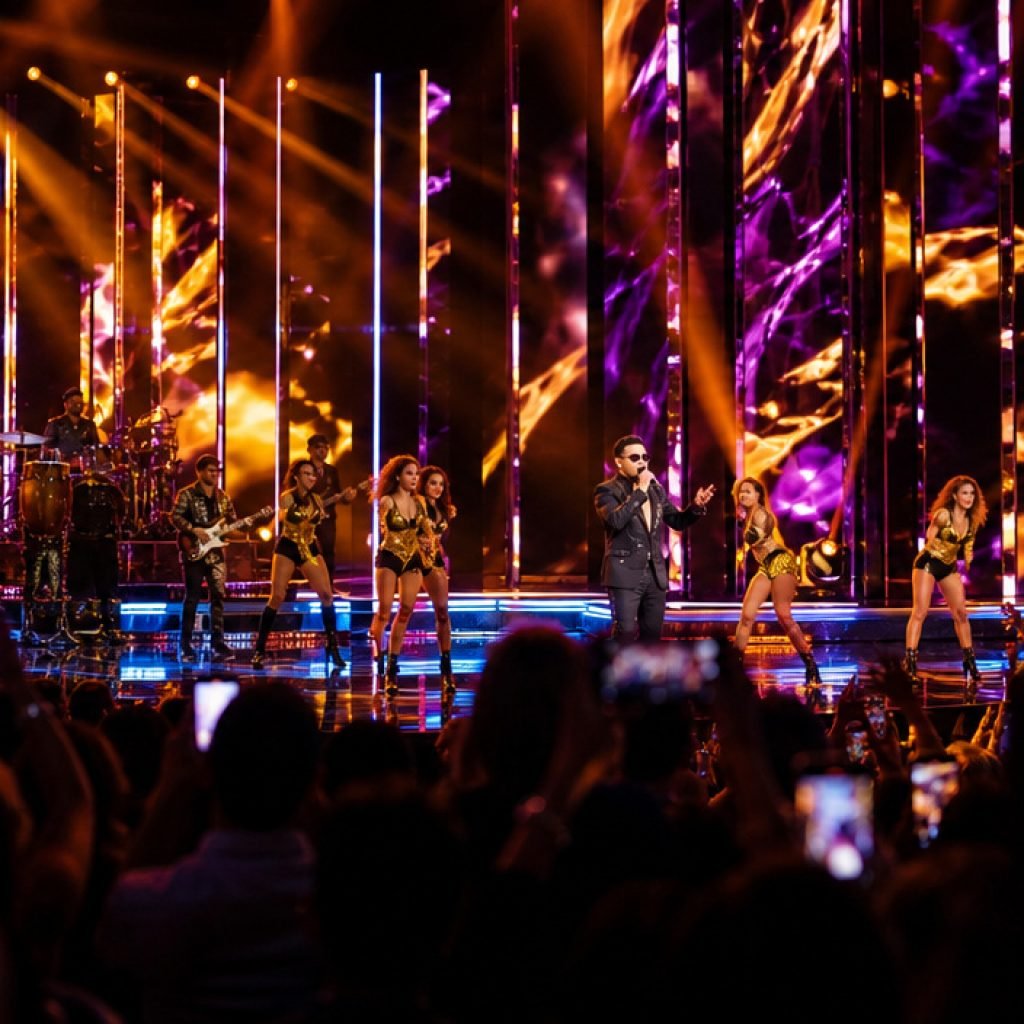
Performance-wise, the 2026 Billboard Latin Music Awards set a new benchmark for production value. Rosalía’s performance was arguably the emotional and artistic apex of the event. Leaning into the avant-garde aesthetic that has characterized her recent output, her set utilized complex, shifting stage geometry and minimalist choreography that emphasized raw vocal prowess over theatrical clutter. It was a stark contrast to the maximalist, pyrotechnic-heavy sets typical of recent years, signaling a shift toward ‘authentic’ live presentation. Alongside her, other notable performances provided the necessary kinetic energy to keep the crowd engaged. The stage design integrated augmented reality elements that allowed viewers watching from home to experience a three-dimensional depth that physical stage lighting alone cannot achieve, marking a technological milestone for the awards. The curation of these performances focused on storytelling—pairing unexpected artists for collaborations that transcended linguistic and sub-genre barriers, demonstrating the collaborative nature that defines the current Latin music ecosystem.
The Globalization of the Latin Sound
Beyond the glitz of the stage, the 2026 ceremony acted as a barometer for the massive economic and cultural expansion of Latin music. Industry analysts note that streaming figures for Latin content have surpassed previous quarterly projections, with non-Spanish speaking territories accounting for an increasingly larger share of listenership. This globalization has shifted the power dynamic of the Billboard charts. The artists celebrated in Miami are no longer just regional stars; they are touring juggernauts, selling out arenas in cities from Tokyo to London. This shift has forced the industry to invest more heavily in international marketing and cross-cultural distribution deals, which was a recurring theme in the discussions held by executives during the pre-show events. The financial impact of the 2026 ceremony itself on the Miami local economy—driven by tourism, hospitality, and media infrastructure—was estimated to be in the millions, cementing the city’s status as the mandatory headquarters for Latin entertainment.
The Future of Live Music Technology
The 2026 event also highlighted a significant evolution in production technology. Producers shifted away from traditional televised stage setups to a hybrid digital-physical format. By implementing high-fidelity spatial audio mixing, the organizers ensured that the broadcast experience matched the high-intensity energy of the live venue. Furthermore, the use of real-time data visualization during performances—such as displaying streaming metrics or fan engagement heatmaps behind the performers—provided a modern, digital-first context to the show. This integration of data and art reflects a broader trend: music is becoming an interactive product. For the artists, the challenge is now to produce music that resonates as strongly on a viral-video format as it does on a traditional radio wave. The 2026 awards show successfully proved that the industry is ready to bridge this gap, utilizing technology to foster deeper, more immediate connections between performers and their global fanbase.