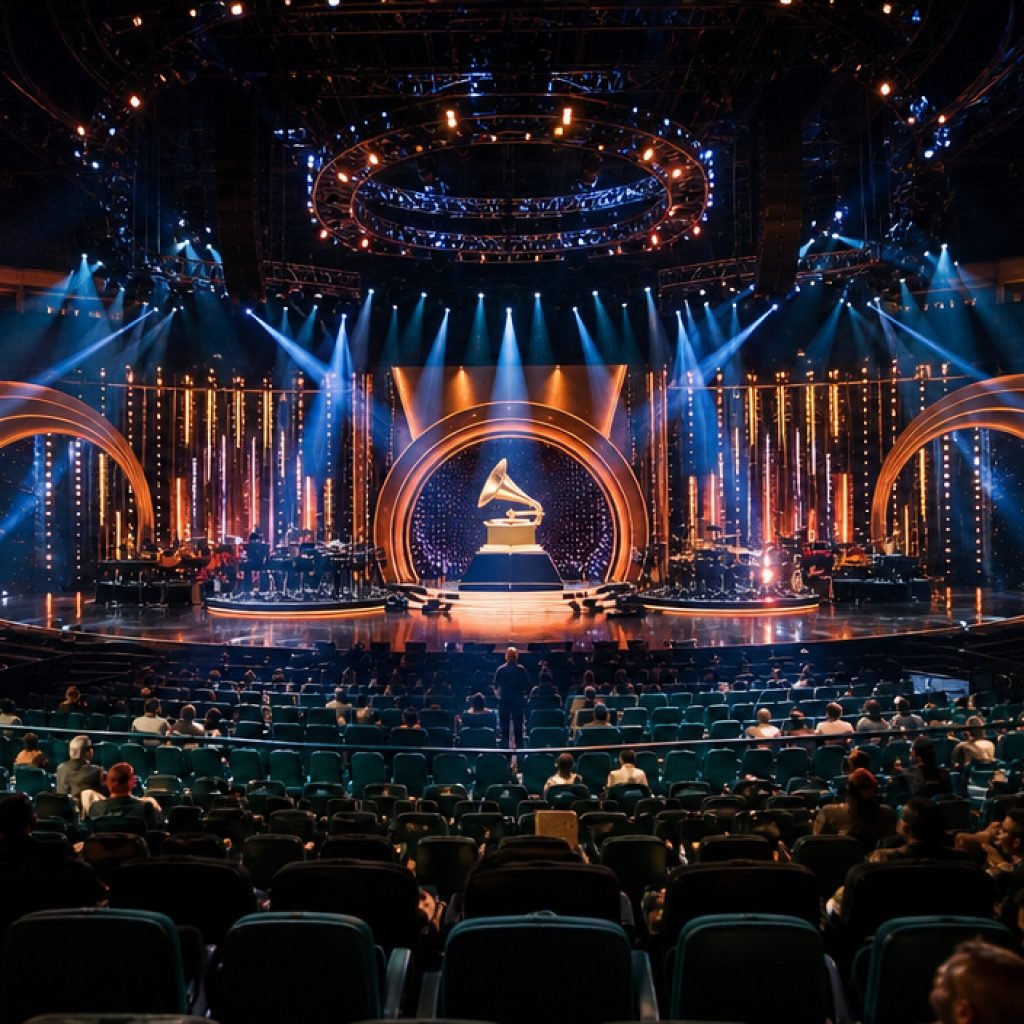

The Latin Recording Academy has officially pulled back the curtain on the first wave of performers for the 27th Annual Latin Grammy Awards, igniting anticipation for what is poised to be one of the most culturally significant nights in the industry. Scheduled to take place on November 12, 2026, in the glittering entertainment capital of Las Vegas, the event will feature a powerhouse lineup headlined by global superstars Anitta, Rosalía, and Daddy Yankee. This announcement marks a definitive moment for the Latin music sector, underscoring the Academy’s commitment to blending heritage with contemporary global trends.
The Academy’s Strategic Vision for 2026
The 27th Annual Latin Grammy Awards are shaping up to be more than just a ceremony; they represent a strategic convergence of generations and genres. By selecting Anitta, Rosalía, and Daddy Yankee as the initial headliners, The Latin Recording Academy is effectively bridging the gap between the pioneers who built the reggaeton and urban Latin foundations and the modern innovators who are currently defining the international pop landscape. This selection is not merely promotional—it is a calculated reflection of the industry’s current market trajectory, where genre-fluidity and cross-continental collaborations dominate streaming metrics and cultural discourse.
The Titans of Rhythm: An Analysis of the Headliners
To understand the magnitude of this lineup, one must look at the specific contributions of the featured artists.
Anitta has transcended her Brazilian roots to become a global pop phenomenon. Her ability to synthesize funk carioca with mainstream pop melodies has made her a crucial figure in the internationalization of Portuguese-language music. Her inclusion in the 2026 lineup signals that the Academy is continuing to prioritize inclusivity, ensuring that the “Latin” umbrella remains expansive enough to celebrate Portuguese and Spanish-speaking talent alike.
Rosalía, conversely, represents the avant-garde spirit of the awards. Her career has been defined by the deconstruction and reconstruction of traditional flamenco. By fusing experimental electronic production with Spanish folk roots, she has set a benchmark for artistic integrity that resonates with both critics and commercial audiences. Her performance is expected to be a high-concept visual and auditory affair, likely pushing the technical boundaries of what is possible on the Latin Grammy stage.
Daddy Yankee, often cited as the ‘King of Reggaeton,’ provides the essential historical weight to the evening. His participation is significant, as it acknowledges the foundational role his sound played in establishing the urban genre as a global powerhouse. For many, seeing him on the 2026 stage is a testament to the longevity of the movement he helped spearhead. His presence connects the current generation of listeners to the roots of the music that now dominates global charts.
The Economic Pulse: Why Las Vegas Remains the Latin Music Capital
Las Vegas has once again been chosen as the host city for the 27th Annual Latin Grammy Awards, a decision that speaks to the robust infrastructure the city provides for large-scale, high-production events. Beyond the spectacle, the choice of Las Vegas is rooted in economic synergy. The Latin Grammy Awards have historically served as a massive revenue driver for the city, bringing in thousands of industry professionals, media personnel, and tourists. The ‘Latin Music Week’ events leading up to the main ceremony create an ecosystem where record labels, tech companies, and streaming giants converge to facilitate deals that will shape the music industry for the coming fiscal year.
Furthermore, the venue selection allows for the sophisticated lighting, stage design, and acoustic engineering that artists like Rosalía and Anitta require. Modern award shows are increasingly treated as cinematic experiences; the Las Vegas strip offers the necessary production facilities to handle the complex, multi-stage setups required for such high-profile performances.
Production and Performance: The Tech Behind the Show
Behind the scenes, the 2026 production team is reportedly focusing on ‘immersive broadcast integration.’ This implies that the viewing experience for audiences at home will be enhanced through improved augmented reality (AR) overlays and localized sound mixing that brings the live energy of the venue directly to the listener. As streaming remains the primary consumption method for Latin music, the Academy is under pressure to ensure that the broadcast does not feel like a static event but rather an interactive, shareable digital moment. The interplay between the performers—who are natively digital-first in their marketing—and the broadcast production is expected to be a focal point of the night.
Looking Ahead: The Future of the Latin Grammys
As we look toward November 12, the conversation is already shifting toward what this performance wave says about the future of the awards. There is a palpable shift toward celebrating ‘crossover’ artists—those who do not merely perform in one language or style. The inclusion of Anitta, Rosalía, and Daddy Yankee suggests that the Latin Grammy Awards are no longer just a regional celebration but a premier global event on par with the Grammys or the Brit Awards. The challenge for the Academy moving forward will be to maintain this balance of commercial viability and artistic recognition as the Latin music market continues its unprecedented global expansion. The anticipation surrounding this first wave of performers is high, and if the Academy’s track record is any indication, the 27th annual ceremony will likely set new benchmarks for viewership and social media engagement.