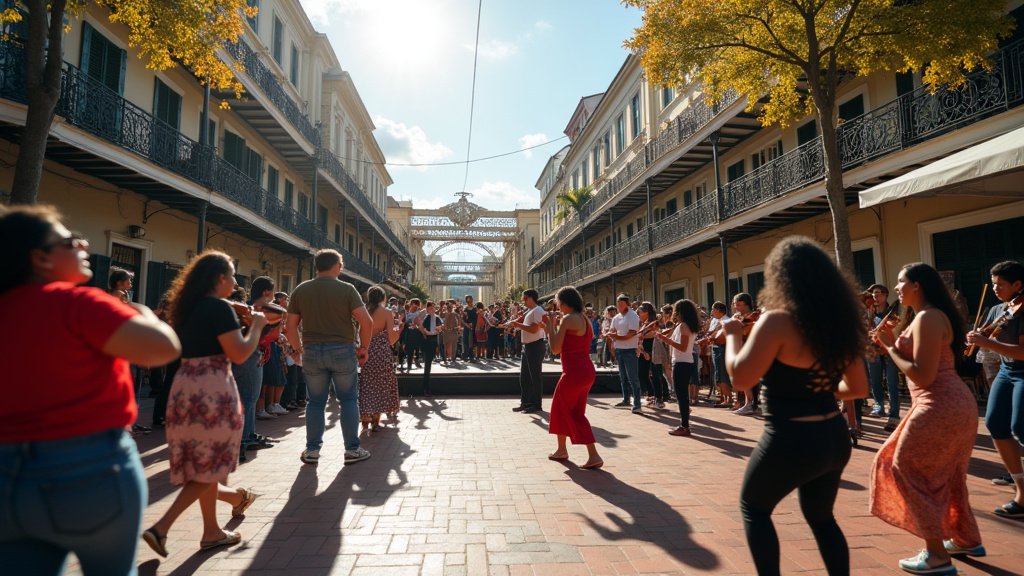
New Orleans is preparing to host a significant cultural convergence this autumn as the fourth annual Dominican NOLA Fest arrives on October 17, 2026. This year’s installment promises to be the most ambitious iteration yet, serving as a dynamic platform for cultural diplomacy and artistic exchange between the Dominican Republic and the Crescent City. With free admission extended to the public, the festival creates an accessible environment for community engagement, inviting attendees to immerse themselves in the deep-rooted similarities and distinctive differences that define both the Caribbean and Louisiana spirits. From the kinetic energy of bachata dance to the formal elegance of classical music, the festival underscores the growing recognition of New Orleans as a focal point for international cultural appreciation.
Key Highlights:
- Date: The event is officially scheduled for October 17, 2026, in New Orleans.
- Admission: The festival remains fully free and open to the public, emphasizing inclusivity and cultural accessibility.
- Featured Performance: A visiting juvenile orchestra from the Dominican Republic will take the stage, highlighting youth development in classical and contemporary music.
- Interactive Experience: Attendees can participate in dedicated bachata dance workshops, fostering a hands-on connection to Dominican dance traditions.
- Cultural Mission: The event aims to strengthen the diplomatic and cultural bonds between New Orleans and the Dominican Republic, building on a four-year tradition of partnership.
Bridging Hemispheres: The Cultural Synthesis of NOLA and the Dominican Republic
The Historical Undercurrent of Caribbean-Gulf Relations
To understand the significance of the Dominican NOLA Fest, one must first appreciate the long-standing, albeit often overlooked, relationship between New Orleans and the broader Caribbean basin. For centuries, the Gulf South and the Caribbean have functioned as mirrors to one another—sharing colonial histories, trade routes, and, most importantly, deeply hybridized musical heritages. The 2026 festival is not merely a celebration; it is a continuation of this historical dialogue. By inviting a visiting juvenile orchestra from the Dominican Republic, the organizers are highlighting the shared European and African roots that define both Dominican classical training and the jazz-centric education systems prevalent in New Orleans.
This specific initiative bridges the gap between generations. When young musicians from Santo Domingo stand alongside the musical landscape of New Orleans, they are not simply performing; they are participating in a trans-hemispheric conversation. This educational exchange is designed to provide young artists with a global stage, demonstrating how music acts as a universal language that transcends geopolitical borders. The inclusion of these young performers is a strategic choice, ensuring that the legacy of this cultural exchange is passed down to the next generation of creatives.
The Rhythmic Architecture of Bachata
Beyond the orchestral performance, the festival anchors itself in the visceral, rhythmic culture of the Dominican Republic. Bachata, a genre born from the rural marginalized communities of the DR, has evolved into a global phenomenon. At the 2026 festival, the bachata dance workshops serve as a secondary focal point. For the New Orleans community, these workshops offer more than just a lesson in movement; they provide a physical entry point into the Dominican worldview.
Dance, in this context, is an act of storytelling. The workshops are structured to explain the nuances of the genre—the interplay between the lead and the follower, the subtle percussion patterns, and the emotional gravity that defines the music. By embedding these workshops within the festival, the organizers ensure that the cultural experience is participatory. Attendees are not just observing Caribbean culture from a distance; they are physically internalizing its rhythms and social structures, thereby deepening the impact of the cultural ties being celebrated.
Future Projections and Economic Impact
Cultural Diplomacy as an Economic Driver
As the festival enters its fourth year, analysts are beginning to observe the secondary economic impacts of such cultural gatherings on the local New Orleans economy. While the event offers free admission, the ripple effect on local hospitality, tourism, and gastronomy is palpable. Events that foster international connection often serve as a catalyst for future tourism. When international groups—like the visiting juvenile orchestra—arrive in New Orleans, they generate a ‘soft power’ effect, where the city is perceived not just as a hub for American jazz, but as a gateway to broader, international artistic movements.
Looking forward, stakeholders are examining whether this event can be scaled to support year-round cultural exchange programs. The goal is to move beyond a one-day festival and toward a permanent ‘cultural corridor’ between the Caribbean and the Gulf. If successful, the Dominican NOLA Fest could serve as a model for other cultural festivals in the region, proving that targeted, high-quality, free cultural programming can elevate a city’s global standing while strengthening local community identity.
Sustainability of the Partnership
Sustainability is the final, crucial component of the 2026 planning committee’s strategy. By securing the commitment of international participants and local New Orleans sponsors, the festival organizers are creating a resilient framework for future iterations. The challenge for the upcoming years will be to maintain the balance between rapid growth and the intimate, authentic feel that characterizes the event. As the festival gains visibility, the demand for international participation will likely increase, requiring a more robust logistical infrastructure. However, if the current trajectory holds, the Dominican NOLA Fest is well-positioned to become a permanent fixture in the New Orleans calendar of major cultural events.
FAQ: People Also Ask
Q: Is there an admission fee for the 2026 Dominican NOLA Fest?
A: No, the festival offers free admission to the public, maintaining its commitment to community access and cultural enrichment.
Q: What is the main musical attraction at this year’s festival?
A: The headline performance features a visiting juvenile orchestra from the Dominican Republic, highlighting young international musical talent.
Q: Besides the concert, what interactive activities are available?
A: The festival includes dedicated bachata dance workshops, allowing attendees to learn the technical and cultural aspects of the popular Dominican dance style.
Q: Why is this festival important for New Orleans?
A: The festival strengthens cultural and diplomatic ties between New Orleans and the Dominican Republic, celebrating shared Caribbean and Gulf roots and fostering international artistic exchange.