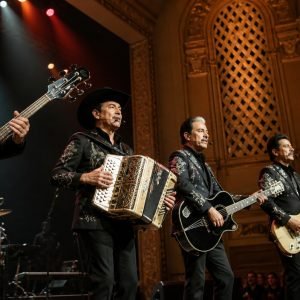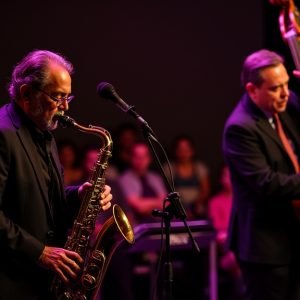
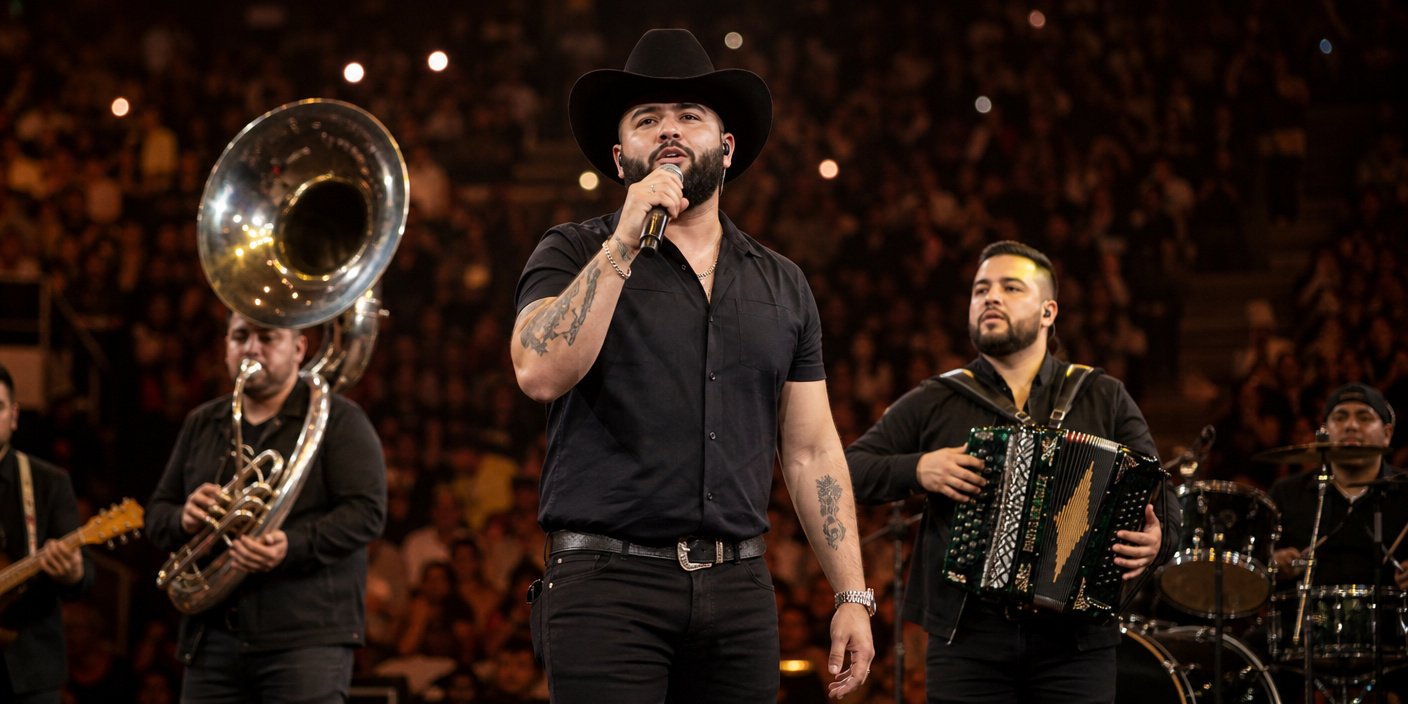
The global music landscape has witnessed a tectonic shift in the last twenty-four months, with Regional Mexican music surging from niche, localized playlists to the top of the Billboard Hot 100 and Spotify’s Global 50 charts. At the epicenter of this cultural phenomenon stands Carín León, the Hermosillo-born singer-songwriter who has become a vocal advocate for preserving the genre’s DNA. As the industry scrambles to capitalize on this explosion, León offers a counter-intuitive warning to his peers: the path to sustainable, worldwide dominance is not paved with crossover compromises, but by leaning harder into Mexican identity.
Key Highlights
- Authenticity as Currency: León asserts that the genre’s unprecedented growth is directly linked to artists refusing to dilute their sound for Anglo or international markets.
- The “Imitation” Trap: He argues that chasing generic, international production styles risks alienating the core fanbase that propelled Regional Mexican music to the mainstream in the first place.
- Global Resonance: Despite being labeled “Regional,” the music is finding massive audiences in non-Spanish speaking territories, proving that specific cultural markers are universal hooks.
- The Hermosillo Effect: León credits his specific upbringing and stylistic roots in Sonora as the “greatest musical weapon” in his arsenal.
The Authenticity Mandate: Rewriting the Crossover Rulebook
For decades, the standard playbook for a Latin artist aiming for global superstardom involved a specific, often reductive, process: pivot toward American pop production, collaborate with English-language superstars, and polish away the “rough edges” of the original regional sound. Carín León is arguably the most prominent voice currently dismantling this strategy. Speaking on the surge of Regional Mexican music—a genre spectrum that includes banda, norteño, and the rapidly evolving corridos tumbados—León maintains that the audience’s appetite for “realness” is what actually drives the numbers.
In his view, the industry is seeing a correction. Listeners, fatigued by the homogeneity of global pop, are gravitating toward the visceral storytelling, the specific instrumentation (tuba, accordion, bajoloche), and the lived-in narratives of Mexican life. When an artist like León steps onto a stage, he does not perform a “diluted” version of Mexican music; he performs the music of his reality in Hermosillo. This refusal to compromise has not hindered his growth; it has accelerated it. By staying “more Mexican than ever,” he taps into a vein of cultural pride that resonates as much in Los Angeles and Madrid as it does in Sinaloa or Sonora.
The Hermosillo Influence: Roots as a Catalyst
The geography of his sound is not a coincidence. Hermosillo, the capital of the Mexican state of Sonora, has become a hotbed for the current evolution of the genre. Unlike the traditionalist approach that strictly adheres to the “classic” sound, the current crop of artists from the region are experimentalists. They are weaving influences from classic rock, country, and soul into the traditional accordion-heavy arrangements.
León’s philosophy is rooted in this local hybridity. He argues that the “musical weapon” is not just the culture itself, but the willingness to modernize it without abandoning the heritage. When he performs, he is representing a specific identity. For him, this identity is not a barrier to entry for international fans; it is the unique value proposition. If the music sounded like everything else on the radio, he argues, there would be no reason for a listener in Europe or Asia to stop and listen.
Resisting the “International” Compromise
There is an undeniable economic pressure to homogenize. Major labels often look at the skyrocketing streaming numbers for Regional Mexican tracks—often reaching billions of streams for single albums—and see a product that needs to be “scaled” for the global market. León’s warnings against this are pragmatic. He observes that when an artist strips away the, for example, distinctive rasp of a singer or the specific rhythm of a norteño beat to fit into a “Latin Pop” mold, they lose the very thing that made them viral.
This is a data-backed assertion. The rise of artists like Peso Pluma, Junior H, and León himself confirms that the global market is no longer requiring “Americanization” to digest Latin music. Instead, the market is demonstrating a voracious appetite for cultural specificity. The success is rooted in the fact that the listeners are curious about the culture, not looking for a sanitized reflection of their own.
Beyond the Charts: Economic and Cultural Resonance
The economic impact of this shift is profound. Concert ticket sales for Regional Mexican artists in the United States have seen a 300% growth in tertiary markets where these artists were previously non-existent. This isn’t just a trend; it is a fundamental shift in the global music economy. By refusing to chase international imitation, León and his contemporaries are essentially forcing the industry to come to them, rather than the other way around. This leverage allows them to maintain creative control, set higher touring standards, and ultimately, dictate the terms of their own legacy.
Looking toward the future, the longevity of this movement depends on the continued refusal to trade authenticity for convenience. If artists maintain the “more Mexican than ever” ethos, they secure their spot in the canon of global music history. If they succumb to the pressure to homogenize, they risk becoming a brief, statistical anomaly.
FAQ: People Also Ask
Q: What is the defining characteristic of the “Regional Mexican” sound currently topping charts?
A: It is a diverse spectrum, but the current wave is defined by the fusion of traditional instruments like the tuba, accordion, and tololoche (or upright bass) with modern, aggressive lyrical themes often rooted in corridos tumbados and banda.
Q: Why does Carín León believe ‘authenticity’ is a business strategy?
A: León believes that global listeners are currently seeking unique cultural experiences and ‘real’ narratives. By staying authentic, artists provide a unique product that cannot be replicated by generic pop music, thereby capturing listener loyalty and high streaming engagement.
Q: Is ‘Regional Mexican’ music limited to Mexico?
A: Absolutely not. While the roots are firmly in Mexico, the consumption is global. Key markets now include the United States, Colombia, Spain, and Chile, with a rapidly growing fanbase in non-Spanish speaking territories interested in the fusion of genres.
Q: How has the role of streaming impacted this genre?
A: Streaming has democratized access, allowing Regional Mexican music to bypass traditional radio gatekeepers who previously favored pop or reggaeton. This has allowed the raw, regional sound to reach millions of listeners organically, proving the strength of the grassroots fanbase.