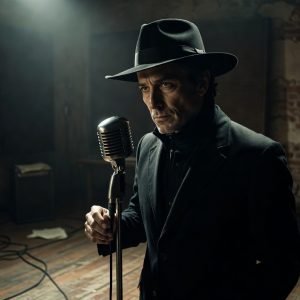
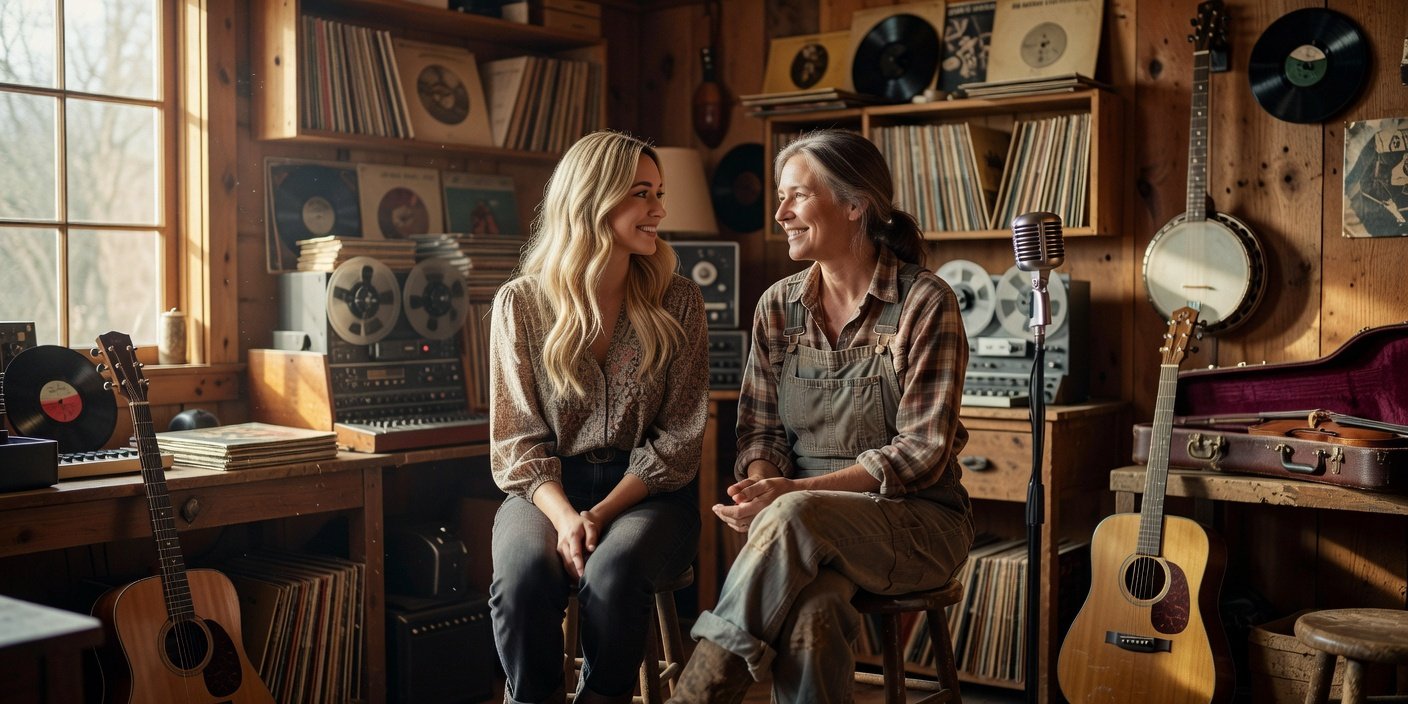
In an era of rapid-fire music consumption where ‘new’ often implies ‘invented from scratch,’ a refreshing counter-narrative is taking hold. Artists like Veronique Medrano, Kacey Musgraves, and Gillian Welch are explicitly choosing to let their roots show, rejecting the industry’s tendency to embrace buzzy newcomers as if they emerged in a vacuum. By actively referencing the musical and cultural lineages that informed their craft, these artists are not just paying homage; they are actively working to preserve the history of genres like Americana, country, and Tejano, pushing back against the erasure of the predecessors who built the blueprints they currently walk upon.
Key Highlights
- Rejecting the ‘First’ Narrative: Musicians are increasingly challenging the industry-wide habit of claiming ‘pioneer’ status, which often erases the history and contributions of those who came before.
- The Tejano-Americana Bridge: Veronique Medrano serves as a focal point for this movement, bridging regional Mexican styles with country traditions to honor legends like Freddy Fender.
- Preservation vs. Innovation: Kacey Musgraves and Gillian Welch demonstrate that honoring deep-rooted traditions actually enhances, rather than restricts, contemporary artistic innovation.
- Cultural Transparency: The trend signals a shift toward radical transparency in creative inspiration, ensuring younger generations understand the collaborative nature of musical evolution.
Reclaiming the Lineage: Why Origins Matter in Modern Music
The music industry is a machine designed to prioritize the ‘now.’ It feeds on the cycle of discovery, hype, and inevitably, the fall from grace for those who cannot sustain the impossible pace of virality. However, a byproduct of this obsession with the immediate is the persistent erasure of history. When a performer proclaims themselves the ‘first’ to achieve a specific sound or milestone—a claim often left unchecked by hurried media cycles—they inadvertently, or sometimes intentionally, bury the generations of musicians who cultivated that soil long before them. This is the ‘audacity of the claim,’ as observed by music writers tracking these shifts. It is a form of cultural gaslighting that this new wave of artists, led by the likes of Medrano, Musgraves, and Welch, is actively dismantling.
The Trap of the ‘Vacuum’ Myth
The idea that any artist emerges fully formed, sans influence, is the ultimate myth of the modern pop landscape. When we analyze the career trajectories of these three distinct artists, we find a shared philosophy: acknowledgement is an act of defiance. By explicitly connecting their work to the past, they challenge the audience to look beyond the playlist algorithm. For Veronique Medrano, this manifests in her deliberate synthesis of Tejano influences with the storytelling bedrock of country music. When she performs a track like Freddy Fender’s ‘Wasted Days and Wasted Nights,’ she isn’t just covering a song; she is re-contextualizing it with a syncopated cumbia feel, effectively forcing her audience to acknowledge the cross-pollination that defined her sound.
Kacey Musgraves and the Evolution of Modern Country
Kacey Musgraves has long been a master of this narrative-weaving technique. Throughout her discography, she has navigated the space between traditional country tropes and modern pop sensibility. However, her recent work indicates a deeper dive into the roots of the genre. She doesn’t hide her influences—from the deep-cut songwriting traditions of Nashville to the cosmic country aesthetic popularized by the likes of Willie Nelson. By wearing these influences on her sleeve, Musgraves validates a lineage that the mainstream country industry has often tried to sanitize or commodify. Her approach provides a roadmap for how modern artists can occupy the mainstream while staying tethered to the underground traditions that gave them their substance.
Gillian Welch: The Sanctity of the Deep Root
If Musgraves acts as the bridge between pop and traditional country, Gillian Welch acts as the guardian of the soil. Welch has built a career defined by her unwavering commitment to the ‘old, weird America’—a term popularized by Greil Marcus. For Welch, the roots are not just an accessory; they are the entire architecture of her work. By maintaining the stark, sparse, and haunting traditionalism of her sound, she serves as a constant reminder that the ‘key changes’ we hear in modern music are often variations on themes that have existed for centuries. Her work proves that there is a vast, attentive audience for music that does not rely on trends but instead relies on the endurance of cultural identity.
Secondary Angle: The Economic Impact of Musical Erasure
There is a tangible economic dimension to this cultural reclamation. When history is erased, the financial and structural support for the progenitors of these sounds evaporates. By failing to credit the originators of country-Tejano fusions or folk-Americana storytelling, the industry effectively denies these artists their due royalties and professional longevity. The movement led by Medrano, Musgraves, and Welch is, in a very real sense, a campaign for economic equity. When artists name-check their influences, they bring attention, and by extension, potential revenue and renewed interest, to those who helped build their path. It is a redistribution of cultural capital that the music industry desperately needs to facilitate.
Secondary Angle: The Historical Context of the ‘Tejano-Country’ Cross-Pollination
To understand the significance of Veronique Medrano’s work, one must look at the historical friction and fusion between Texas Tejano and Nashville country. These two massive musical forces have existed in the same geographic space for decades, often isolated by rigid industry borders. Medrano’s approach is not just an artistic choice; it is a historical correction. By bringing these sounds together, she is reminding listeners that the ‘borders’ of genre are arbitrary constructs, often drawn by corporate interests rather than the musicians themselves. Exploring this history allows fans to appreciate the complexity of regional music scenes that are rarely covered in mainstream music journals.
Secondary Angle: Predicting the Future of ‘Roots-First’ Marketing
As this trend gains momentum, we should expect to see a shift in how major labels approach artist branding. The ‘self-made’ archetype is losing its luster, replaced by the ‘collaborator with history’ persona. In the coming years, marketing campaigns will likely pivot from ‘discover this new voice’ to ‘understand the lineage this voice represents.’ This change could lead to more robust archival projects, better-documented liner notes, and a more literate listening public. It signals a future where an artist’s value is determined not by how unique they are, but by how well they engage with the collective tapestry of human creativity.
FAQ: People Also Ask
Q: Why is it important for artists to cite their musical influences?
A: Acknowledging influences prevents the ‘erasure’ of genre history and ensures that the creators who paved the way receive the cultural and economic recognition they deserve.
Q: What is the significance of the Tejano-Country fusion mentioned in the article?
A: It challenges the rigid genre boundaries often enforced by the mainstream music industry, highlighting the long-standing cultural and geographic overlap between these two distinct but related American musical traditions.
Q: How does this ‘roots’ movement affect the average listener?
A: It encourages deeper engagement with music, moving listeners beyond the algorithmic ‘surface level’ and into a richer exploration of the cultural history and cross-genre evolution of the sounds they enjoy.
Q: Is this trend limited to the country and Americana genres?
A: While this article focuses on those genres, the philosophy of ‘letting your roots show’ is a growing sentiment across many sectors of the music industry, as artists in hip-hop, electronic, and pop are increasingly transparent about their predecessors.