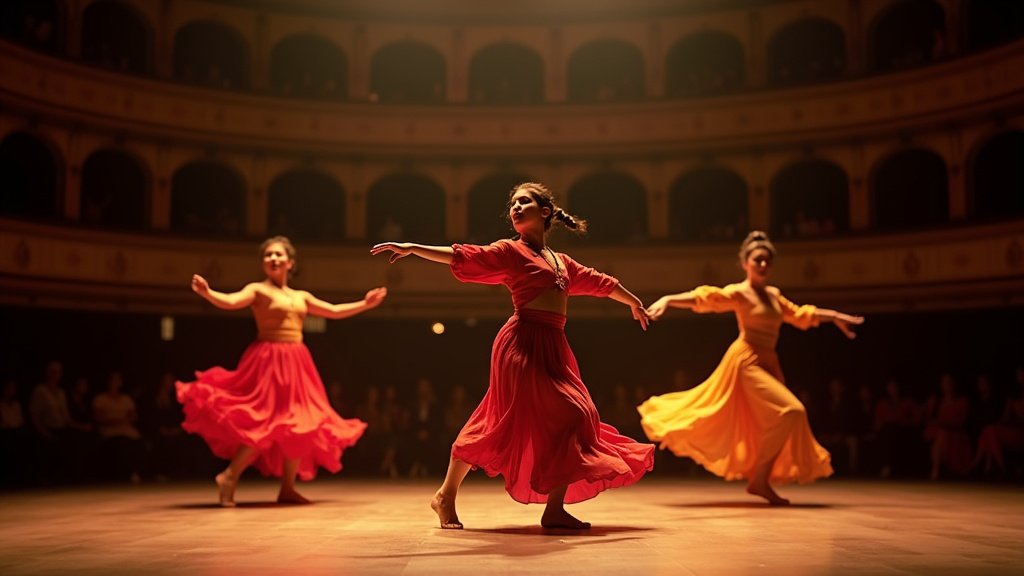
The “Colors of Love” multicultural music and dance variety show made its highly anticipated return to the Center Stage Theater this week, reaffirming its status as a vital touchstone for Santa Barbara’s performing arts community. As the lights dimmed and the curtain rose, the production offered a masterful curation of global traditions, blending the percussive intensity of Flamenco, the rhythmic joy of Latin dance, and the intricate, emotional depth of Argentine Tango. By prioritizing local talent and diverse cultural expressions, the event provided a necessary reminder of the theater’s unique ability to foster connection in an increasingly digital world.
Key Highlights
- Production Return: “Colors of Love” returned to the Center Stage Theater, revitalizing local interest in multicultural dance showcases.
- Diverse Repertoire: The program featured a rigorous selection of dance forms, specifically highlighting the technical precision of Argentine Tango, the spirited energy of Latin styles, and the traditional soul of Flamenco.
- Venue Significance: The Center Stage Theater served as the anchor for the event, providing an intimate setting that allowed the audience to witness the nuanced expressions of the performers up close.
- Community Engagement: The show successfully bridged generational and cultural divides by emphasizing the universal language of rhythm and movement.
The Rhythmic Pulse of Santa Barbara’s Multicultural Scene
The return of “Colors of Love” to the Center Stage Theater was not merely an event; it was a cultural statement. In a region often dominated by large-scale touring productions or static cinematic experiences, this variety show provided a kinetic, living, and breathing alternative. The production serves as a testament to the thriving, yet often quiet, ecosystem of local dance schools, choreographers, and musicians who dedicate their lives to preserving traditional art forms while experimenting with modern fusion.
The Anatomy of the Performance: Flamenco to Tango
Each segment of the show was meticulously crafted to honor the heritage of the dance form being presented. Flamenco, often described as a raw expression of the soul, commanded the stage with its complex footwork and rhythmic handclapping, or palmas. The performers demonstrated the quintessential ‘duende’—the height of emotion and authenticity that defines the art form. This was masterfully contrasted by the introduction of Argentine Tango. Unlike the more upbeat social ballroom styles, the Tango segment focused on the dialogue between partners. The tension, the sharp pivots, and the melancholic embrace provided a narrative depth that resonated throughout the theater.
Latin dance numbers followed, serving as the connective tissue of the evening. These performances were marked by high-octane energy, vibrant costumes, and a relentless forward momentum that engaged the audience directly. By alternating between these distinct styles, the production team created a dynamic arc, ensuring that the show never lingered too long in one emotional register, keeping the energy levels consistently high.
The Role of the Center Stage Theater
Geography matters in the arts. The Center Stage Theater, known for its intimate acoustics and layout, played an unsung hero role in this production. Larger venues often create a barrier between the performer and the spectator; however, the Center Stage configuration demands a level of honesty. There is nowhere to hide on such a stage. This limitation became an advantage for “Colors of Love,” allowing the audience to hear the intake of breath, the striking of a heel against the floor, and the subtle communication between dancers. This proximity creates a shared experience that is becoming increasingly rare in live entertainment.
Building Community Through Movement
One of the most compelling aspects of the “Colors of Love” showcase is its commitment to inclusivity. The show functions as an incubator for local talent, bringing together performers from various dance schools across the Santa Barbara region. This collaborative environment is essential for the health of the local arts economy. When dancers from a Flamenco studio collaborate with Tango musicians, it strengthens the network of the arts community, leading to future projects and cross-pollination of ideas. This show is more than a one-night event; it is a catalyst for the creative economy in the region, keeping local venues viable and local artists employed.
Secondary Angles: Future Trajectories
Looking forward, the success of this event raises interesting questions about the future of community-driven variety shows. First, the success of “Colors of Love” suggests a shift in audience preferences toward ‘curated intimacy’—shows that offer high production quality without the impersonal nature of stadium-sized tours. Second, there is a clear opportunity for the integration of digital education. As these shows gain traction, there is potential for the theater to leverage digital platforms to stream rehearsals or workshops, further cementing the bond between the audience and the craft. Finally, the economic impact of such events should not be underestimated. By drawing crowds to the theater, these productions drive revenue to surrounding local businesses, from restaurants to parking garages, proving that a robust arts scene is a direct driver of local commerce.
FAQ: People Also Ask
Q: What is the significance of the Center Stage Theater in Santa Barbara?
A: The Center Stage Theater is a crucial independent venue that provides a platform for local arts, theater, and dance organizations. Its intimate design fosters a unique connection between performers and audiences, making it a staple of the local creative economy.
Q: What dance styles were featured in ‘Colors of Love’?
A: The show highlighted a diverse range of styles including Latin, Flamenco, and Argentine Tango, showcasing both technical expertise and cultural tradition.
Q: How often does ‘Colors of Love’ take place?
A: While the frequency can vary based on production schedules and venue availability, the show’s recent return highlights its continued relevance as a recurring feature in the Santa Barbara performing arts calendar.
Q: Why is community-led dance production important?
A: Community-led productions preserve traditional dance forms, foster local talent, create economic opportunities for local artists, and strengthen the social fabric of the neighborhood by providing a shared cultural space.