The Panamanian music scene has long been a bedrock for Caribbean-influenced rhythm, yet few emerging artists have managed to bridge the gap between hard-hitting reggaeton and vulnerable, acoustic-led pop quite like ErickOscar. His latest ten-track album, ‘Dime Que Sí’, serves as a masterclass in sonic versatility, offering a project that feels both intimately personal and broadly accessible. By stripping away the excessive production often found in modern urban music, ErickOscar allows his songwriting to take center stage, proving that the most compelling rhythmic textures are those rooted in authentic identity.
Key Highlights
- Ten-Track Sonic Journey: A cohesive 10-song narrative that explores various musical moods without sacrificing stylistic unity.
- Genre-Blending Production: A seamless fusion of reggaeton, Latin pop, and acoustic instrumentation that challenges the conventional boundaries of urban music.
- Authentic Storytelling: The album highlights ErickOscar’s personal songwriting capabilities, focusing on raw emotion rather than purely club-oriented themes.
- Cultural Preservation: A steadfast commitment to Panamanian roots, infusing traditional elements into contemporary soundscapes.
The Evolution of the Panamanian Sound
Breaking the Mold of Urban Pop
In the current global music landscape, there is a tendency to lean into high-gloss, maximalist production that often homogenizes the regional nuances of Latin music. ErickOscar’s ‘Dime Que Sí’ arrives as a deliberate counter-movement to this trend. Throughout the ten tracks, listeners are treated to an exploration of dynamics that is rarely seen in the contemporary reggaeton space. The album opens with a rhythmic intensity that invites the listener in, but it quickly pivots toward a more reflective, introspective space. This structural choice—alternating between the high-octane energy of modern reggaeton and the stripped-back serenity of acoustic arrangements—is the defining characteristic of the project.
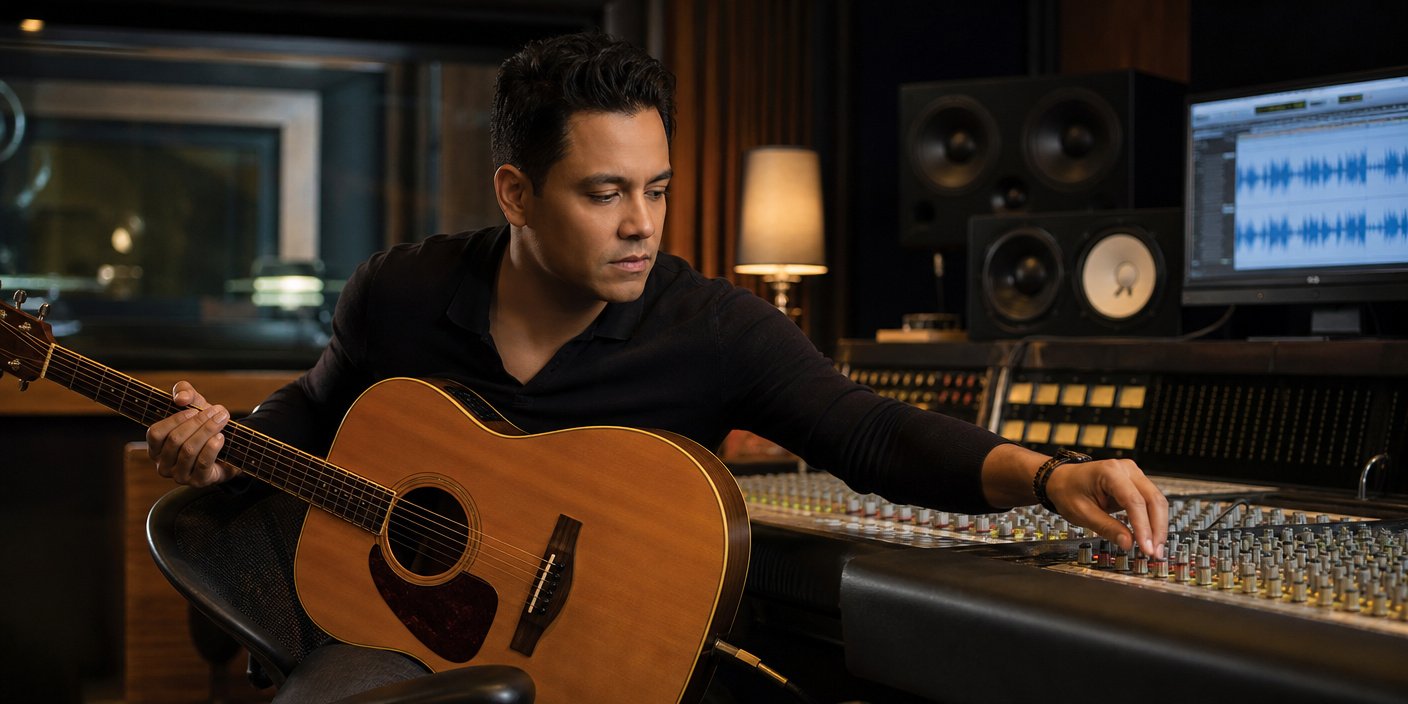
From a technical standpoint, the mixing on ‘Dime Que Sí’ is commendable. Integrating acoustic guitar riffs with the syncopated basslines of reggaeton is a precarious balancing act. Often, the transient response of an acoustic instrument can get lost in the sub-bass frequencies typical of urban production. However, here, the production team has carved out distinct sonic pockets, ensuring the organic timbre of the guitar remains present even when the beat is at its most aggressive. This technical proficiency underscores a deeper artistic maturity; ErickOscar is not just creating tracks for the club, but for the listener who engages with music on a more cerebral level.
The Lyricism of Vulnerability
Beyond the sonic architecture, the thematic core of the album lies in its narrative openness. Songwriting in the reggaeton genre often defaults to themes of nightlife, excess, or romantic conquest. ErickOscar flips this script by injecting his personal history and emotional vulnerability into the writing process. In several tracks, the lyrics serve as a diary entry, grappling with the complexities of identity, the pressure of expectations, and the quieter moments of personal life.
This approach effectively humanizes the artist, creating a parasocial bond with the audience that is essential for long-term career viability in a crowded market. By grounding the project in personal truth, he avoids the trap of generic lyricism, making ‘Dime Que Sí’ an album that resonates with anyone who has faced the dissonance between their public persona and their private reality.
Exploring the Cultural Intersection
The Panamanian Heritage
One cannot analyze ‘Dime Que Sí’ without discussing its geographic and cultural weight. Panama has played a crucial, often underappreciated role in the genesis and evolution of reggaeton, blending Jamaican dancehall rhythms with Spanish-language lyricism long before it became a global phenomenon. ErickOscar taps into this lineage, not by mimicking the past, but by synthesizing it with modern pop sensibilities. The project acts as a bridge between the ‘Panama vibe’—characterized by its distinct rhythmic patterns and lyrical flows—and the polished expectations of international pop radio.
Secondary Angles: Future Implications
To understand the broader impact of this release, we must look at three secondary factors:
1. The Shift Toward ‘Organic Urban’: We are currently observing a trend where artists are moving away from entirely digital, MIDI-driven beats. ‘Dime Que Sí’ is a prime example of this movement toward ‘Organic Urban’, where the inclusion of live instrumentation (acoustic guitars, pianos, and organic percussion) adds a layer of texture that digital samples simply cannot replicate.
2. Economic Viability of Independent Latin Artistry: The success of this release, distributed through independent channels, highlights the democratization of the music industry. ErickOscar proves that a high-quality, conceptual album can compete in the streaming era without the backing of a major label machine, provided the vision is strong enough.
3. The Evolution of the Listener: Modern consumers of Latin music are becoming more discerning. They are demanding more than just a ‘hit’ single; they want albums that provide a cohesive experience. This project aligns with the rise of the ‘album-focused’ listener, a trend that is reshaping how Latin artists approach release strategies.
FAQ: People Also Ask
Q: What is the primary genre of ErickOscar’s ‘Dime Que Sí’?
A: The album is a hybrid project, primarily blending reggaeton and Latin pop, but it is heavily distinguished by the inclusion of acoustic elements and organic instrumentation.
Q: How many tracks are included in the album?
A: ‘Dime Que Sí’ is a ten-track collection, carefully curated to balance different musical moods.
Q: What makes this album stand out from other recent reggaeton releases?
A: Unlike many current releases that lean fully into maximalist digital production, this album prioritizes personal, vulnerable songwriting and incorporates acoustic textures that provide a more intimate, human connection to the listener.
Q: Does the album feature any specific cultural influences?
A: Yes, the album is heavily influenced by the artist’s Panamanian roots, weaving traditional Panamanian rhythmic nuances into a contemporary pop framework.