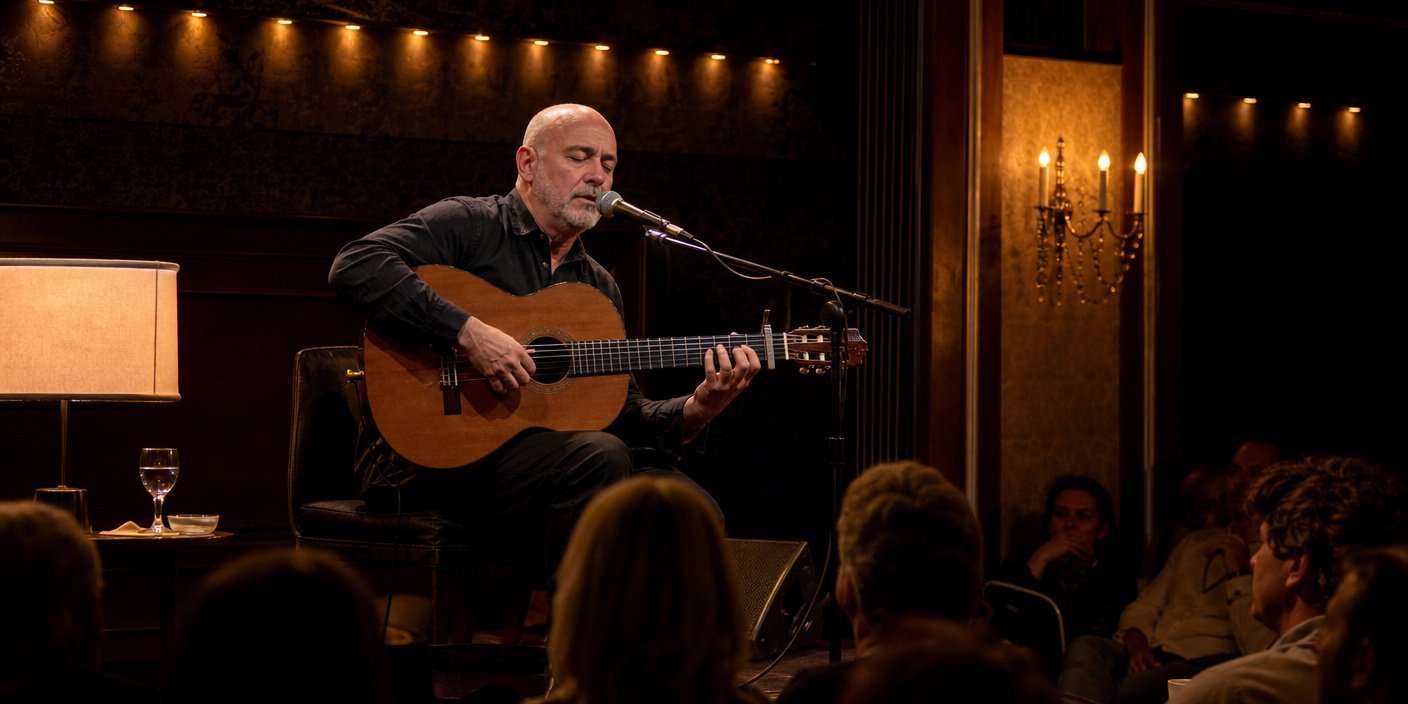
The Spanish cultural landscape is preparing for an intimate and deeply rhythmic intervention this autumn as legendary singer-songwriter Javier Ruibal takes the helm of the ‘Nuevos Territorios’ concert series. Scheduled for October 16 and 17, 2026, at the prestigious Sala Berlanga in Madrid, this two-night residency represents more than just a musical performance; it is a meticulously curated exploration of the bridges between folk traditions, the visceral soul of flamenco, and the complex, syncopated rhythms of Latin America. By stepping into the role of curator, Ruibal is not merely performing his own extensive catalog but is positioning himself as a conductor of cultural dialogue, inviting audiences to witness the evolution of Hispanic musical identity.
The Artistic Vision of Nuevos Territorios
At the heart of the ‘Nuevos Territorios’ series lies a philosophy of connectivity. Javier Ruibal has long been lauded as an architect of sound, blending the ‘cantes de ida y vuelta’—the historical musical exchanges between Spain and Latin America—into a coherent, modern aesthetic. The choice of Sala Berlanga, a venue renowned for its acoustic precision and intimate connection between performer and spectator, is deliberate. It provides the perfect backdrop for a series that prioritizes nuance over spectacle. In an era where music is often consumed in fragmented, high-speed digital bursts, Ruibal’s residency demands patience and active listening. He aims to strip back the production to its skeletal, rhythmic core, allowing the complex guitar arrangements and poetic lyricism to take center stage. This series serves as a bridge, linking the ancestral roots of Andalusian flamenco with the rhythmic buoyancy of Caribbean and South American genres, proving that these diverse traditions are not disparate, but part of a singular, evolving continuum.
Sala Berlanga: A Hub for Cultural Exchange
The selection of Sala Berlanga as the venue for this October residency is a significant endorsement of the space’s status in the Madrid cultural circuit. Managed by the Fundación SGAE, the venue has consistently acted as a sanctuary for auteur cinema and independent musical projects that sit outside the commercial mainstream. For Ruibal, the venue’s architecture—which offers an almost theatrical, enclosed intimacy—is essential. The upcoming October 16 and 17 performances will utilize the space’s unique acoustic characteristics to highlight the interplay between percussion, melody, and silence. This is not a stadium show; it is an immersive environment designed to foster a direct line of communication between the stage and the audience. Attendees can expect a setting that feels more like a private salon than a public concert hall, heightening the emotional impact of the compositions. The residency serves as a reminder that Madrid remains a vibrant nexus for cross-cultural synthesis, drawing on its history as a gateway for artistic exchange.
Bridging the Divide: Flamenco meets Latin American Rhythms
To understand the significance of ‘Nuevos Territorios’, one must understand the evolution of Ruibal’s work. His career has been defined by a restless refusal to adhere to the rigid boundaries of genre. While deeply rooted in the traditions of his native El Puerto de Santa María, Ruibal’s music has always looked westward. The upcoming series is expected to feature collaborations or explorations that spotlight these trans-Atlantic connections. Flamenco, often perceived as a strictly Andalusian phenomenon, is, in Ruibal’s hands, a living, breathing form that can absorb jazz harmonies, African polyrhythms, and the melancholic beauty of Latin American folk songs. Attendees on October 16 and 17 will likely hear the convergence of the cajón’s sharp attack with the fluid, circular melodies of Latin folk music. This is the ‘New Territory’ Ruibal is mapping—a space where borders are irrelevant, and the language of music is the only necessary vernacular.
Ruibal’s Enduring Legacy in Modern Spanish Music
Javier Ruibal’s impact on the Spanish music industry is profound. Having navigated a career that spans several decades, he has become a mentor and an inspiration for younger generations of musicians who seek to innovate without abandoning their heritage. By curating this series, Ruibal is effectively passing the torch, showcasing the relevance of traditional structures in a contemporary setting. This residency is not a retrospective of his past hits, but a forward-looking experiment. He challenges the notion that ‘traditional’ music is static. Instead, he presents a vision of tradition as a foundation for innovation. For those attending the shows in October 2026, the value lies in witnessing a master craftsman at work, someone who understands that the most profound innovation often comes from revisiting the roots with a fresh perspective. The series is expected to draw a diverse crowd, from lifelong fans of his poetic songwriting to students of musicology interested in the mechanics of the fusion he so masterfully creates.
The Economic and Cultural Impact of Curated Residencies
There is also a broader economic context to consider. In the wake of changing consumption habits, curated artist residencies like ‘Nuevos Territorios’ are becoming increasingly important for local cultural economies. By anchoring a two-night event in a specific venue, Ruibal creates a focal point that draws music tourism to the neighborhood, benefiting local businesses and reinforcing the role of live music as an engine for urban vitality. These events do more than sell tickets; they create a cultural footprint, establishing Madrid as a destination for high-caliber, thought-provoking artistry. As the music industry continues to wrestle with the implications of artificial intelligence and algorithmic recommendations, the value of the human curator—an artist like Ruibal, who brings a distinct, personal point of view to the programming—becomes infinitely more valuable. The success of these two nights will likely serve as a blueprint for future artist-led initiatives at Sala Berlanga and beyond.
FAQ: People Also Ask
Q: What is the significance of the title ‘Nuevos Territorios’?
A: The title refers to the ‘new territories’ of musical fusion. It represents Javier Ruibal’s exploration of the boundaries between folk, flamenco, and Latin American rhythms, and his desire to map a space where these genres can coexist and influence one another.
Q: Why is Javier Ruibal choosing to host this at Sala Berlanga?
A: Sala Berlanga is known for its intimate, acoustically focused environment. It allows Ruibal to perform in a space that prioritizes the clarity of his complex guitar work and the lyrical depth of his songs, rather than the large-scale sound of a stadium venue.
Q: Can I buy tickets for both nights of the residency?
A: Yes, the series is scheduled for October 16 and 17, 2026. Given the intimacy of the Sala Berlanga and the reputation of Javier Ruibal, it is highly recommended to secure tickets early through official event channels.
Q: Is this concert series just about flamenco music?
A: No. While flamenco is a significant pillar of the music, the series explicitly highlights the intersection with Latin American rhythms and folk traditions. It is a comprehensive exploration of the ‘cantes de ida y vuelta’ and global musical fusion.