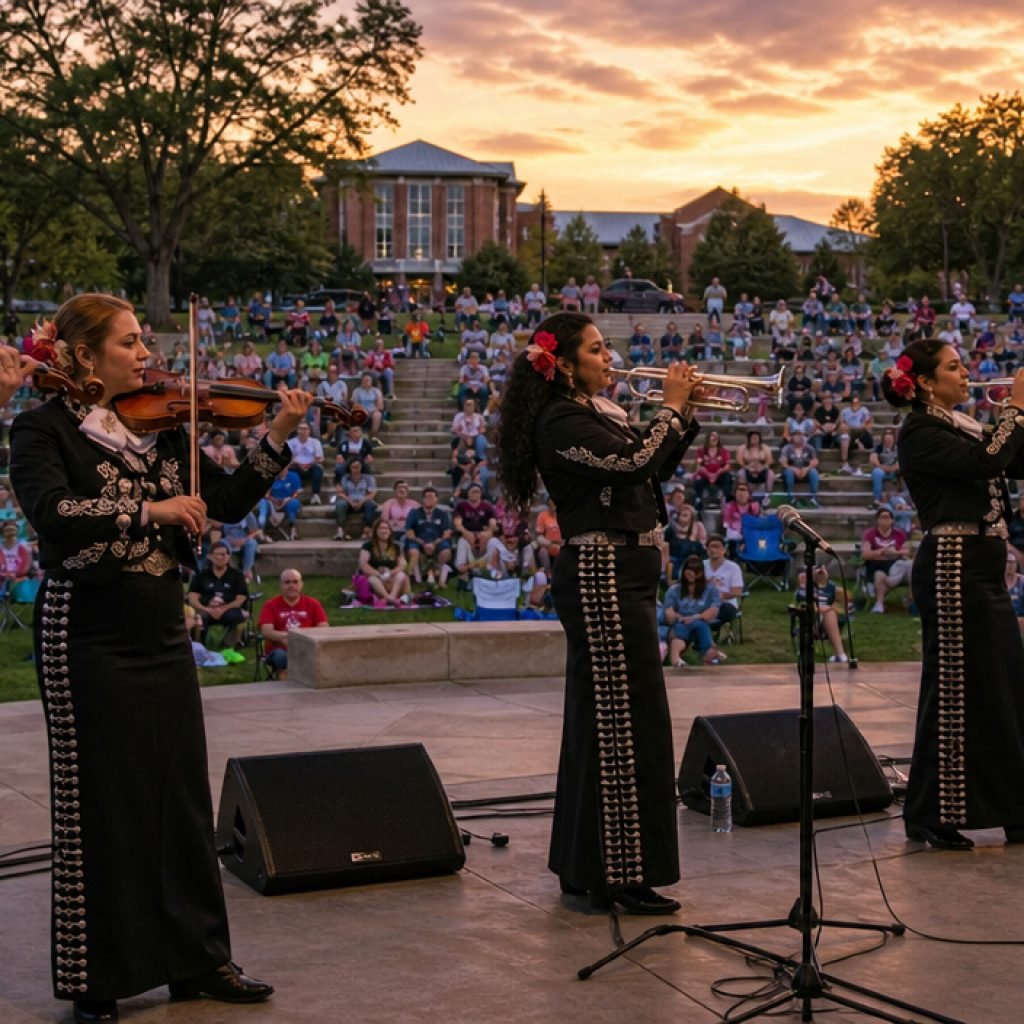
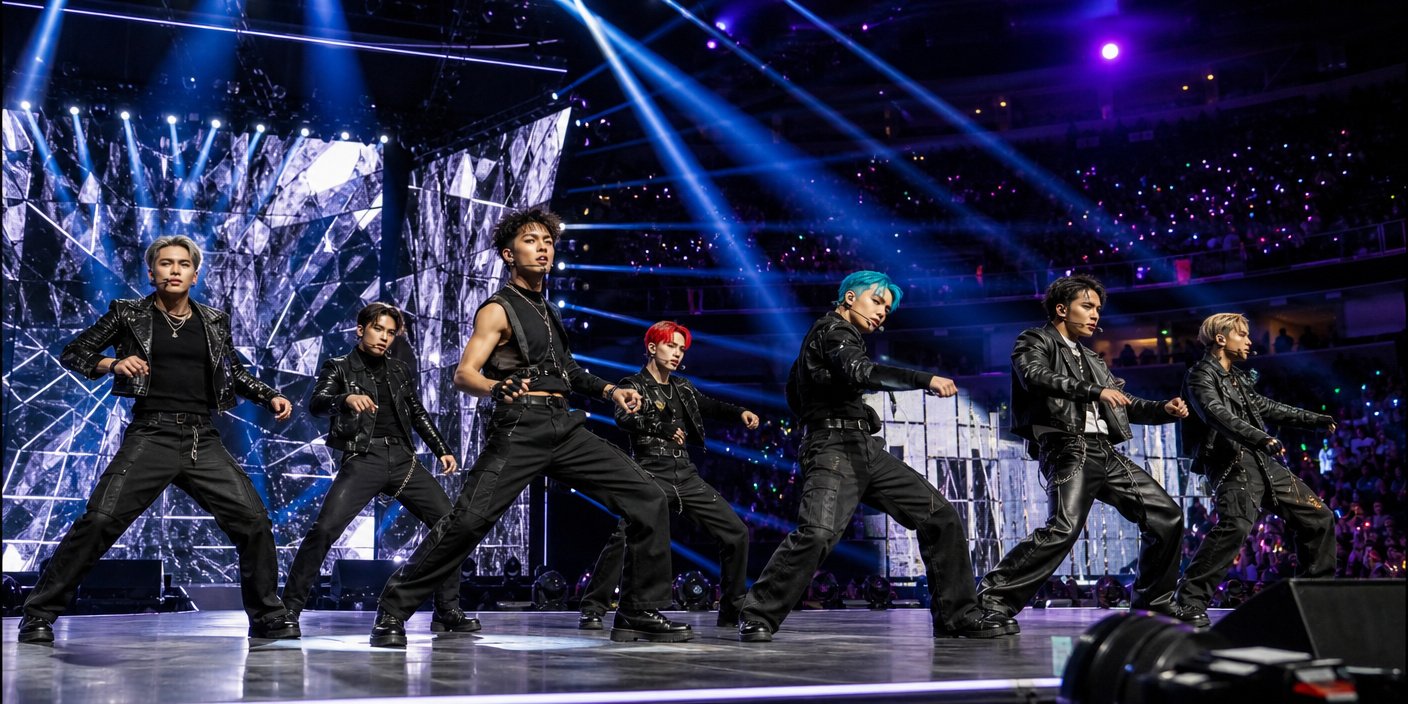
The music industry has long been defined by geographic silos, yet this week, the walls between K-pop and Latin music finally crumbled. Santos Bravos has officially become the first Latin American group to perform at KCON, the world’s largest K-culture convention and music festival. This performance is more than a novelty; it is a definitive marker of a shifting global music landscape where cultural integration is no longer an anomaly, but the new standard of commercial and artistic success. As fans from Seoul to Santiago unite, the crossover success of Santos Bravos signals that the industry is entering a post-regional era of pop consumption.
Key Highlights
- Historic Milestone: Santos Bravos is the first Latin American ensemble to secure a performance slot on the KCON main stage, bridging two of the music world’s most dominant and dedicated fanbases.
- Global Integration: The performance acts as a catalyst for a broader shift in the music industry, moving away from fragmented regional marketing toward a unified ‘Global Pop’ strategy.
- Production Synergy: The fusion of K-pop’s meticulous, high-intensity choreography and production with Latin music’s rhythmic, melodic sensibilities creates a unique, high-energy hybrid that is capturing global streaming demographics.
The Borderless Evolution of Modern Pop
The arrival of Santos Bravos at KCON serves as a case study in the power of digital-first music discovery. For years, the global music industry operated on distinct, often impenetrable tracks. K-pop, with its highly polished, synchronized idol training system, dominated the East Asian market before exploding into the Western mainstream. Simultaneously, the Latin music explosion—driven by the streaming dominance of reggaeton and urban Latin genres—redefined the listening habits of the Americas and Europe. For a long time, these two juggernauts existed in parallel, rarely intersecting except through occasional, high-profile collaborations.
Santos Bravos, by positioning themselves directly within the KCON ecosystem, has disrupted this dichotomy. Their performance was not merely an act of participation; it was an act of translation. By blending the linguistic and rhythmic structures of their native Latin pop with the visual and performance language typically associated with K-pop stages, the group demonstrated that the core of pop music is not found in language, but in energy, tempo, and the ‘performative spectacle.’
The KCON Ecosystem and Strategic Expansion
KCON has historically been a stronghold for Korean music and culture, a carefully curated ecosystem that has proven incredibly adept at scaling its influence. By inviting Santos Bravos, the event organizers have acknowledged a critical truth about the modern Gen Z and Alpha consumer: their musical identity is fluid. These listeners do not categorize their playlists by geography; they categorize them by vibe, mood, and intensity.
This strategic inclusion serves a dual purpose. For KCON, it expands the festival’s demographic appeal, tapping into the massive, highly engaged Latin American market. For Santos Bravos, it provides an unparalleled platform to reach a sophisticated, globally-minded audience that is already accustomed to appreciating high-production values and complex musical narratives. The economic implication is significant; the integration of these fanbases creates a cross-pollinated market where music labels can hedge their bets on global superstardom rather than localized fame.
The Technical and Aesthetic Fusion
The most striking aspect of the Santos Bravos performance was the technical synergy on display. K-pop performance is rooted in a specific brand of precision—complex formations, aggressive lighting queues, and perfectly synchronized dance breaks. Santos Bravos adopted this framework, infusing it with the syncopated, rhythmic vitality inherent in Latin music production.
From a technical standpoint, this is a complex integration. The audio engineering required to blend the high-frequency vocal layering of K-pop with the bass-heavy, percussion-focused production of Latin pop is a challenge, yet the sound engineers involved in the KCON setup noted that the two genres share a surprising amount of DNA. Both rely on ‘hook-driven’ production, high-speed tempo variation, and an emphasis on visual storytelling. This convergence suggests that the future of pop production will be increasingly collaborative, with cross-continental production teams becoming the norm rather than the exception.
Future Predictions: Beyond the Crossover
What comes next? If the success of Santos Bravos is any indication, we are moving toward a period where the ‘genre’ is less important than the ‘community.’ Future music festivals will likely mirror this KCON experiment, moving toward broader, thematic gatherings that prioritize cultural exchange over regional exclusivity. We can expect to see more Latin artists training within the K-pop system, and conversely, K-pop idols incorporating Latin rhythmic structures into their upcoming releases. The ‘Santos Bravos Effect’ will likely be the subject of boardroom discussions at major labels for the next two fiscal years, as executives scramble to replicate this cross-cultural synergy. The borderless nature of this pop music event proves that in the digital age, if you can capture the audience’s attention with a superior performance, the language or origin of the music becomes secondary to the shared experience of the show.
FAQ: People Also Ask
Q: Why is Santos Bravos’ appearance at KCON considered historic?
A: It is the first time a Latin American group has been officially included in the KCON lineup, marking a significant breaking point in the traditionally insular barrier between the Latin and K-pop music markets.
Q: How does this performance affect future KCON events?
A: It sets a precedent for a more ‘Global Pop’ focus, potentially opening the door for other international artists to perform at KCON, effectively transforming the festival into a global music hub rather than a solely Korea-centric event.
Q: What makes this crossover successful in terms of streaming and demographics?
A: Both Latin and K-pop fanbases are among the most active and engaged groups on social media and streaming platforms. By merging these two fanbases, the artists gain immediate access to a combined, global audience that is already primed for high-energy, performance-heavy content.