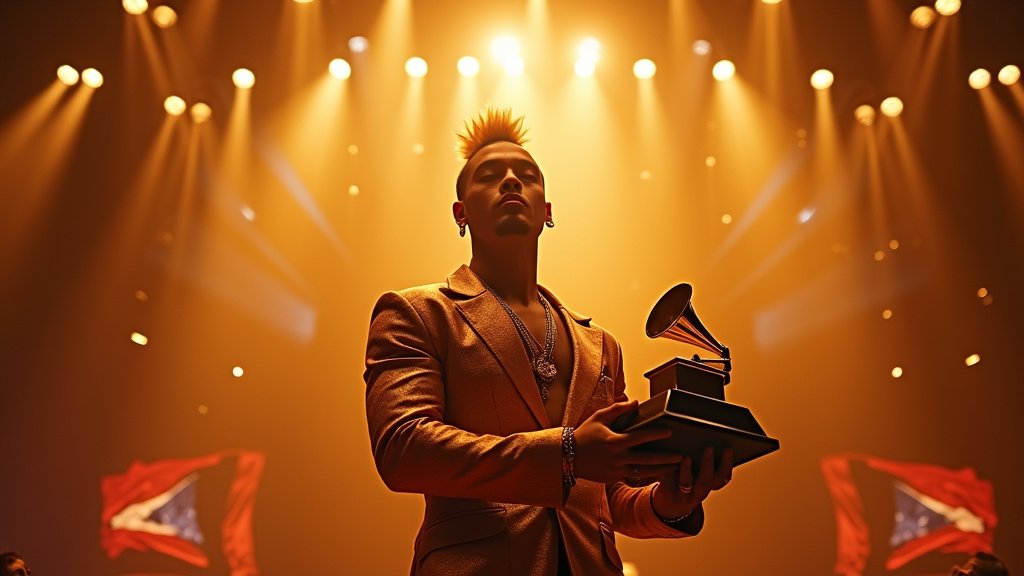
The 68th Annual Grammy Awards are set to take place on February 1, 2026, but the conversation around the Bad Bunny Grammys has already made history. The Puerto Rican superstar has secured six nominations, most notably becoming the first Spanish-language artist to be nominated across all of the prestigious “Big Three” categories in a single year: Album of the Year, Record of the Year, and Song of the Year. These landmark nods are for his latest project, “Debí Tirar Más Fotos” and its title track, “DtMF,” solidifying a new era for Latin music on the global stage and underscoring the significance of these Bad Bunny Grammys. The impact of these Bad Bunny Grammy nominations is already being felt throughout the Latin music industry. The Bad Bunny Grammys represent a monumental moment for Spanish language music.
A Trifecta of Historic Nods at the Bad Bunny Grammys
Bad Bunny’s nominations for Album of the Year, Record of the Year for “DtMF,” and Song of the Year for “DtMF” are unprecedented achievements for a primarily Spanish-language artist, marking a significant moment in the Bad Bunny Grammys history. This historic feat follows in the footsteps of his album “Un Verano Sin Ti,” which in 2023 became the first Spanish-language album to ever be nominated for Album of the Year. The Recording Academy’s recognition of “Debí Tirar Más Fotos” in these top categories signals a profound shift in how non-English language music is perceived and valued within the industry. “DtMF” is now counted among the select few primarily Spanish-language songs nominated for Song of the Year, a category that has historically favored English tracks, further highlighting the importance of these Bad Bunny Grammys. The Bad Bunny Grammys are a testament to his widespread appeal.
Beyond the “Big Three,” Bad Bunny also earned Bad Bunny Grammy nominations for Best Música Urbana Album, Best Album Cover for “Debí Tirar Más Fotos” (a new category for this year’s awards), and Best Global Music Performance for his track “EoO.” These six nominations highlight the breadth and depth of his artistic contributions and the critical acclaim his work has garnered, making this year’s Bad Bunny Grammys especially notable. The anticipation for the Bad Bunny Grammys is palpable.
“Debí Tirar Más Fotos”: A Cultural Tapestry and Its Bad Bunny Grammys Impact
Released on January 5, 2025, “Debí Tirar Más Fotos” (translating to “I Should Have Taken More Photos”) is more than just an album; it’s a vibrant celebration of Puerto Rican music and identity, contributing significantly to the conversation around Bad Bunny Grammys. The project features a diverse range of collaborators, many representing various Puerto Rican styles, and has been described as a love letter to the island and its people. The album delves into themes of love, culture, gentrification, and immigration, reflecting contemporary issues faced by the Puerto Rican diaspora. Its success on charts, including topping the Billboard 200, further underscores its widespread appeal and cultural resonance, paving the way for its recognition at the Bad Bunny Grammys. The Dtmf song of the year nomination is a significant achievement for the Bad Bunny Grammys.
Latin Music’s Ascendance: From Growth to Dominance in the Era of Bad Bunny Grammys
Bad Bunny’s historic Grammy nominations are not isolated incidents but rather a powerful testament to the unstoppable rise of Latin music and its impact on events like the Bad Bunny Grammys. The genre is consistently breaking records in the United States, generating an all-time high of $1.4 billion in revenue in 2024 alone. It accounts for 8.1% of the total U.S. music market revenue and is recognized as the fastest-growing genre in the country. This growth is driven overwhelmingly by streaming, with Latin music fans contributing nearly 98% of the genre’s revenue through these platforms. The increasing visibility and market share of Latin music underscore its position as a dominant force shaping mainstream American culture, with the Bad Bunny Grammys serving as a prime example of these global music awards. The music industry shift is undeniable, with the Bad Bunny Grammys at its forefront.
A Cultural Icon and Advocate: The Influence Behind the Bad Bunny Grammys
Bad Bunny’s influence extends far beyond music, contributing to the cultural significance of the Bad Bunny Grammys. He has become a significant cultural and political icon, using his global platform to champion Puerto Rican identity and advocate for social justice. His refusal to compromise his language or culture for mainstream crossover success has amplified his message, making him a symbol of resistance against colonialism, racism, and social inequality. His activism addresses issues ranging from gender-based violence and toxic masculinity within Latino culture to the political and economic struggles of Puerto Rico. This holistic approach to his artistry has resonated deeply, connecting him with a broad audience that sees him as a voice for the community, further enhancing the prestige of his Bad Bunny Grammy nominations. These Bad Bunny Grammys are more than just awards; they are a reflection of his impact.
A “Radical Wake-Up Call” for the Grammy Awards
The surge of Bad Bunny and Latin music into the highest echelons of awards like the Grammys serves as a “radical wake-up call” for the music industry and beyond, emphasizing the importance of celebrating artists at the Bad Bunny Grammys. It highlights how much the landscape has shifted, forcing a re-evaluation of what constitutes mainstream success and artistic merit. The pervasive influence of Spanish language music and Latino culture in the U.S.—a country where Spanish is the second-most spoken language—can no longer be ignored. Bad Bunny’s nominations are a powerful affirmation that cultural barriers are dissolving and that global music trends are evolving, demanding more inclusive recognition, particularly within the context of the Grammy Awards 2026. His success is a potent reminder of the immense power and undeniable artistry emerging from diverse communities worldwide, making his journey one of the most compelling stories in contemporary music and a defining moment for Latin music industry.