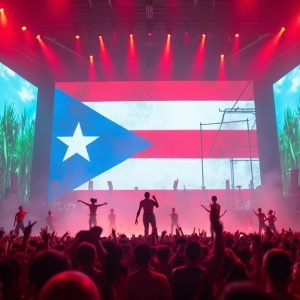

The atmosphere at Billboard Latin Music Week 2026 in Miami was electric, signaling a definitive shift in the landscape of global music. As streaming platforms solidify their dominance and the boundaries between genres continue to erode, this year’s programming went beyond mere celebration to provide a masterclass in industry adaptation. From the strategic pivots of urban heavyweights like Anuel AA to the philosophical reflections of global icons like Maluma, the event served as a crystal ball for the next decade of Latin music consumption.
Key Highlights
- The Corridos Crossover: Anuel AA formally outlined his strategic commitment to incorporating Regional Mexican elements into his upcoming projects, underscoring the genre’s unstoppable global momentum.
- Maluma’s Entrepreneurial Evolution: The Colombian superstar provided deep reflections on transitioning from a chart-topping pop artist to a diversified media mogul, emphasizing the importance of intellectual property over ephemeral fame.
- Market Saturation & Quality: Industry analysts pointed to a ‘quality-over-quantity’ pivot, with record labels signaling a move away from hyper-frequent single releases in favor of sustained album campaigns.
- The Streaming Hegemony: Data presentations confirmed that Latin music consumption in non-Spanish speaking territories grew by double digits, driven primarily by the cross-pollination of urban and traditional sounds.
The Strategic Evolution of Latin Music
The 2026 edition of Billboard Latin Music Week was defined by the intersection of legacy and innovation. As the industry grapples with the ‘streaming fatigue’ phenomenon, major labels and artists are recalibrating their approach to audience engagement. The narrative throughout the week was not just about the numbers—though the numbers remain staggering—but about the sustainability of the Latin boom. We saw a concerted effort by artists to bridge the gap between digital virality and long-term brand equity.
Anuel AA’s Corridos Ambition
Perhaps the most talked-about session involved Anuel AA, who utilized the platform to detail his upcoming transition into the Corridos space. For years, the urban genre dominated the charts, but the rapid ascent of Regional Mexican music—specifically Corridos Tumbados—has forced a recalibration. Anuel’s plans involve a fusion model: maintaining the aggressive, raw trap aesthetic that defined his early career while integrating the instrumentation and narrative structures of traditional Mexican music. This isn’t just a stylistic experiment; it is a tactical play to capture the demographic that is currently driving the largest growth in the Latin market. By leveraging his massive follower base to spotlight this fusion, Anuel is positioning himself at the vanguard of what many are calling ‘Urban-Regional 2.0.’
Maluma’s Reflection on Longevity
In contrast to the genre-bending discussions, Maluma’s keynote focused on the internal psychology of the artist. Reflecting on his decade-plus journey, the ‘Papi Juancho’ star emphasized that the Latin music industry has matured past the point of treating artists as disposable assets. Maluma spoke candidly about the necessity of building an ecosystem around one’s image—investments in fragrance, fashion, and film production were cited as essential pillars for a modern superstar. His message to emerging artists was clear: success in 2026 is measured not just in Spotify streams, but in the ability to pivot into a business entity that survives the shifting tides of popular music trends.
The Economic Landscape and Streaming Trends
Beyond the artist spotlights, the industry data presented at the conference painted a compelling picture. The streaming hegemony of Latin music continues to hold firm, but the growth pattern is shifting. Analysts noted that while ‘passive listening’ remains high, ‘active consumption’—where fans engage with music via video content, live experiences, and social integration—has become the primary revenue driver. The move toward fewer, high-impact releases rather than ‘album dumping’ strategies suggests that the industry is listening to consumer fatigue. We are entering an era where artist scarcity is becoming a premium asset, a stark departure from the relentless 2022-2024 content cycle.
Cultural Export and Future Predictions
The final takeaway from the week was the continued expansion of the Latin market into Asian and European territories. The data suggests that the cultural export of the Latin sound is no longer reliant on translation; it is being consumed as a dominant pop aesthetic. Experts predict that by 2028, the distinction between a ‘Latin’ artist and a ‘Global’ artist will effectively vanish, as the language barrier continues to dissolve in favor of a universal rhythmic language.
FAQ: People Also Ask
Q: What is the main trend driving Latin music in 2026?
A: The primary trend is the fusion of Urban sounds with Regional Mexican music, specifically the integration of Corridos instrumentation into mainstream Trap and Reggaeton beats.
Q: How are artists like Maluma changing their business models?
A: Artists are shifting from being solely ‘performers’ to becoming diversified ‘moguls,’ focusing on building multi-sector brands that include fashion, alcohol labels, and production companies to ensure longevity beyond their music charts.
Q: Is Latin music still growing in non-Spanish markets?
A: Yes. Data presented at the 2026 event confirms that Latin music consumption is experiencing significant double-digit growth in non-Spanish speaking territories, proving that it is now a foundational pillar of global pop music.
Q: Why are artists moving away from constant music releases?
A: Industry analysts attribute this to ‘streaming fatigue.’ There is a shift toward a ‘quality-over-quantity’ approach, where artists prioritize longer-term album cycles and high-impact releases over the saturation of frequent single drops.