
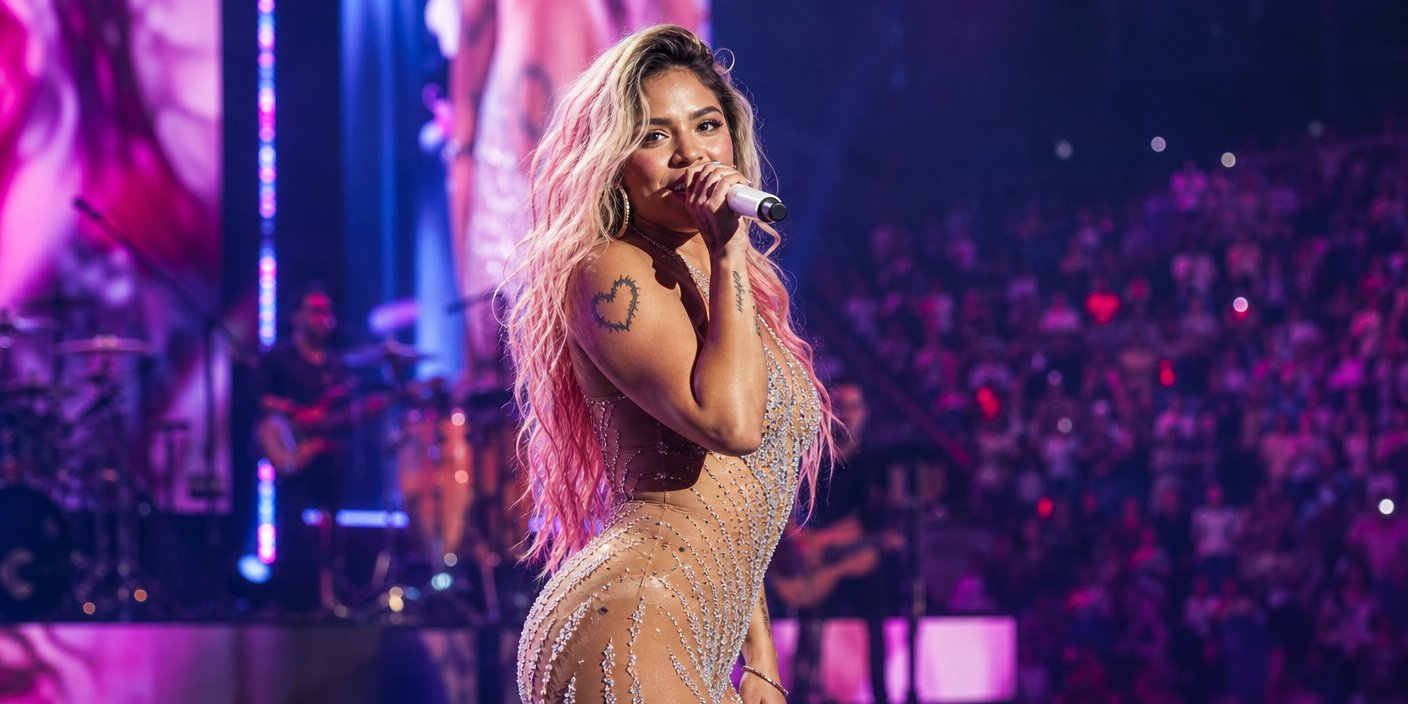
Karol G has solidified her position as the undisputed queen of the charts, maintaining the No. 1 spot on the Billboard Hot Latin Songs list for the week of September 26, 2026. As the Latin music industry continues its meteoric rise on the global stage, the competition for the top ten positions remains fierce, blending established superstars with aggressive newcomers who are redefining the boundaries of the genre. The Billboard Hot Latin Songs chart continues to serve as the ultimate barometer for popularity, factoring in a complex mix of streaming data, radio airplay, and digital sales that capture the pulse of the Latin music diaspora.
Key Highlights
- The Reign Continues: Karol G successfully defends her No. 1 position, proving her continued cultural resonance and commercial dominance in the Latin music sphere.
- The Heavy Hitters: Bad Bunny maintains his status as a perennial chart staple, reinforcing the enduring strength of his catalog and new releases.
- The Rising Guard: Artists like Netón Vega, Lenin Ramirez, Jay Wheeler, and Omar Courtz are actively carving out significant market share, signaling a diversification within the Top 10.
- Genre Fusion: The weekly breakdown highlights a dynamic intersection of traditional Reggaeton rhythms with the explosive growth of Regional Mexican music, a trend defining 2026.
The Anatomy of 2026 Latin Chart Dominance
The landscape of the Billboard Hot Latin Songs chart is more than just a list; it is a reflection of a rapidly evolving music economy. As of September 26, 2026, the data confirms that listeners are increasingly diversifying their playlists, favoring artists who can bridge the gap between high-energy club anthems and deeply personal, relatable storytelling. Karol G’s ability to remain at the apex of this chart is not merely a testament to her vocal prowess, but to her mastery of the multi-platform ecosystem that modern artists must navigate to survive. She has optimized her release cycles to coincide with peak streaming hours, a strategy that is clearly paying dividends.
The Unstoppable Ascent of Karol G
Karol G’s performance in the third quarter of 2026 is nothing short of historic. She has managed to maintain the top spot against a backdrop of increasing volatility in music consumption habits. By leveraging both social media virality and traditional radio support, she has created a ‘sticky’ listener base that returns to her tracks repeatedly. Her hold on the No. 1 position this week underscores a broader industry shift where artists are moving away from singular album drops toward a constant stream of singles, EPs, and collaborations, all designed to feed the algorithm-driven landscape of modern streaming services. This strategy keeps her name in the conversation, ensuring that whenever a listener opens a Latin hits playlist, her music is the primary offering.
The Consistent Titan: Bad Bunny’s Staying Power
While Karol G holds the top position, the presence of Bad Bunny within the Top 10 remains the chart’s constant anchor. Even in weeks where he is not at the very top, his ability to retain multiple entries in the upper echelons of the rankings serves as a masterclass in artist branding. In 2026, Bad Bunny has pivoted slightly, focusing on deeper, more atmospheric tracks that have resonated with a core fanbase while simultaneously attracting new listeners. His continued presence acts as a ‘floor’ for the chart; he sets the standard of excellence that other artists must reach to even hope for a Top 10 placement. His consistency suggests that the ‘Bad Bunny era’ is far from over, despite the intense competition from younger artists.
The New Wave: Netón Vega, Lenin Ramirez, and the Regional Surge
The most intriguing storyline of the September 26, 2026, rankings is the aggressive climb of artists like Netón Vega, Lenin Ramirez, Jay Wheeler, and Omar Courtz. The inclusion of these names in the Top 10 is indicative of a massive pivot toward Regional Mexican music. For years, the Latin charts were heavily dominated by Reggaeton and Urban Pop. However, the last eighteen months have seen a sea change. Netón Vega, in particular, represents this new vanguard—artists who are not just singing, but who are actively engaging with the cultural roots of their audience, blending traditional instrumentation with modern, high-fidelity production techniques. This is no longer a ‘niche’ interest; it is now a fundamental component of the mainstream Latin music diet.
Data-Driven Dynamics: The Billboard Methodology
Understanding why these artists are on top requires a look at the methodology behind the Billboard Hot Latin Songs chart. Billboard tracks a ‘weighted’ success metric. Streaming plays (via Spotify, Apple Music, and Amazon Music) contribute the largest portion of the score, followed by terrestrial radio airplay, and then paid digital song sales. This is why artists like Jay Wheeler and Omar Courtz can skyrocket up the list—they command significant engagement on short-form video platforms like TikTok, which then bleeds into high-volume streaming numbers. In 2026, a viral moment is the single greatest predictor of a chart-topping track. The artists occupying the Top 10 this week have clearly mastered the art of creating ‘shareable’ content, ensuring that their music permeates the cultural consciousness far beyond traditional radio bounds.
Future Predictions: What Lies Ahead for the Q4 Charts?
Looking past September 26, 2026, the question is how long Karol G can hold the crown. The Latin music industry is notoriously fickle, and the rise of independent distribution models means that an unknown artist can break into the Top 10 with a single well-timed, algorithm-friendly track. We are seeing a decentralization of star power. While the titans like Bad Bunny and Karol G have solidified their legacies, the lower half of the Top 10 is becoming increasingly fluid. Expect to see more ‘genre-blending’ collaborations in the coming weeks, as Urban artists look to partner with Regional Mexican stars to capture that growing demographic. The ‘Billboard Hot Latin Songs’ chart of late 2026 is a snapshot of an industry that has finally come into its own, commanding global influence and setting the tempo for popular music worldwide.
FAQ: People Also Ask
Q: How does the Billboard Hot Latin Songs chart calculate its rankings?
A: The chart is based on a weighted formula that incorporates three primary data points: streaming activity (on-demand audio and video services), radio airplay (measured by audience impressions on Latin radio stations), and digital song sales. These metrics are combined to create a comprehensive score for each song, updated weekly.
Q: Why are Regional Mexican artists suddenly so prominent in the Top 10?
A: There has been a massive cultural shift in music consumption. Young Latinx listeners, particularly in the United States, are rediscovering and remixing traditional sounds. This, combined with the power of viral social media clips, has propelled artists like Netón Vega and Lenin Ramirez into the mainstream, successfully competing with traditional Reggaeton superstars.
Q: Does the chart separate genres within the Latin category?
A: No, the Billboard Hot Latin Songs chart is genre-agnostic regarding the sub-type of Latin music. It includes Reggaeton, Latin Pop, Regional Mexican, Bachata, and other styles under one umbrella, provided the songs are primarily in Spanish or feature significant Latin-cultural influence. This makes the competition intense and ensures that the chart reflects the broadest possible ‘Latin’ listening experience.