
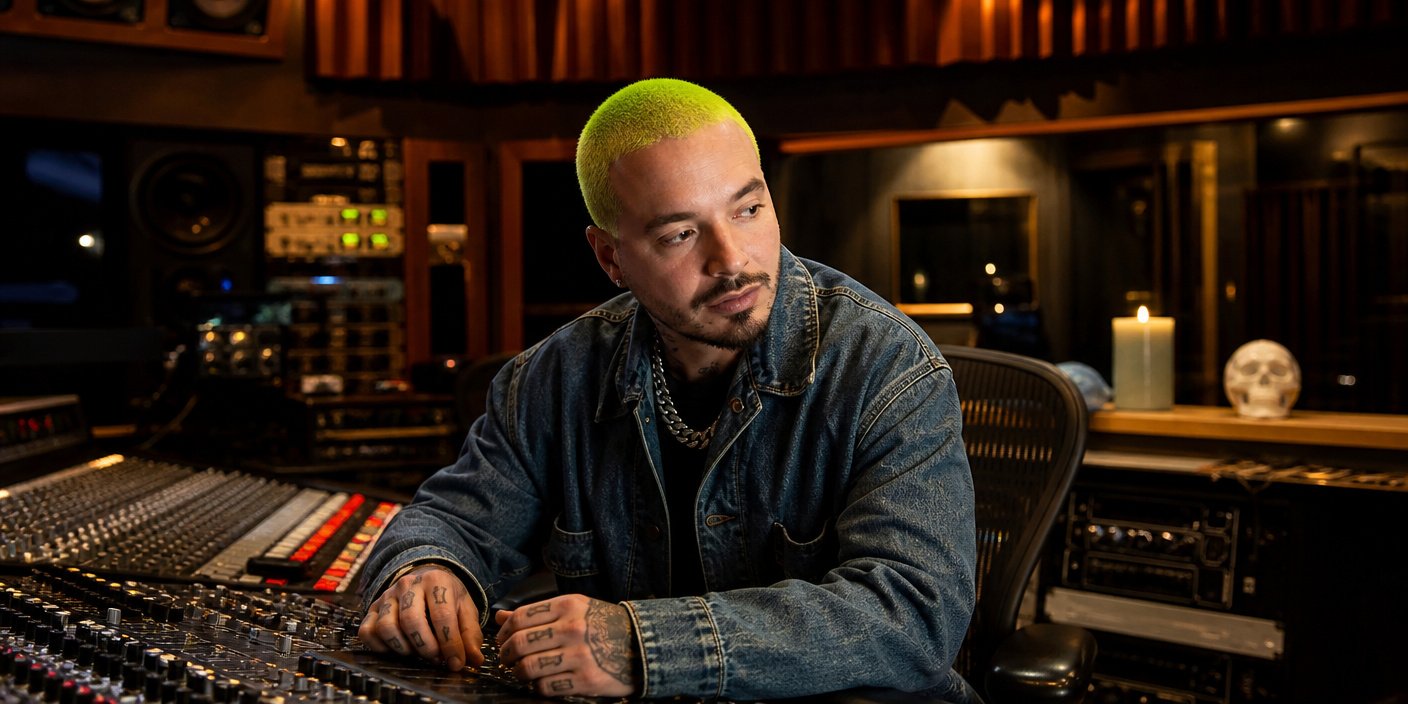
The landscape of global pop music has fundamentally shifted, and J Balvin is at the forefront of a movement declaring that the ‘crossover’ era is officially over. In recent discussions regarding the trajectory of his career and the wider industry, the Colombian superstar has made it clear: he feels no obligation to record an album in English to achieve or maintain global relevance. Balvin asserts that the success of his peers, including Karol G and Bad Bunny, serves as concrete proof that the necessity for language-switching to tap into international markets has been rendered obsolete by the sheer scale of the global Latin music audience.
The Shift in Global Music Consumption
For decades, the narrative surrounding Latin music was dictated by a specific prerequisite: to reach the pinnacle of global pop—particularly the U.S. and European markets—artists were expected to produce music in English. This tradition, pioneered by icons like Shakira and Ricky Martin, served as the gatekeeper to mainstream success. However, that barrier has been dismantled by the streaming revolution. Today, platforms like Spotify and Apple Music have democratized access to music, allowing listeners to consume art based on rhythm, melody, and cultural resonance rather than linguistic accessibility.
J Balvin’s perspective is grounded in the current reality of the charts. In 2023 and 2024, tracks sung entirely in Spanish have routinely topped the Spotify Global Top 50 charts. This isn’t a niche trend; it is a fundamental reconfiguration of the music industry’s power structure. Balvin points to the gargantuan success of Karol G’s Mañana Será Bonito—which made history as the first all-Spanish-language album by a female artist to debut at number one on the Billboard 200—as irrefutable evidence of this new world order. When an artist can sell out stadiums from Mexico City to Paris while singing exclusively in Spanish, the commercial argument for an English-language crossover album dissipates entirely.
The Karol G and Bad Bunny Paradigm
The cultural impact of artists like Karol G and Bad Bunny cannot be overstated. They have not only maintained their linguistic integrity but have thrived because of it. By doubling down on their roots, their urban sound, and their specific regional dialects, they have attracted a massive, globalized fanbase that values authenticity over assimilation.
For J Balvin, this success validates his own artistic choices. He has consistently championed the idea that Latin music is no longer a ‘sub-genre’ or an export product; it is a primary driver of global pop culture. When he looks at the statistics of his own streaming numbers—consistently placing him among the most-streamed artists globally—he sees a direct correlation between his commitment to Spanish and his enduring connection with his audience. The ‘crossover’ is no longer a bridge to success; in many ways, it is a detour that risks alienating the core fanbase that propelled these artists to stardom in the first place.
The Economics of Global Sound
The financial implications of this shift are massive. The global Latin music market is currently one of the fastest-growing segments in the music industry. According to industry reports, Latin music revenue has seen double-digit growth year-over-year, driven largely by the ubiquity of reggaeton, dembow, and Latin trap on global streaming platforms.
This economic dominance means that labels and distributors no longer view Spanish-language music as a risky investment. The demand is self-evident. As Balvin suggests, the market has matured to a point where English is simply one of many tools, not the exclusive language of ‘success.’ This creates a unique environment where artistic freedom is more protected. Artists are no longer forced to dilute their sound or lyrical complexity to satisfy an English-speaking demographic that is already showing a willingness—and an appetite—to explore music in other languages.
Looking Ahead: A Post-Linguistic Future
The future of pop music appears to be increasingly polyglot. J Balvin’s stance is not just a defensive position regarding his own career; it is a forward-looking observation of a globalized digital society. In a world where music transcends borders via algorithmic recommendations, the need for a ‘universal’ language has been replaced by a celebration of cultural specificity.
As we move forward, the definition of a ‘global star’ will continue to evolve. It will likely not require an English-language debut or a collaboration with a Western pop giant to validate one’s position on the world stage. Instead, the model established by Balvin, Karol G, and Bad Bunny will serve as the blueprint: define your sound, own your culture, and let the global audience come to you. The ‘moment’ Balvin refers to is not a fleeting trend; it is a permanent change in how the world consumes, values, and celebrates music.