
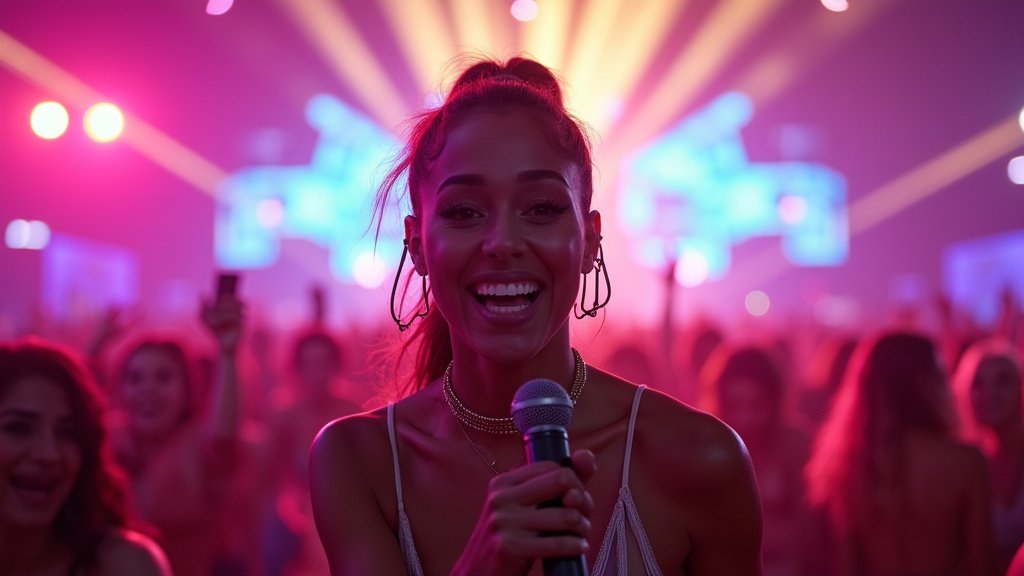
MIAMI, FL – The global music scene is experiencing a seismic shift, with Latin Music Global not just breaking through but fundamentally reshaping the charts and influencing culture worldwide. This transformation was a central theme at Billboard Latin Music Week 2025, where industry leaders and iconic artists convened to discuss the genre’s unprecedented ascent and its profound impact on the global music market and the broader music industry growth. The sheer scale of Latin Music Global’s influence is undeniable.
The Unstoppable Surge: Latin Music Global Data-Driven Dominance
Latin Music Global has evolved from a regional genre into a global powerhouse, a fact underscored by robust statistics. Revenue for the U.S. Latin music industry has consistently outpaced the overall market, exceeding $1.4 billion in 2024 and showing a 6% growth, according to the Recording Industry Association of America (RIAA). This upward trajectory is largely fueled by streaming, which accounts for a staggering 98% of Latin Music Global revenue in the U.S. Luminate data reveals Latin music now comprises nearly 10% of the U.S. market share, with genres like regional Mexican music experiencing particularly explosive growth, driven by artists such as Peso Pluma and Fuerza Regida. This surge isn’t confined to the U.S.; Latin America itself posted a remarkable 22.5% increase in recorded music revenues in 2024, marking fifteen consecutive years of growth, further solidifying the Latin Music Global presence and contributing to overall music industry growth.
The Pillars of Latin Music Global Reach
The current dominance of Latin Music Global can be attributed to several interconnected factors. The digital revolution, spearheaded by streaming platforms, has democratized access, allowing artists to connect directly with global audiences, bypassing traditional gatekeepers. Social media platforms, particularly TikTok and Instagram, have played a pivotal role, turning songs into viral global phenomena through dance challenges and trends, showcasing the reach of Latin Music Global. Furthermore, strategic collaborations between Latin artists and mainstream English-speaking acts have been instrumental in exposing diverse sounds to wider demographics, boosting streaming music revenue and expanding the Latin Music Global footprint.
Voices of Change: Artist Perspectives and Bilingual Music Artists
At the heart of this revolution are the artists themselves, pushing creative boundaries and challenging industry norms. Icons like Emilio and Gloria Estefan have long been instrumental in bringing Latin rhythms to the international mainstream, starting with their band Miami Sound Machine and continuing through Emilio’s extensive production work for artists such as Shakira and Jennifer Lopez. Their pioneering efforts paved the way for subsequent generations of bilingual music artists embracing Latin Music Global.
Contemporary artists are embracing their heritage and linguistic versatility. Kali Uchis, a Colombian-American artist, embodies this shift, fluidly creating music in both English and Spanish. She has spoken out against industry pressure to stick to one language for commercial viability, asserting, “I’m not going to make music in just one language because it’s easier to sell. I’m going to do both because I can”. Her approach, characterized by genre-bending and bilingual expression, resonates with a global audience ready for authenticity. The conversation at Billboard Latin Music Week often highlighted how artists like Uchis are redefining what it means to be a successful global artist, proving that duality is a strength, not a limitation for Latin Music Global.
Reshaping the Industry and Culture through Latin Music Global
The impact of Latin Music Global extends far beyond chart positions. It has become a significant economic force, driving revenue and creating opportunities across various sectors, within the Latin music industry and beyond. Major festivals now prominently feature Latin artists, a testament to their mainstream appeal and cultural influence. This rise also reflects broader demographic shifts, with the growing Latino population in the U.S. contributing significantly to the genre’s expanding market share. As an artist interview during Billboard Latin Music Week might explore, this cultural momentum fosters a sense of pride and shared identity among millions worldwide, a key aspect of Latin Music Global.
The Future is Latin: The Power of Latin Music Global
As Billboard Latin Music Week 2025 highlighted, the future of the music industry is undeniably interwoven with the continued evolution and global expansion of Latin Music Global. Artists are not only dominating charts but are actively influencing production, technology, and cultural trends, demonstrating the profound impact of reggaeton popularity and other subgenres. With its rich history, diverse sounds, and a new generation of artists championing authenticity and bilingualism, Latin Music Global has firmly established itself as a dominant, dynamic force that will continue to reshape the global music landscape for years to come. The conversations and performances throughout the week reinforced a singular message: Latin Music Global isn’t just a trend; it’s a permanent, powerful fixture on the world stage, significantly impacting the global music market.
.aiseo-related-reading{margin-top:2rem;padding-top:1rem;border-top:1px solid rgba(0,0,0,.08)} .aiseo-related-title{font-size:1.25rem;line-height:1.3;margin:0 0 .5rem} .aiseo-related-list{list-style:disc;margin-left:1.25rem}