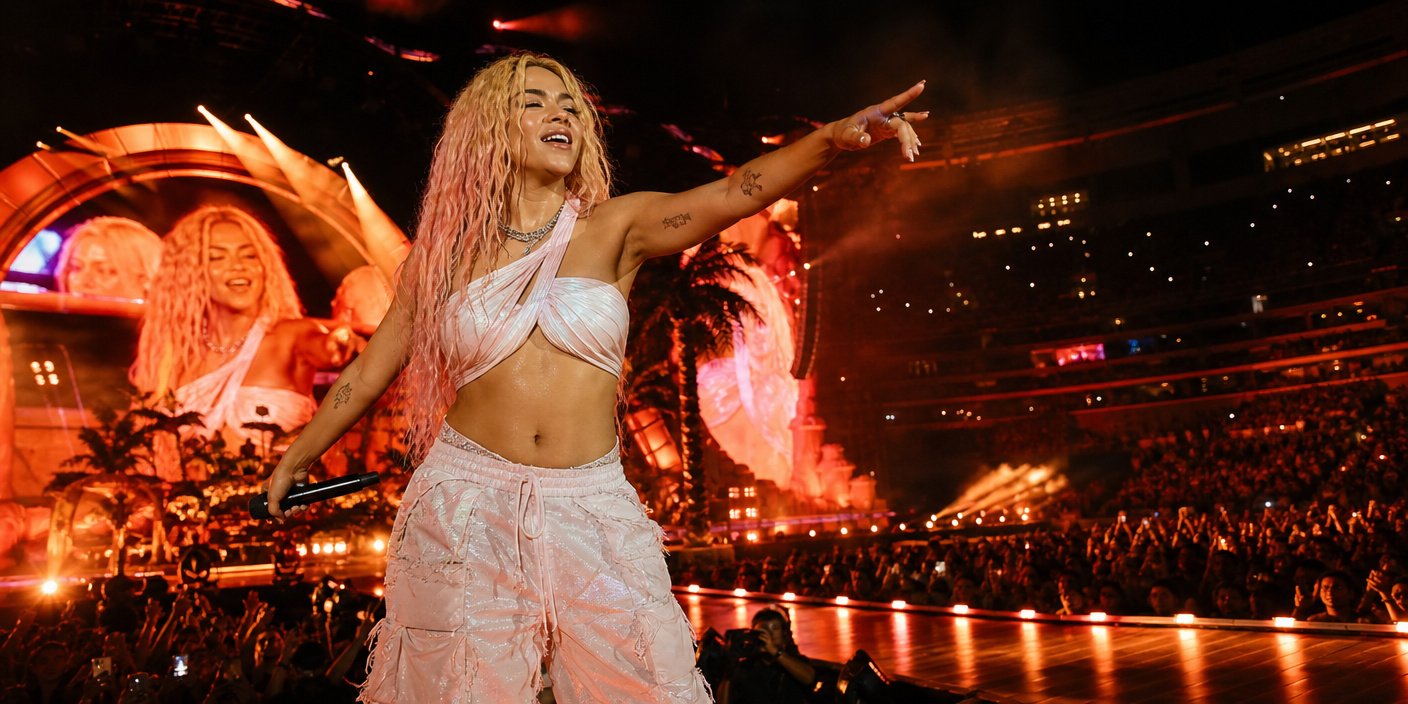
Karol G has officially solidified her touring schedule for the remainder of 2026 and the beginning of 2027, marking a pivotal expansion in her international touring strategy. The announcement confirms a high-profile series of stadium performances across Latin America, specifically highlighting key stops in Costa Rica and Colombia, alongside a comprehensive multi-city South American run set to kick off in January 2027. This move signals not only the continued demand for the ‘Mañana Será Bonito’ experience but also a deliberate long-term commitment to cementing her dominance in the regional concert market.
Key Highlights
- Stadium-Scale Reach: The tour focuses on massive stadium venues, reflecting Karol G’s current tier of global superstardom and ability to draw record-breaking crowds.
- January 2027 Expansion: The strategic South American tour launch is set for January 2027, ensuring a robust start to the new year for international live music.
- Core Regional Focus: Major performances confirmed for Costa Rica and Colombia, reaffirming the artist’s deep connection to her Latin American fanbase.
- Sustainability Strategy: By locking in these dates well in advance, management is prioritizing venue availability and logistical precision to maintain the high production standards synonymous with her shows.
Scaling the Mañana Era: A 2027 Stadium Roadmap
The announcement of Karol G’s tour dates through early 2027 is more than just a list of locations; it is a calculated business move that highlights the professionalization of the Latin American touring market. For years, major artists often treated Latin America as a secondary priority or a stopgap between North American legs. Karol G, however, has flipped this narrative, placing her home region at the center of her strategy. By scheduling stadium-sized performances in Costa Rica and Colombia, she is not merely filling venues; she is establishing a cultural and economic anchor for her tour that ensures consistency, scalability, and financial stability.
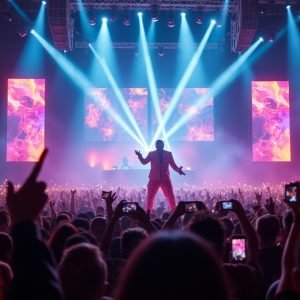
This strategy relies heavily on the ‘Mañana Será Bonito’ brand architecture. The tour is not just a collection of songs; it is an immersive environment that requires specific infrastructure. Stadiums are the only venues capable of housing the elaborate stage designs, pyrotechnics, and visual storytelling that have become the hallmarks of a Karol G performance. By locking in these dates now, her team is ensuring that they secure the limited inventory of available stadiums capable of supporting such massive production requirements. This proactive scheduling is essential in a competitive global market where stadium availability can be booked years in advance by sporting leagues and high-profile international acts.
The Latin American Powerhouse
The emphasis on Colombia and Costa Rica as key anchors is indicative of a ‘home-base’ strategy that leverages high-density fan engagement. Colombia, in particular, acts as the emotional and creative hub for her operations. By returning to perform in these markets, she is fostering a virtuous cycle of loyalty and commercial success. Economically, this is significant. Major stadium tours are not just entertainment events; they are major drivers of local tourism, hospitality revenue, and employment. The ripple effect of a Karol G stadium show is felt across city centers, from local service industries to transportation networks.
Furthermore, the January 2027 start date for the broader South American run is a strategic ‘Q1’ power play. While many artists might take time off to record or recharge, Karol G is choosing to maintain momentum. This allows her to capitalize on the summer season in the Southern Hemisphere, a peak time for live outdoor events. It differentiates her from peers who rely on a traditional North American summer touring cycle, effectively turning the off-season into a prime revenue-generating opportunity.
Economic Impact and Infrastructure
The logistics involved in moving a stadium-grade show across South American borders are immense. This involves coordinating local labor, complying with distinct national regulations, and ensuring the seamless transport of millions of dollars in audiovisual equipment. By formalizing this strategy early, Karol G’s team is mitigating the risks of such a massive operation. This level of planning also provides predictability for investors and partners. When a major artist locks in a multi-city run of this magnitude, it creates a stable economic platform for local promoters and ticket vendors.
Moreover, the evolution of her tour management reflects a shift toward vertical integration. The ability to guarantee a consistent flow of tickets, merchandise, and premium experiences is what separates a pop star from an industry icon. The 2027 strategy demonstrates that her team is looking beyond the ‘moment’ of an album cycle and toward the ‘sustainability’ of a touring brand. She is no longer just touring to support a record; she is touring to maintain her position as a dominant entity in the global live entertainment ecosystem.
Future-Proofing the Brand
Looking ahead, this strategy sets a template for other Latin artists. By prioritizing the logistical and production quality of South American stadiums, she is raising the bar for what is expected of regional tours. The ‘Mañana Será Bonito’ era has proven that the audience demand is not just present—it is explosive. The question for 2027 is not ‘will they come?’ but rather ‘how do we accommodate everyone?’ By securing these dates now, the artist is future-proofing her career, ensuring that she remains in the public consciousness and maintains the high-frequency contact with fans that drives long-term career longevity. As she steps into 2027, the focus remains clear: massive venues, high-fidelity experiences, and a unwavering commitment to the markets that built her platform.
FAQ: People Also Ask
Q: What makes the 2027 South American tour strategy significant?
A: It represents a shift toward sustained, high-production stadium touring in the region, prioritizing it as a core market rather than an afterthought, which stabilizes revenue and deepens fan engagement.
Q: Why are Costa Rica and Colombia highlighted?
A: These countries represent key cultural and commercial hubs for Karol G, serving as essential anchors that ground the tour in markets with exceptionally high fan loyalty and proven capacity for stadium-sized event economics.
Q: How does this tour schedule impact the Latin American live music industry?
A: It sets a new standard for production values and logistical planning in the region, encouraging local infrastructure development and proving that Latin American markets can successfully host, manage, and sustain large-scale, high-complexity international touring operations.